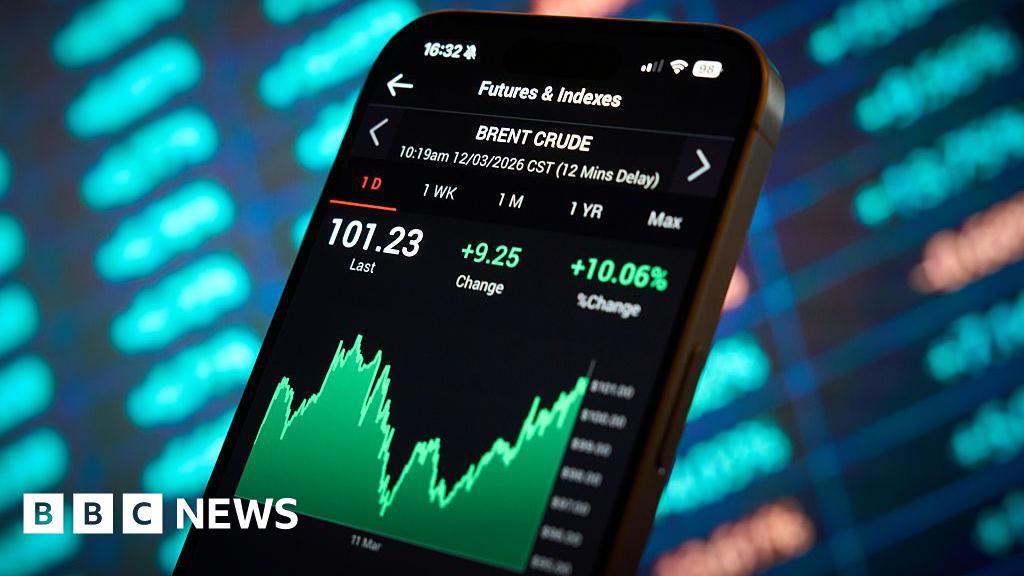
Oil moved from about $72/bbl before 28 Feb to a peak of $118/bbl on 19 Mar and was just under $112/bbl as of last Friday (≈+55% vs pre-strike). The piece highlights that President Trump's comments have driven outsized oil volatility, but investor scepticism is growing, leaving energy markets more volatile and posing upside risk to inflation and downside risk to growth.
The market has begun to price event-risk as a volatility/timing problem more than a pure supply shock — short-dated implied vol is rich versus 3–6 month expiries because headlines create knee-jerk flows while structural physical disruption remains limited. That creates a predictable term-structure opportunity: dealers are long gamma in the front month and long vega further out; if investor scepticism continues, front-month vegas should compress faster than calendar vega, rewarding front-month premium sellers but leaving tail risk exposed.
Second-order winners are those that capture margins immediately (refiners, select midstream operators) and not those leveraged to production growth that requires months to ramp (small-cap E&P capex winners). Losers are high-fuel-intensity businesses with limited FCF pass-through (airlines, long-haul logistics) and consumer-exposed cyclicals that see margin pressure and demand abrasion if energy stays elevated for quarters. A sustained oil shock also reintroduces policy risk (inflation -> central bank hawkishness) which amplifies multiples compression across cyclicals within 2–6 quarters.
Key catalysts to watch: credible physical supply disruptions (weeks), a diplomatic breakthrough or ceasefire (days-weeks) that would unwind risk premia, or sustained oil >$120 for 60+ days which historically triggers demand elasticity responses within 2–3 quarters. Positioning should therefore harvest front-month risk-premia while carrying explicit capped tail protection for escalation scenarios; size these trades so that a single geopolitical escalation does not dominate portfolio drawdowns beyond pre-set risk budgets.
AI-powered research, real-time alerts, and portfolio analytics for institutional investors.
Overall Sentiment
mildly negative
Sentiment Score
-0.25
