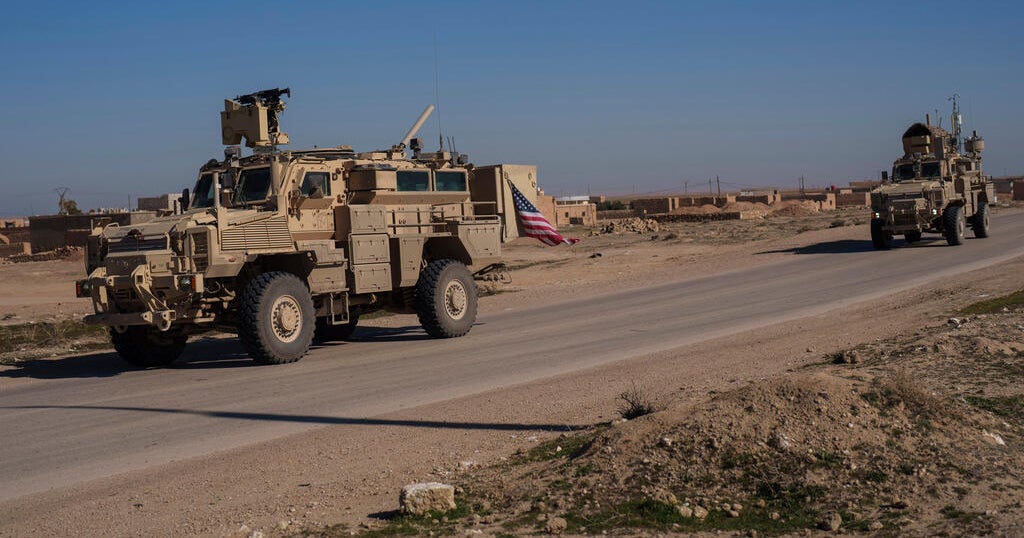
The U.S. plans to withdraw about 1,000 remaining troops from Syria over the next two months, ending a roughly decade-long military presence that began in 2015; earlier departures included the al Tanf and al Shaddadi garrisons. The pullout follows major political shifts cited in the region — including a reported collapse of the Assad government in late 2024 and a deal to integrate the Kurdish-led Syrian Democratic Forces into Syrian forces — and comes after the U.S.-assisted transfer of roughly 5,700 ISIS detainees to Iraqi custody and recent retaliatory strikes under Operation Hawkeye Strike. For investors, the reduction in U.S. footprint lowers direct U.S. military exposure but may increase regional security and energy-risk premiums and has potential implications for defense contractors and geopolitical risk pricing.
Market structure: A ~1,000 troop pullout materially reduces demand for on‑the‑ground base services and logistics (benefiting adversaries of US footprint) while only marginally denting top‑line for large primes (LMT, NOC, RTX) because Syria accounted for <<1% of their revenue historically. Immediate losers are small/mid‑cap government services and base‑support contractors (KBR, HAL) who can see 5–20% near‑term revenue at risk if contract extensions aren’t awarded; energy impact is modest — a 1–3% reduction in regional risk premium could shave a similar magnitude off Brent in 4–8 weeks absent new shocks.
Competitive dynamics & supply/demand: Withdrawal accelerates consolidation of regional security under Assad/Iran/Russia and shifts US procurement emphasis from expeditionary logistics to high‑end ISR, hypersonics and cyber — a multi‑year structural win for large primes with R&D heavy portfolios. Supply of private security services falls (reduced demand) while demand for advanced systems and air/missile defense increases; expect DoD reallocation within next 6–18 months, potentially raising budgets for modernization programs by mid‑single digits.
Risk assessment: Tail risks include ISIS resurgence from detainee transfers, Turkey‑Kurd flareups, or Iranian proxy strikes that could rapidly reverse asset moves; these are low probability but high impact and could spike oil >+10% and VIX >+50% within days. Key catalysts: DoD budget guidance (next 30–90 days), any large breakout attack (hours–weeks), and Iraq’s detention stability metrics (monitor weekly detainee reports).
AI-powered research, real-time alerts, and portfolio analytics for institutional investors.
Request DemoOverall Sentiment
neutral
Sentiment Score
0.00
Trade implications & contrarian angle: Consensus will likely sell small services and modestly bid large primes; that trade is reasonable but risks being time‑mismatched if political blowback forces renewed strikes. A balanced approach is to tactically underweight mid‑cap services and go long large‑cap prime defense and short energy risk premium over 1–3 month horizons, while maintaining a low‑cost tail hedge against rapid geopolitical escalation.
