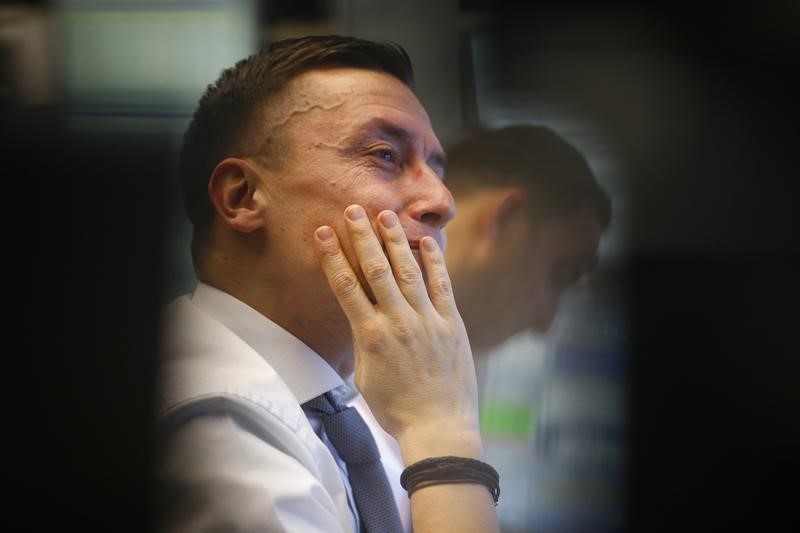
Blue Owl received redemption/tender requests equal to 21.9% and 40.7% of outstanding shares and said it will limit redemptions from two private credit BDCs, prompting sector concerns about private credit liquidity. Shares of KKR and Apollo fell ~4%, Ares ~3% and Blackstone ~2.5% as investors priced potential knock-on effects across alternative asset managers with private credit exposure.
The market is repricing liability mismatches in private-credit vehicles: when liquidity windows narrow, forced selling and wider secondary spreads compress realized returns and accelerate mark-to-market losses for open-ended players. That mechanism creates a feedback loop — headline redemption events drive NAV markdowns, which trigger more outflows from retail and BDC-like structures and pressure managers that monetize AUM via percentage-of-assets fees. Expect the steepest damage to occur within days-to-weeks as stop-lossing and rebalancing run their course, then a multi-month period of higher secondary spreads and slower fund-raising that eats into fee growth.
Second-order impacts will show up in credit markets and funding lines. Banks and non-bank lenders that warehouse private-credit paper will tighten pricing or pull back from hold-to-maturity, raising borrowing costs for middle-market borrowers and increasing fail rates on incremental LBOs and sponsor financing over 3–12 months. That creates a tactical opportunity for well-capitalized opportunistic credit players to buy first-loss tranches at wider spreads, and for liquid credit ETFs to see inflows as public-credit becomes the immediate refuge for yield-seeking capital.
Contrarian frame: large diversified managers with permanent-cap products and long-dated performance fee streams are likely oversold relative to true credit-only franchises. If secondary spreads narrow and distribution gates are lifted, the snapback in implied AUM and fee-annuity valuations can be quick (60–120 days). Tail risk remains material — a broader liquidity shock or macro squeeze could widen the dislocation into a 6–12 month drawdown — so positions should be sized to capture mean-reversion while protecting for downside contagion.
AI-powered research, real-time alerts, and portfolio analytics for institutional investors.
Overall Sentiment
moderately negative
Sentiment Score
-0.45
Ticker Sentiment
