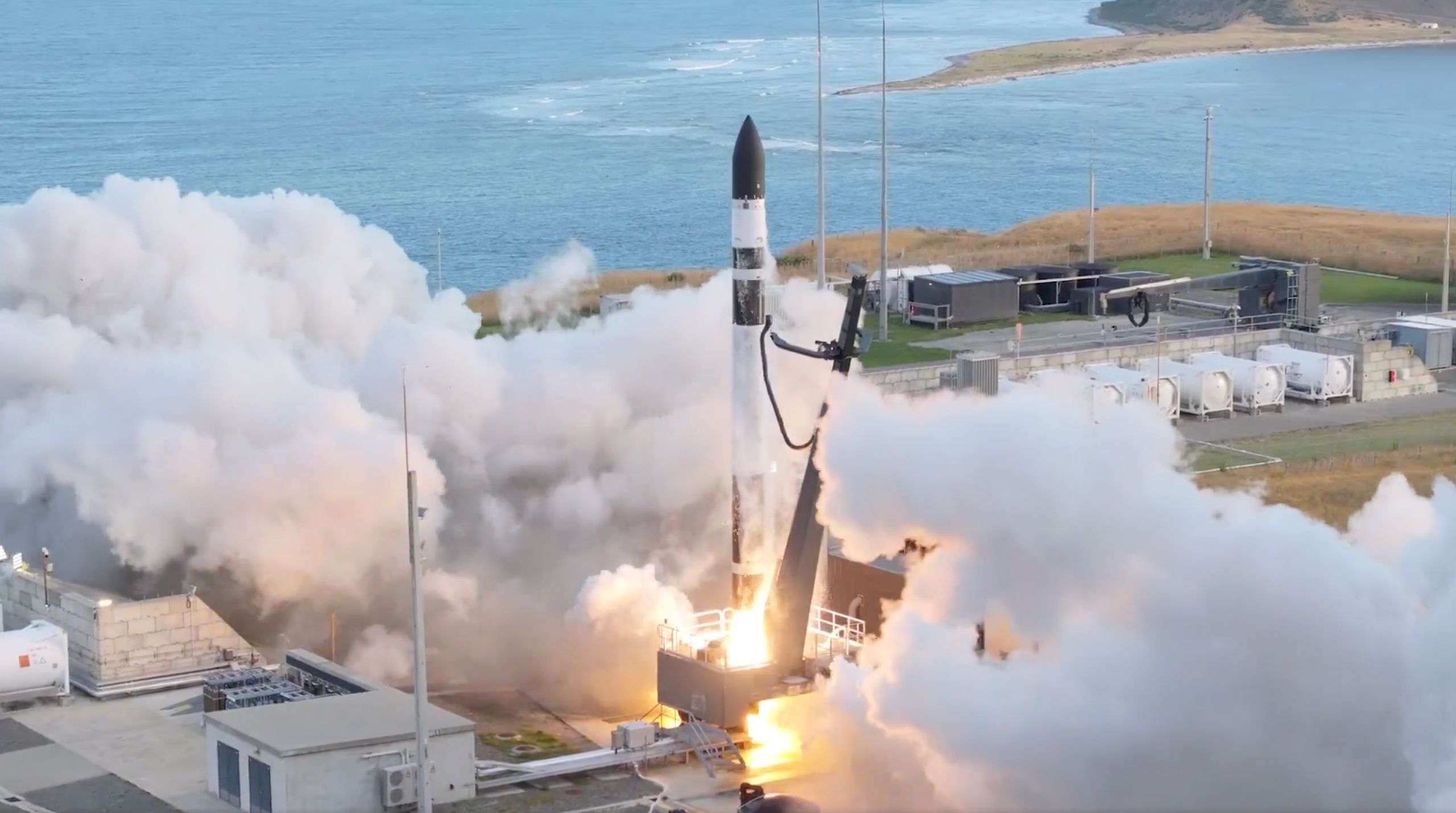
Rocket Lab completed its 21st and final mission of 2025, launching an Electron that deployed the Japanese QPS-SAR-15 (Sukunami-I) into a 575 km circular orbit, marking the company's best single-year cadence (up from 16 in 2024). The flight was Rocket Lab's sixth Electron launch for iQPS this year and the firm says iQPS has booked five additional Electron launches in 2026; in total 18 orbital Electron flights and three suborbital HASTE missions flew in 2025, all successful. Management framed the tempo and backlog as evidence of growing commercial and defense demand, signaling continued execution and revenue visibility into 2026.
Market structure: Rocket Lab (RKLB) demonstrating 21 successful flights in 2025 and multiple booked 2026 Electron launches implies growing willing-to-pay demand for dedicated small‑sat and SAR constellation deployments; direct winners are RKLB, small‑sat integrators (manufacturers/ops for SAR like iQPS equivalents) and defense customers needing hypersonic test flights, while low‑cost rideshare providers and undercapitalized small launcher rivals face pricing pressure. The cadence increase raises Rocket Lab’s marginal pricing power on dedicated launches (can command premiums vs megaconstellation rideshares) and signals tighter short‑orbital launch supply into 2026, supporting higher insurance and firming launch rates for suppliers.
Risk assessment: Key tail risks include a high‑visibility launch failure (catastrophic reputational revenue drop >30% ARR within 3 months), customer concentration (loss of iQPS-related launches could reduce forward revenue by single‑digit to mid‑double‑digit %), export/ITAR restrictions on SAR tech, and sustained capex burn to scale cadence that pressures cash within 12–24 months. Short term (days–weeks) market moves will follow booking/newsflow; medium (months) risks are backlog conversion and margin pressure; long term (quarters–years) risks are consolidation or government procurement volatility.
Trade implications: Favor selective long exposure to RKLB sized 2–3% with event‑driven options overlays to limit downside; consider tactical long A&D exposure (XAR, LMT, NOC) for defense/hypersonic upside; avoid long exposure to commodity/consumer cyclicals in favor of aerospace suppliers. Use option call spreads to play positive booking surprises while capping premium decay; pair trades can isolate execution risk (long RKLB vs short smaller competitor with weak balance sheet).
Contrarian angles: Consensus may overrate sustainable margins from higher cadence—operational scaling, increased insurance, and orbital congestion will compress unit economics; historically many small‑launcher winners suffered post‑hype margin erosion (2018–2021 wave). The market may underprice regulatory/geopolitical risks around SAR and defense work; a major failure or export clampdown could reprice forward bookings by >25% within weeks, creating asymmetry for opportunistic shorts.
AI-powered research, real-time alerts, and portfolio analytics for institutional investors.
Request DemoOverall Sentiment
moderately positive
Sentiment Score
0.45
