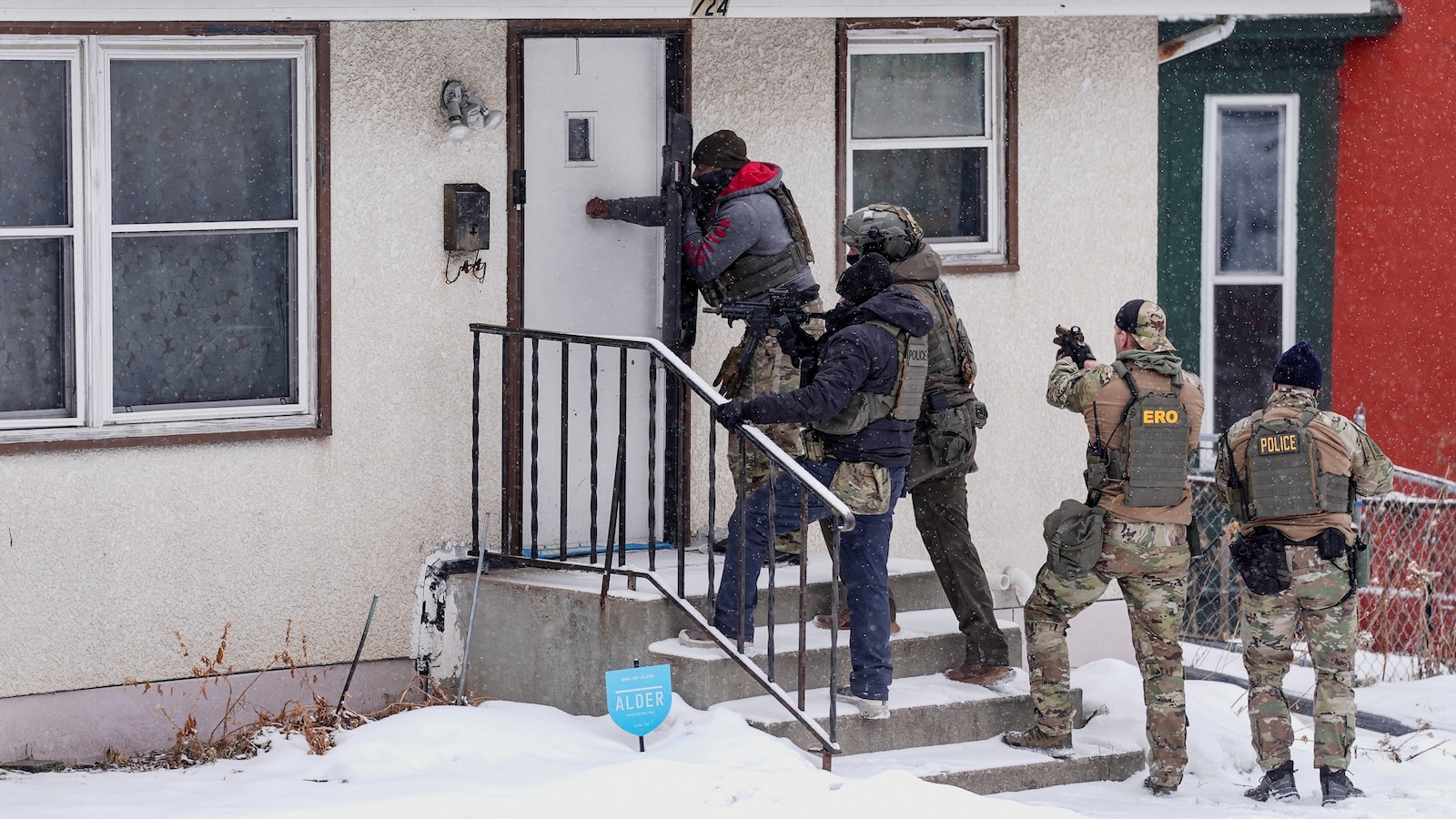
Federal–local tensions in Minneapolis–St. Paul have intensified after a DHS federal officer shot a person alleged to have fled a traffic stop and attacked the officer, following the Jan. 7 fatal shooting of Renee Good by an ICE officer (a claim local officials dispute). The Trump administration has appealed a judge's temporary order limiting federal immigration arrests of lawful protesters/observers, and the DOJ is probing a disruptive protest at Cities Church under the FACE Act, drawing direct statements from senior administration officials and criticism of state and local leaders. The developments raise legal and political risk around federal immigration enforcement in Minnesota and could prolong civil unrest and federal–local confrontation, with limited direct market implications but heightened local governance and reputational risks.
Market structure: Localized civil unrest in Minneapolis most directly benefits vendors of law‑enforcement hardware/software (AXON, LHX, LMT) and analytics contractors to federal agencies (PLTR) via renewed procurement cycles; municipal issuers, local hospitality/tourism, and MN‑centric municipal bond holders are the immediate losers. Pricing power shifts are modest but real: incremental non‑lethal equipment and body‑cam procurement could lift municipal/county RFP budgets by mid‑single digits within 3–9 months, while MN GO credit spreads can widen 10–30 bps in a risk‑off episode.
Risk assessment: Tail risks include a federal court ruling restricting ICE operations (weeks), escalation to multi‑city protests prompting federal deployments (days–weeks), or politically driven contract cancellations (months) — each could swing securities by >15% for vendors or widen MN muni spreads >30 bps. Hidden dependencies: federal budget timing (next 90–180 days), DOJ litigation outcomes (Eighth Circuit docket in 30–60 days), and municipal liquidity windows (quarterly bond auctions) will determine flow and volatility. Catalysts: court rulings, DOJ announcements, and large county RFPs (watch procurement portals over 30–90 days).
Trade implications: Tactical longs in AXON (AXON) and selective defense primes (LHX) for 3–9 month procurement upside, but size positions small (1–2% each) and hedge political/legal exposure with short‑dated puts. Reduce MN‑specific muni exposure now (trim 20–40%) and reallocate to short‑duration Treasuries (SHY/SHV) until spreads normalize; consider 1–3 month put spreads on MN muni ETFs if spreads spike >25 bps.
AI-powered research, real-time alerts, and portfolio analytics for institutional investors.
Request DemoOverall Sentiment
moderately negative
Sentiment Score
-0.35
Contrarian angles: Consensus underprices the post‑Ferguson precedent where equipment procurement accelerated after unrest — a 12–18 month revenue uptick of low‑double digits is plausible for body‑cam vendors, meaning a patient, hedged long in AXON may be underbought. Conversely, market may overreact on MN muni credit: absent sustained riots or fiscal shocks, a 10–30 bp spread move is likely transient and creates a re‑entry signal when 5‑yr MN GO spreads settle back within 10 bps of pre‑event levels.
