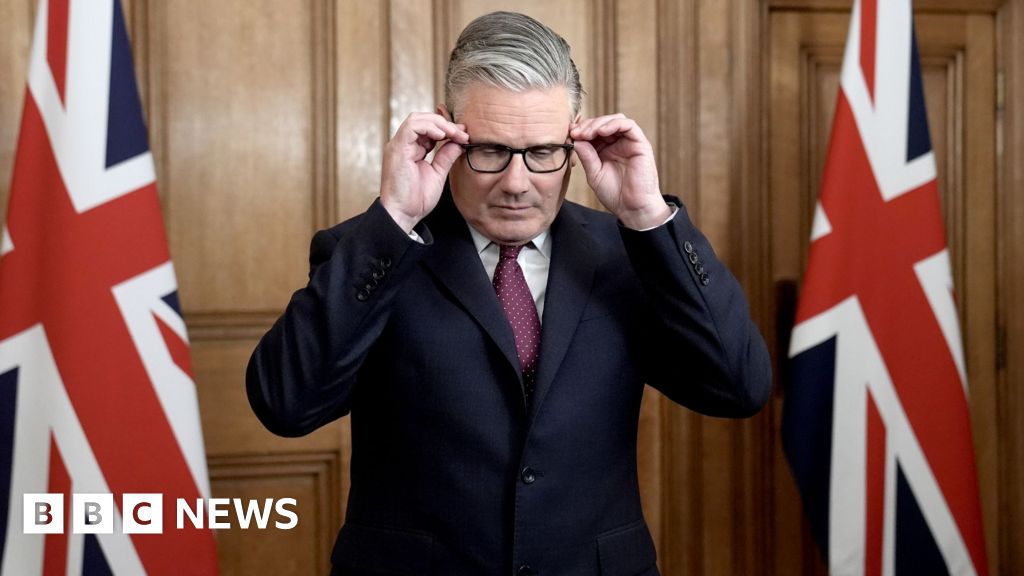
Sir Keir Starmer is facing a leadership crisis after nearly 80 Labour MPs publicly called for him to resign or set an exit timetable, while cabinet ministers including Home Secretary Shabana Mahmood are urging a planned departure. The revolt follows Labour's disastrous local and devolved election results, including the loss of almost 1,500 councillors and defeat in Wales and Scotland. The article signals significant political instability, but the immediate market impact should be limited.
The immediate market read-through is not about policy direction but about decision paralysis: when a governing party enters an open succession fight, the fiscal agenda typically freezes for weeks even if the leadership survives. That raises the probability of either softer spending restraint or delayed tax measures, which is mildly supportive for domestic cyclicals in the very near term but ultimately negative for UK duration-sensitive assets because it widens the range of possible fiscal outcomes. The bigger second-order effect is on the pound and UK risk premia: investors will start pricing a higher odds-weighted path to policy reversals, cabinet reshuffles, and a less coherent Budget process. The near-term winner is opposition optionality, not necessarily any single challenger. A credible leadership contest would force the market to reprice the probability of a more market-friendly or more populist pivot, depending on the eventual successor; that dispersion creates opportunities in rate-sensitive UK equities and sterling rather than a clean directional macro call. The loser set is concentrated in domestically exposed UK midcaps with high wage intensity and limited pricing power, because governance uncertainty tends to hit capex decisions and customer confidence before it shows up in earnings revisions. The contrarian angle is that crises like this often become less about popularity and more about whether the incumbent can delay long enough for the economy to improve on its own. If growth data or inflation cools over the next 6-10 weeks, the leadership pressure can fade faster than consensus expects, creating a sharp squeeze in oversold UK political-risk hedges. The tail risk is an accelerated challenge that lands during a narrow window of weak macro prints, which would amplify moves in gilts and sterling within days rather than months. In practical terms, the setup favors a tactical, event-driven rather than structural trade until a formal challenge emerges or leadership support stabilizes. The key catalyst clock is measured in days to weeks for personnel changes, but in months for any meaningful shift in fiscal policy or investor positioning.
AI-powered research, real-time alerts, and portfolio analytics for institutional investors.
Request DemoOverall Sentiment
moderately negative
Sentiment Score
-0.40
