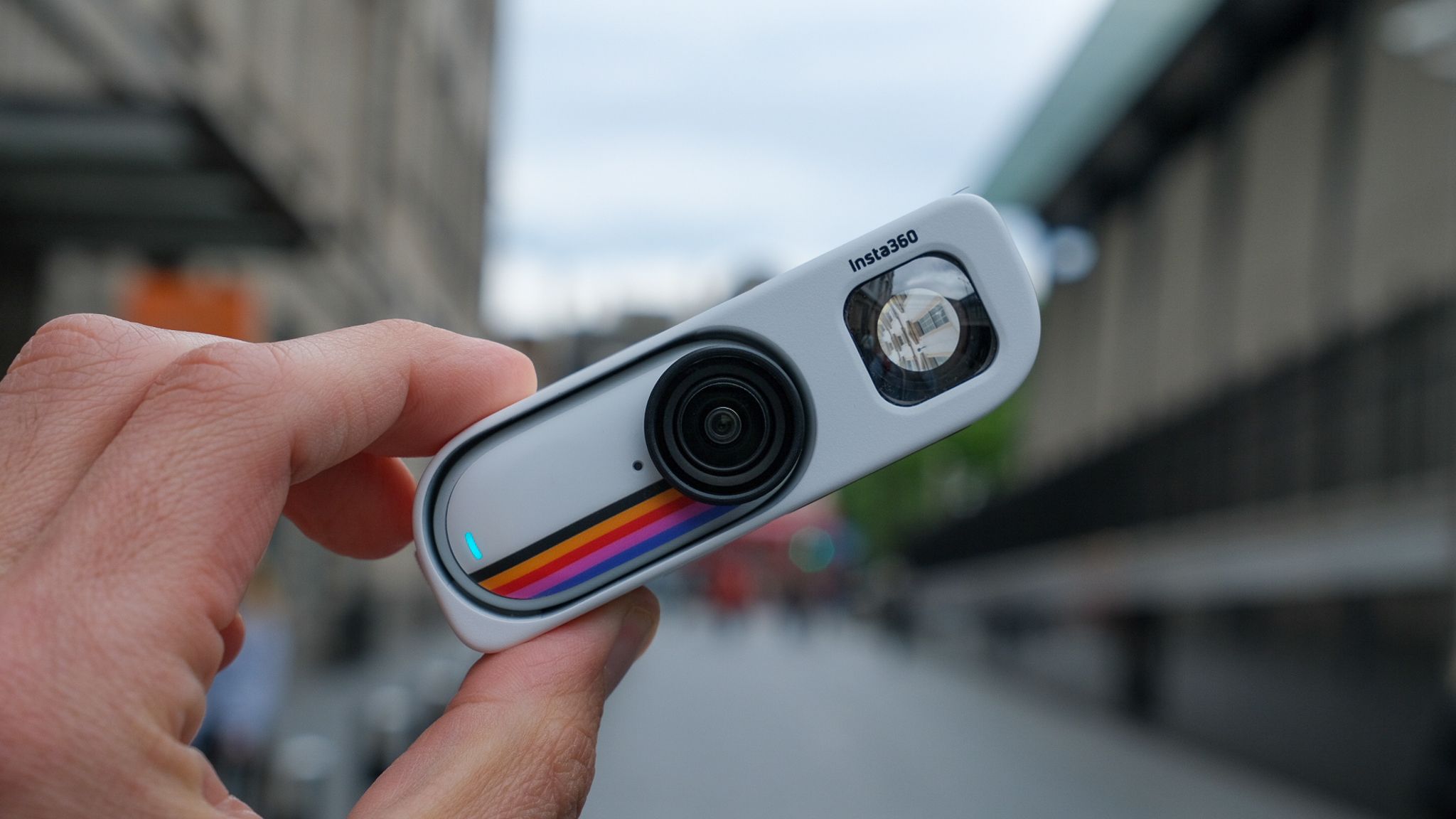
Insta360 launched the GO 3S Retro Bundle, pairing the compact 4K GO 3S camera with a Retro Viewfinder, Battery Pack, NFC skin, and accessories. The bundle is available now in 64GB for $300 / £260 / €300 / AU$470 and 128GB for $320 / £240 / €280 / AU$500, while the Retro Viewfinder is also sold separately for $48 / £46 / €55 / AU$80. The article frames the product as a clever extension of existing hardware rather than a major new camera release, suggesting modest commercial interest but limited market impact.
This is less a product launch than a proof that premium consumer tech now behaves like a content platform: the hardware monetizes, but the real margin expansion comes from accessories, skins, app lock-in, and SKU extension. That matters because it raises the lifetime value of each camera sold and lowers reliance on launching a materially better sensor every cycle. The second-order implication is that the most durable winners in consumer hardware are increasingly those with software-mediated ecosystems, not those competing on specs alone. The obvious beneficiary is Insta360’s own attach rate and pricing power, but the competitive signal is broader: action-camera peers that rely on feature parity are vulnerable to being commoditized while a brand with stronger product storytelling can extract novelty rent. The retro framing also expands the addressable market beyond action users into gift buyers and casual creators, which can support sell-through even if the core enthusiast market is mature. The risk is that this is a short-lived marketing spike unless follow-on content use cases translate into repeat app engagement and accessory adoption over the next 1-2 quarters. The contrarian read is that the bundle may be more incremental than the excitement suggests: a cosmetic wrapper around an existing device rarely changes category economics unless it unlocks a new channel or price tier. If demand is mostly impulse-driven, the bundle can pull forward orders but not expand the installed base, and the accessory economics could be vulnerable to clone products or discounting by retailers after the novelty fades. Watch for whether this drives higher ASPs and lower returns, or simply one-off buzz with no durable lift in unit economics. In the near term, the best trade is to treat this as a small positive read-through for niche consumer electronics brands with accessory ecosystems, not as a standalone catalyst for a broad hardware rerating. The real test is whether this kind of bundle lifts gross margin and reduces churn in the next earnings print; if not, the market should fade the headline quickly.
AI-powered research, real-time alerts, and portfolio analytics for institutional investors.
Request DemoOverall Sentiment
mildly positive
Sentiment Score
0.35
