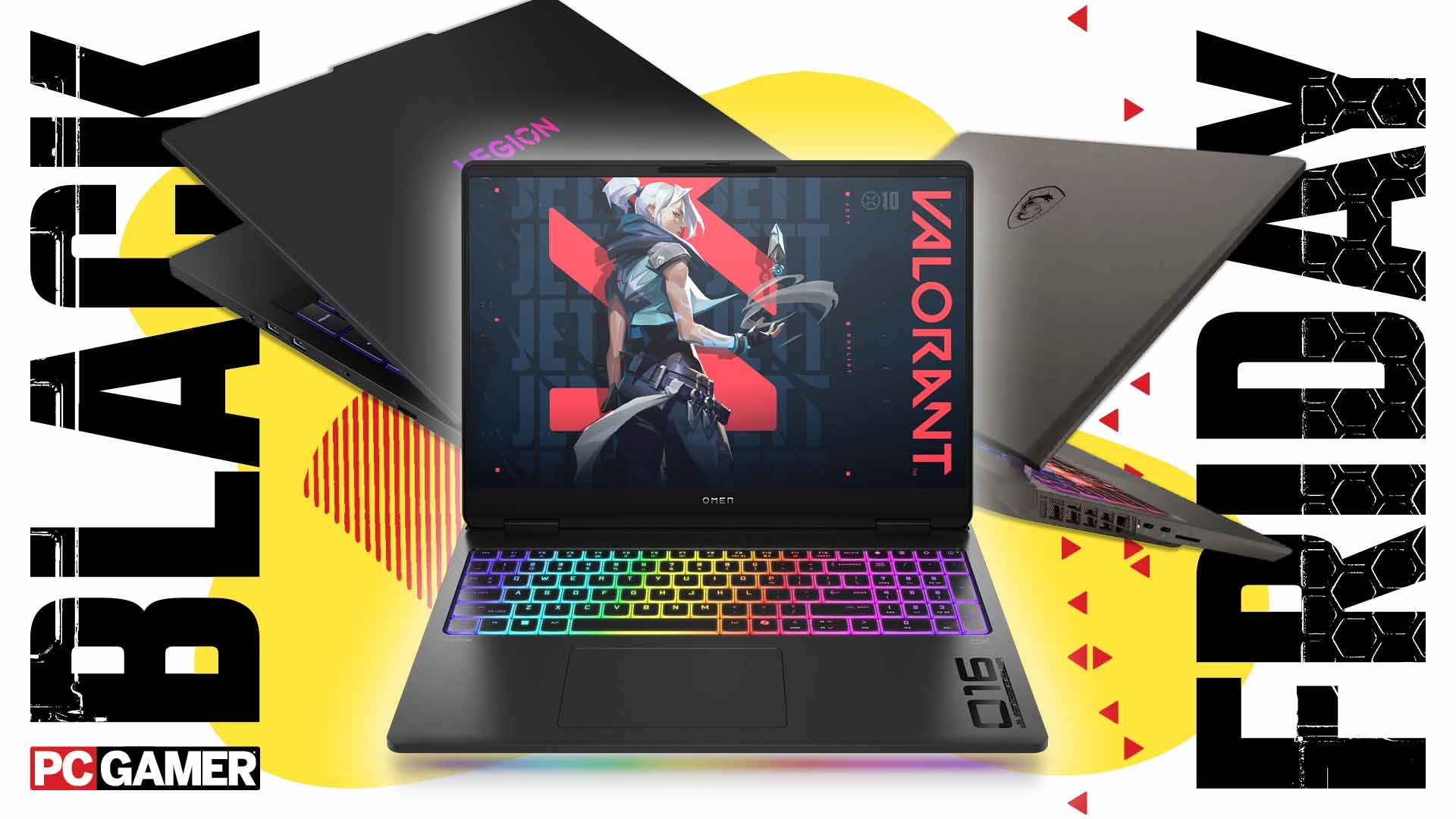
Black Friday coverage highlights RTX 5080 gaming laptops as the best value-for-performance picks, with specific deals including the HP Omen Max 16 at about $1,825 (advertised save $1,475), the MSI Vector 16 HX AI around $1,900 (save $300), and the Lenovo Legion Pro 7i at $2,299 (save $1,200). Key specs cited: full‑watt 175W RTX 5080 GPUs, up to 32 GB DDR5, 1–2 TB SSDs, 16‑inch 1600p/240Hz or OLED panels, and AMD Ryzen AI 9 HX 375 or Core Ultra 9 275HX CPUs; the author argues these provide strong gaming performance under $2,000, undercutting RTX 5090 premium pricing. The note implies heightened price competition and consumer demand for high-performance laptops this holiday season, which could pressure OEM pricing and product mix at the high end of the PC market.
Market structure: Black Friday pricing on RTX 5080 laptops (sub-$2k HP offering) signals OEMs prioritizing unit sell-through over ASPs; short-term winners are NVDA (GPU volume), AMD (mobile CPU/iGPU adoption) and OEMs like HPQ who gain market share through aggressive promotions, while INTC risks being sidelined in mobile gaming designs. Competitive dynamics favor mid-tier high-performance SKUs (5080) over ultra-premium 5090s—expect consumer mix shift that could lower GPU ASPs by 5–15% if widespread.
Risk assessment: Tail risks include renewed export controls on high-end GPUs, a macro pullback in discretionary spend (retail sales down >5% YoY) or tiered ASP compression exceeding 10% QoQ; immediate risk (days–weeks) is retail sell-through volatility, short-term (1–3 months) is holiday channel inventory adjustments, long-term (3–12+ months) is product-cycle replacement and attach-rate erosion to integrated GPUs. Hidden dependencies: attach-rate of discrete GPUs in laptops, OEM channel rebates, and software differentiation (Lenovo LegionSpace) which can sustain pricing despite hardware parity. Key catalysts: NVDA/AMD earnings (next 30–90 days), Newegg/BestBuy weekly sell-through, Steam hardware data.
Trade implications: Favor NVDA and AMD exposure but hedge for ASP risk—establish a 2–3% long NVDA position and 1–2% long AMD over next 2–4 weeks, target +20% / stop -8% over 3 months; small 0.5–1% tactical long HPQ into retail momentum. Pair trade: long NVDA / short INTC (1:0.7) to express GPU share gain vs Intel mobile weakness. Options: buy a NVDA 60-day call spread 5–10% OTM to cap cost and buy AMD 90-day 12% OTM calls ahead of earnings; scale out at +15–25%.
Contrarian angles: Consensus may underprice ASP risk—widespread 5080 discounting could compress NVDA gross margins even if unit volumes rise; conversely AMD’s capable iGPU lowers attach rate of discrete GPUs, a secular threat to NVDA if it accelerates. Historical parallel: RTX 3000→4000 cycle saw initial premium erosion then margin recovery via new architectures; use options and pair trades rather than outright concentration. Reassess if NVDA guidance flags revenue or ASP decline >5% QoQ or retail sell-through misses by >10%, at which point cut net exposure by half.
AI-powered research, real-time alerts, and portfolio analytics for institutional investors.
Request DemoOverall Sentiment
mildly positive
Sentiment Score
0.35
Ticker Sentiment
