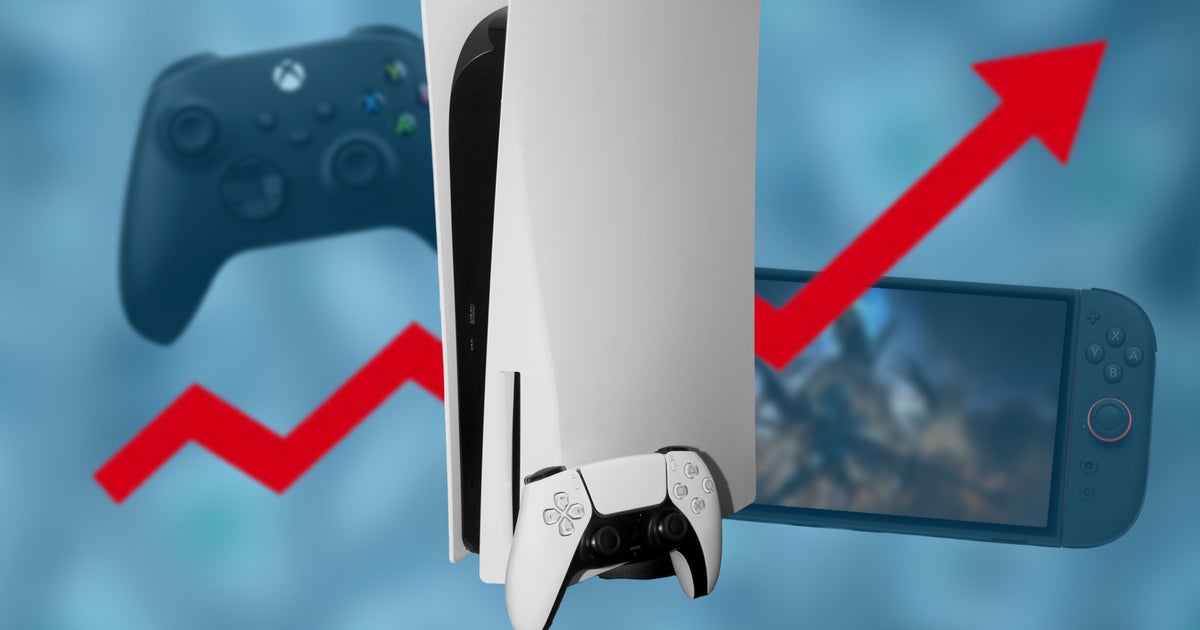
Sony is raising PS5 prices effective 2 April, with the standard PS5 up about £90 in the UK and $100 (roughly 18%) in the US. Company cites sustained memory and storage cost inflation—driven in part by AI infrastructure demand—and analysts warn the Middle East war could add further inflationary pressure, making similar price hikes likely at Microsoft and Nintendo. Analysts say higher hardware costs risk softening demand for new consoles and AAA game sales (notably ahead of GTA 6), and component shortages have already delayed other hardware launches (e.g., Valve).
Component inflation driven by persistent AI capex (DRAM/NAND) is creating a sustained input-cost shock for consumer hardware OEMs that is unlikely to be solved by short-term hedges; OEMs that rely on hardware ASPs for strategic growth are most exposed to margin compression while cloud-anchored platform players can reprice via subscriptions or absorb cost into services. Expect a bifurcation: hardware-centric revenue lines face downward unit growth and deferred replacement cycles over 6–24 months, while cloud and software monetization can both cushion and capitalize on any shift from owned hardware to streaming/subscription consumption.
Second-order winners include memory and foundry suppliers who see stronger pricing and order visibility from AI demand, but their upside is capped by volume elasticity if consumer hardware replacement slows materially. Conversely, firms selling semi-custom SoCs to consoles (and the downstream AAA publishing cycle that depends on new hardware installs) face a double hit — higher input costs and a potentially smaller new-console cohort — which depresses the long-term TAM for boxed-game sales and physical accessory aftermarket over the next console generation.
Key catalysts and timeframes: near-term (weeks–3 months) volatility will track DRAM/NAND spot moves and geopolitical shipping shocks; medium-term (3–12 months) outcomes hinge on AI capex cadence and whether cloud providers scale inventory or slow purchases; long-term (12–36 months) the biggest risk is a structurally longer console generation that reallocates spend to PC/cloud ecosystems. Reversal scenarios: a meaningful cooling in AI spend or a large NAND/DRAM capacity add could normalize component pricing quickly and restore OEM margins, while an acceleration of cloud-gaming adoption would permanently change hardware economics and lift cloud vendors disproportionately.
AI-powered research, real-time alerts, and portfolio analytics for institutional investors.
Request DemoOverall Sentiment
mildly negative
Sentiment Score
-0.35
Ticker Sentiment
