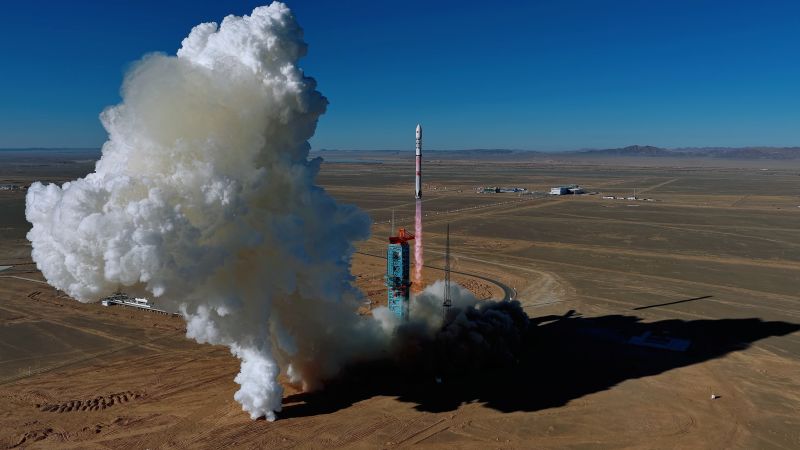
Beijing-based LandSpace successfully placed its Zhuque-3 into orbit but failed in its historic first-stage booster re‑landing attempt after an engine anomaly during the landing phase caused debris to fall at the edge of the recovery zone. The partial success — praised by outside experts as roughly 90% effective because the vehicle reached its landing area — advances China’s commercial push for reusable-rocket capability and intensifies competition with U.S. players like SpaceX, even as technical fixes remain necessary before routine reuse or support missions to Tiangong.
Market structure: LandSpace’s partly successful reusable-landing test accelerates the entry of low-cost Chinese launch capacity and increases downside pressure on small western commercial launchers (e.g., Rocket Lab). Reusable tech can compress per-launch pricing materially — SpaceX showed 30–70% effective cost declines over a decade — implying satellite operators and constellation builders regain leverage on launch cost negotiations over 2–5 years.
Risk assessment: Near-term (days–months) the main risk is idiosyncratic equity volatility in emerging launch names and knee-jerk FX flows; medium-term (6–24 months) regulatory/tariff responses and export controls are tail risks that could bifurcate winners (state-backed Chinese players) and losers (US-listed small-cap launchers). Hidden dependencies include ground infrastructure, specialized alloys and supply-chain bottlenecks; a string of successful Chinese landings within 6–12 months is the catalyst that materially changes market share.
Trade implications: Rotate capital from exposed small-cap launchers into large-cap defense primes and satellite-equipment names that benefit from higher program spending and accelerating demand for space services. Tactical options: buy downside protection on vulnerable small-cap names (3–6 month puts) and use 6–12 month call exposure on defense primes to capture policy-driven upside while keeping position sizes small (1–3% each).
Contrarian angle: Consensus assumes a long (>5 yr) Chinese catch-up; history (SpaceX) shows rapid iteration can shorten that to 2–4 years — markets may be underpricing the near-term competitive threat to specialist launch vendors while underestimating macro upside to defense contractors from accelerated national programs. If Chinese firms fail repeatedly, small-cap launchers re-rate, so position sizing and event-based exits are critical.
AI-powered research, real-time alerts, and portfolio analytics for institutional investors.
Request DemoOverall Sentiment
mixed
Sentiment Score
0.18
