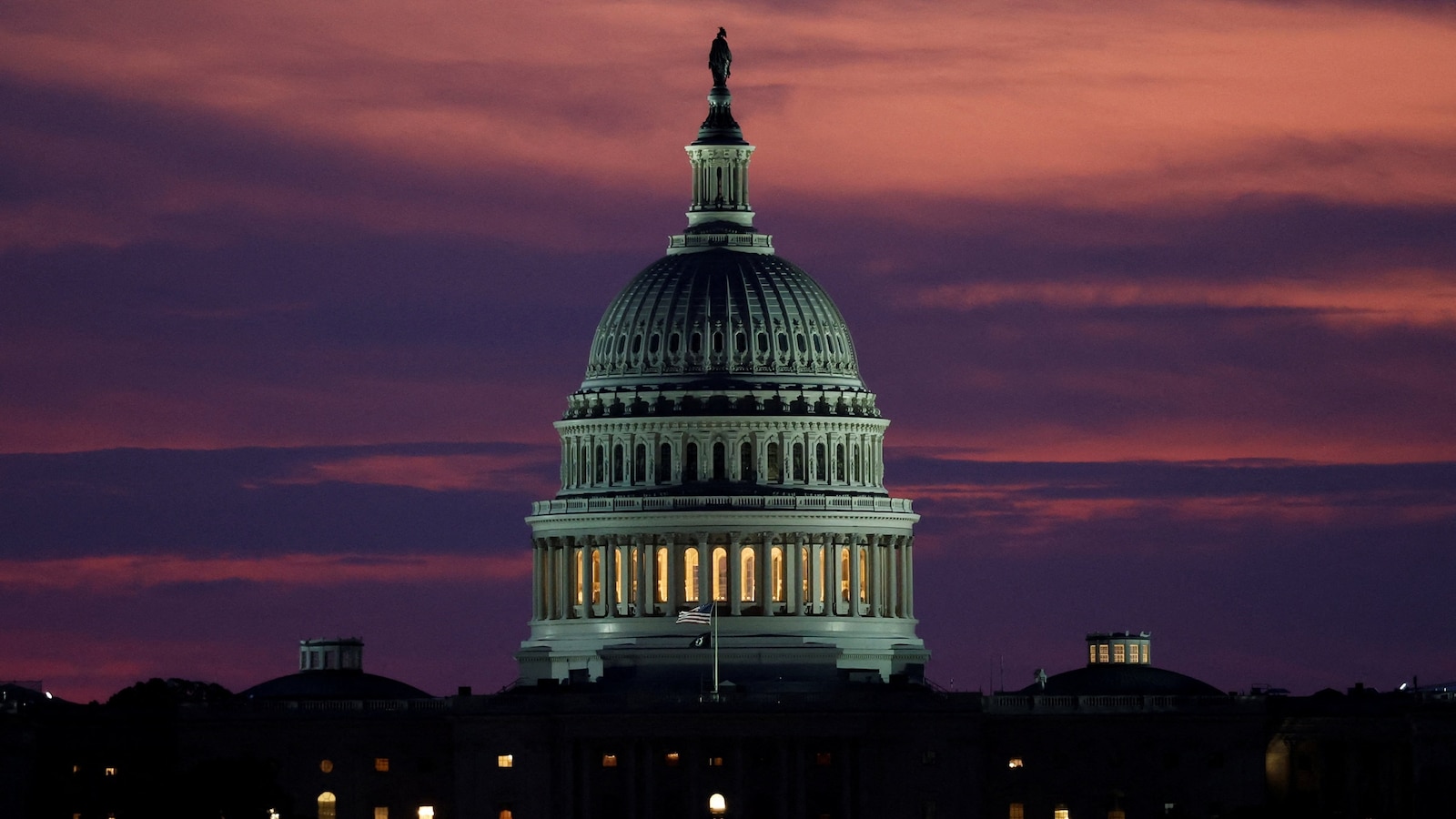
The U.S. government faces a potential shutdown by October 1st as Congress remains deadlocked on a funding resolution. Republicans advocate for a clean short-term continuing resolution until November 20th, while Democrats demand health care-related policy concessions, including expanded Obamacare tax credits and Medicaid cut reversals, estimated at $1.4 trillion over 10 years. With no compromise in sight and President Trump refusing to negotiate further, the likelihood of a shutdown has increased, threatening to furlough federal employees and disrupt various government functions.
The U.S. government is facing a high probability of a shutdown by the October 1st deadline, an event carrying a market impact score of 0.75 and an extremely negative sentiment score of -0.85. The legislative deadlock stems from fundamentally opposing strategies: Republicans are pushing for a 'clean' short-term continuing resolution (CR) to fund the government at current levels through November 20, a standard procedural move. Conversely, Democrats are leveraging the must-pass nature of the bill to secure significant policy concessions, a reversal of historical party roles. The Democratic demands are centered on healthcare, including the reversal of Medicaid cuts and the expansion of Obamacare tax credits, with a non-partisan CBO estimate placing the 10-year cost of their initial proposals at $1.4 trillion. The political impasse has been exacerbated by President Trump's cancellation of a scheduled meeting with Democratic leaders, signaling that no clear path to a compromise exists. A shutdown would furlough millions of federal workers, halt services like national parks, and inject significant economic uncertainty, though essential services and Social Security payments would continue with potential delays.
AI-powered research, real-time alerts, and portfolio analytics for institutional investors.
Overall Sentiment
extremely negative
Sentiment Score
-0.85
