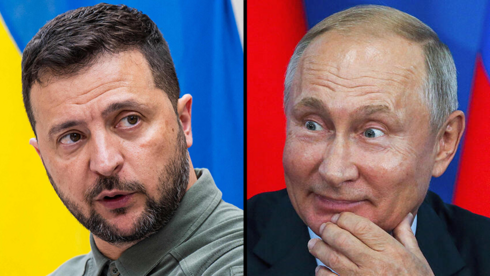
President Putin stated Russia's diminished support for Iran in the conflict is partly due to the large Russian-speaking population in Israel, emphasizing Russia's traditionally good relations with the Arab world. Separately, Ukraine's Zelensky reported that among bodies repatriated by Moscow was a Russian mercenary with Israeli documents, alleging deception by Russia in the prisoner exchange, further complicating the already tense geopolitical landscape between Russia, Ukraine, Iran and Israel.
The geopolitical landscape is exhibiting increased complexity, centered on Russia's strategic maneuvering in both the Middle East and Ukraine. Russian President Vladimir Putin has articulated a rationale for limiting assistance to Iran, citing the significant presence of nearly two million Russian-speakers in Israel, which he termed an "almost a Russian-speaking country." This statement indicates a careful balancing of alliances, prioritizing ties with Israel over deeper military involvement with Iran, while simultaneously reaffirming support for Iran's peaceful nuclear energy program, evidenced by ongoing reactor construction projects. Concurrently, tensions with Ukraine are escalating on a diplomatic front. Ukrainian President Volodymyr Zelensky has accused Moscow of deception in a prisoner-and-body exchange, claiming Russia returned the body of a Russian-Israeli mercenary under the guise of a Ukrainian. This exchange represents the sole tangible outcome from recent negotiations, which are otherwise stalled by Russia's stringent ceasefire demands and its perceived military momentum. The overall market impact signal is exceptionally low (0.1), suggesting that while these developments carry significant long-term geopolitical weight, they are not currently viewed as immediate market-moving catalysts.
AI-powered research, real-time alerts, and portfolio analytics for institutional investors.
Overall Sentiment
neutral
Sentiment Score
0.00
Ticker Sentiment
