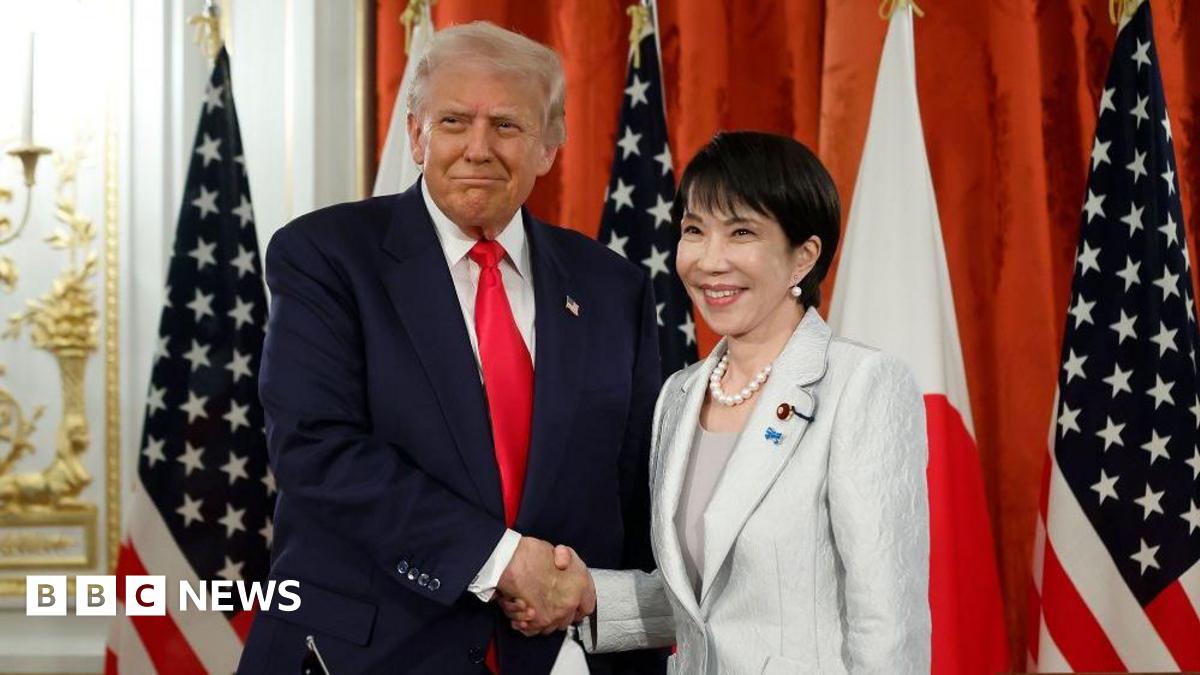
US President Donald Trump and newly elected Japanese Prime Minister Sanae Takaichi formalized agreements, including a 15% US tariff on Japanese imports, notably autos, in exchange for Japan's pledge to invest $550 billion in the US and increase purchases of American goods across various sectors. A critical deal was also struck to boost rare earth supply and production, aiming to reduce reliance on China and secure vital minerals for technology and defense. These agreements, framed as a 'new golden age' for the alliance, underscore ongoing trade pressures on Japan's export-heavy economy while strategically diversifying critical supply chains.
The recent agreement between the US and Japan formalizes a 15% tariff on Japanese imports, including the significant automotive sector, a a reduction from the previously threatened 25%. In exchange, Japan has committed to a substantial $550 billion investment in the US and increased purchases of American goods across sectors like agriculture, energy, and aerospace, including $8 billion in agricultural products. This deal, while mitigating higher tariff risks, still places considerable pressure on Japan's export-dependent economy.
A critical component of the bilateral discussions was the rare earths deal, aimed at boosting supply and production of these vital minerals. This strategic cooperation seeks to reduce US reliance on China, which currently dominates critical mineral processing, and secure essential inputs for electronics, EVs, and military equipment. Japan's abundant, albeit challenging to extract, rare earth deposits are central to this diversification effort.
Despite the "new golden age" rhetoric, the agreement underscores ongoing trade tensions and strategic realignments. The continued 15% tariffs, alongside US pressure for Japan to increase defense spending to 2% of GDP, indicate a complex relationship where economic concessions are intertwined with geopolitical objectives. Investors should note the long-term implications for Japanese exporters and global supply chains.
AI-powered research, real-time alerts, and portfolio analytics for institutional investors.
Overall Sentiment
mildly positive
Sentiment Score
0.35
