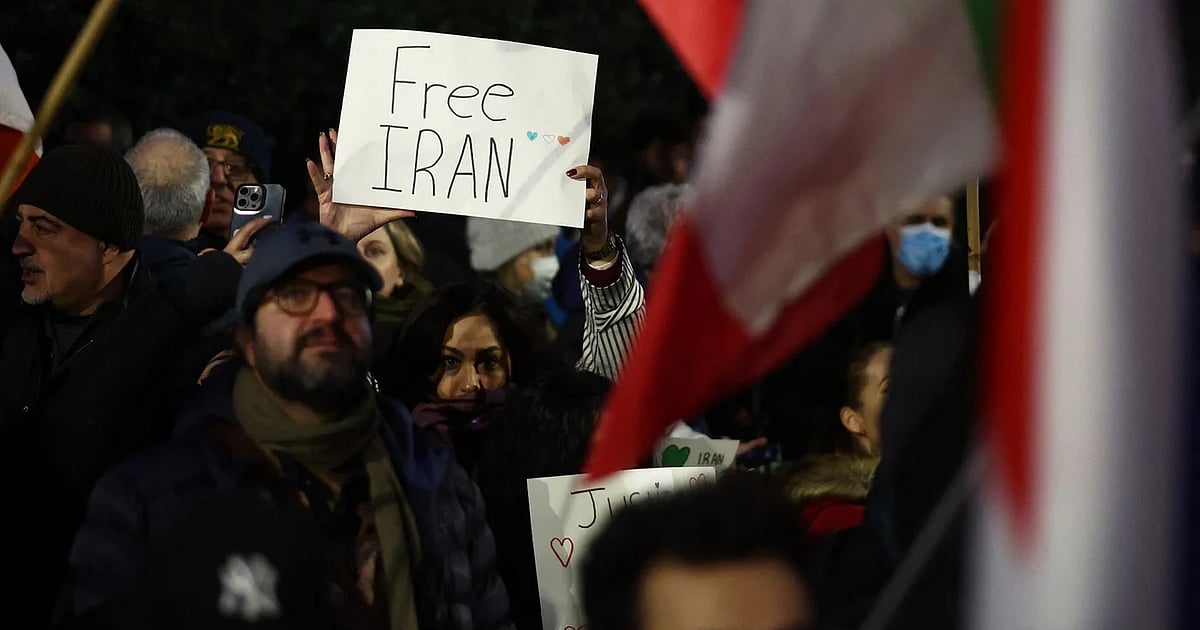
Iran faces expanding nationwide unrest that has shifted from women-led moral protests into broad economic strikes disrupting bazaars, transport, factories and schools, threatening material economic activity. Official inflation tops 40% with food prices rising faster, rent consuming over half of household income, nearly 60% of working-age Iranians excluded from secure employment, and the IRGC controlling roughly a quarter to a third of GDP—conditions that raise sovereign and operational risk, entrench sanction-evasion networks, and increase political and economic volatility for investors with Iran or regional exposure.
Market structure: The fusion of women-led moral revolt into broad labour/consumer strikes shifts Iran from a political disruption to a demand-side shock — domestic consumption (retail, real estate, services) will contract materially while IRGC-controlled sectors (construction, logistics, energy trading) preserve or expand market share by capturing rents. Expect persistent double-digit CPI (>30–40% annually) and continued IRR weakness, wider EM spreads and a higher structural risk premium priced into Middle East risk-sensitive assets.
Risk assessment: Tail scenarios include a severe regional escalation (Strait of Hormuz closure) that could push Brent >$120/bbl within days-weeks, or conversely a rapid regime collapse/negotiated opening that removes sanctions and depresses oil prices by >20% over months — both low-probability, high-impact. Immediate (days): FX and oil volatility spikes; short-term (weeks–months): EM equity/bond selloff and commodity risk-premia; long-term (quarters–years): entrenched IRGC economic dominance that reduces the efficacy of sanction-driven plays.
Trade implications: Tactical preference is to own oil/gold and short fragile EM beta while limiting duration in EM credit. Implement 1–3 month option structures for oil and EM puts to capture volatility with defined risk; re-allocate 3–6% of risk budget from EM consumption/real-estate exposures into energy, gold, and defensives (defense contractors) over 1–4 weeks. Monitor Brent at $95 and EEM index downmoves of 8–12% as triggers to scale positions.
Contrarian angles: The consensus oil-risk premium may be overstated because Iran retains black‑market exports and buyers can substitute other supplies, so a fast mean reversion (oil -15% from spike) is plausible within 2–3 months. Conversely, markets underprice the political durability of IRGC economic control — sanction-relief plays are riskier and slower than typical regime-change narratives. Historical parallels (2011 Arab Spring) show initial commodity spikes then reversion; position sizing should assume reversion risk.
AI-powered research, real-time alerts, and portfolio analytics for institutional investors.
Request DemoOverall Sentiment
strongly negative
Sentiment Score
-0.70
