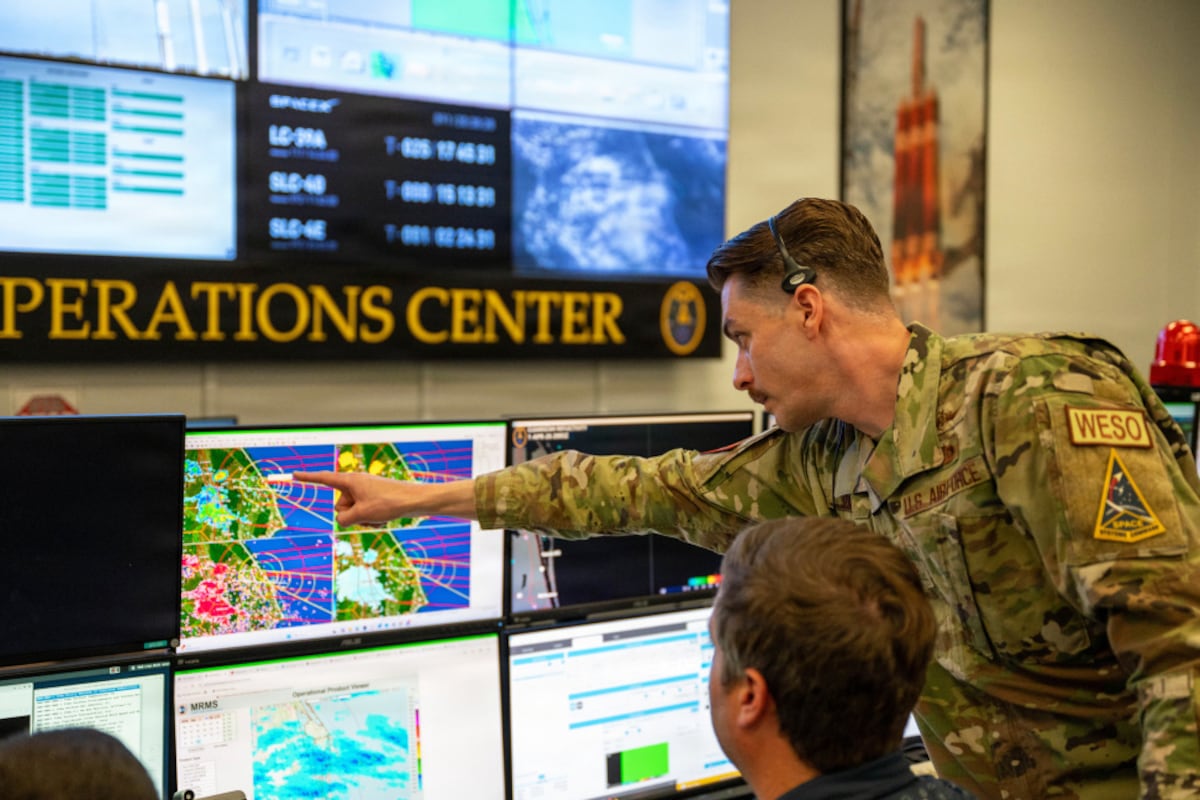
Artemis II launched April 1 with mission support from U.S. Space Force’s Space Launch Delta 45, which performed hazard-zone trajectory and debris analysis, emergency response planning, telemetry and weather monitoring, and airfield logistics/recovery coordination. SLD 45 coordinated land/sea/air hazard zones, roadblocks, traffic flow and emergency staging to protect Cape Canaveral and local communities, and leadership noted the unit enabled more than 100 Eastern Range launches in 2025. NASA reported Orion was traveling about 3,700 mph and was roughly 150,000 miles from the moon and 100,000 miles from Earth as of Friday afternoon.
The visible effect of higher launch tempo is a durable demand shift away from one-off mission suppliers toward firms that own range and recovery capabilities, mission assurance software, and airborne/sea logistics. Over a 12–36 month procurement horizon that includes follow-on modernization budgets and sustainment contracts, incumbents with installed Eastern Range relationships can capture recurring revenue streams (maintenance, telemetry, safety services) that are sticky and typically flow through at higher gross margins than build‑to‑print hardware.
Second-order beneficiaries include niche maritime contractors (recovery, salvage, range‑safety barges), specialized avionics/telemetry suppliers, and weather/forecast analytics providers whose data is bundled into launch‑go decisions. These service lines have shorter lead times and lower capital intensity than rocket manufacturing, so a 10–25% increase in sortie rate can translate into outsized EBITDA gains for the outfits that own the on‑range stack rather than the vehicle.
Principal tail risks are programmatic (an anomaly or high‑profile failure that triggers regulatory tightening), climate/weather seasonality concentrated in the Southeast U.S., and a multi‑year pivot toward privatized range tech that could disintermediate military range operators. Useful catalysts to time exposure are DoD/Space Force RFP releases, FY appropriations windows (next 6–18 months), and public awards for range modernization; any of these can re‑rate vendors quickly if they win multi‑year service contracts.
AI-powered research, real-time alerts, and portfolio analytics for institutional investors.
Request DemoOverall Sentiment
neutral
Sentiment Score
0.00
