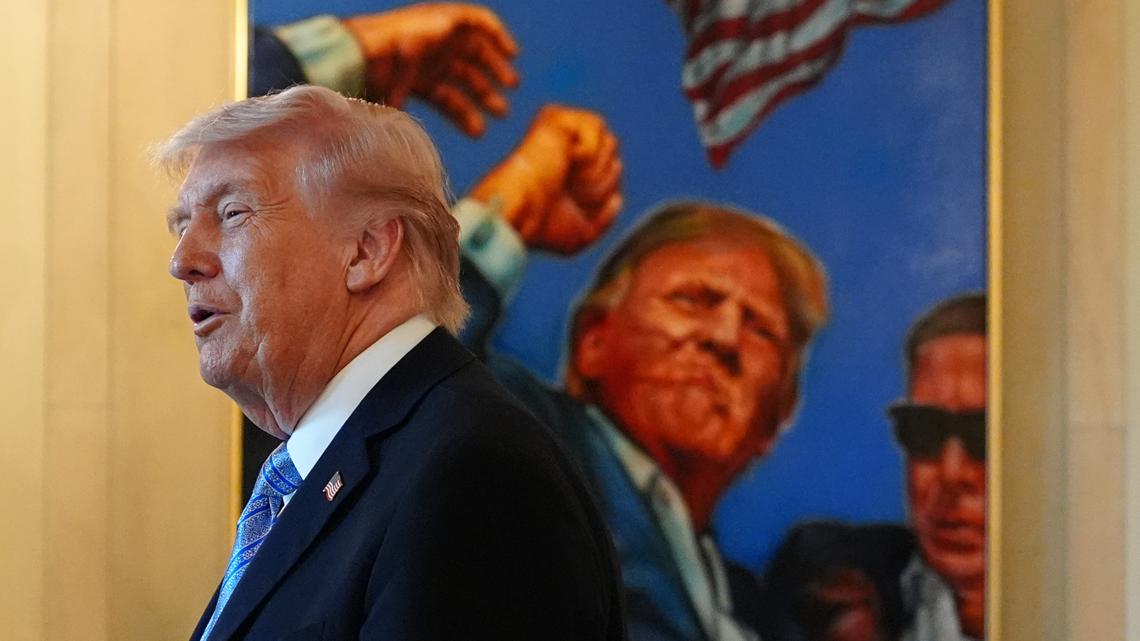
Tuesday's elections in Indiana, Ohio and Michigan will test Donald Trump's influence over the Republican Party and could shift control in key state and federal races. In Indiana, Trump-backed challengers are targeting seven GOP state senators; in Ohio, former Sen. Sherrod Brown and Republican Jon Husted are positioned for a high-stakes U.S. Senate special election, while Vivek Ramaswamy leads the Ohio governor primary. The Michigan special Senate election could decide whether Democrats secure a firm majority or the chamber remains tied 19-19.
The market implication is not the election itself, but the signal it sends about intra-party discipline. A stronger-than-expected showing for Trump-backed challengers would increase the probability of more primary pressure on incumbents in both chambers, which raises the odds of legislative volatility around spending, taxes, and sector-specific regulation into the next 6-12 months. That tends to compress the value of political optionality for industries that rely on bipartisan negotiated outcomes, especially healthcare, utilities, and defense procurement. The more interesting second-order effect is on state-level governance rather than federal headline risk. A one-seat shift in a battleground state legislature can alter redistricting, election administration, and budget negotiation power for years, which matters for municipal issuers, insurers, and regulated utilities with local franchise exposure. The special-election pattern also matters because it can distort polling models: if Democrats continue to overperform in low-turnout contests, the consensus may be underestimating their midterm floor even if presidential-year dynamics remain unfavorable. Contrarian view: investors may be overpricing the idea that Trump-linked primary success directly translates into general-election strength. These contests are occurring in heavily partisan districts and low-salience environments, where endorsements can dominate; that is a poor proxy for swing-district performance in a higher-turnout midterm. The bigger tail risk is not a blue-wave sweep, but a fragmented Republican bench that emerges more ideologically rigid and less governable, increasing policy whipsaw risk without necessarily changing control of key chambers.
AI-powered research, real-time alerts, and portfolio analytics for institutional investors.
Request DemoOverall Sentiment
neutral
Sentiment Score
-0.05
