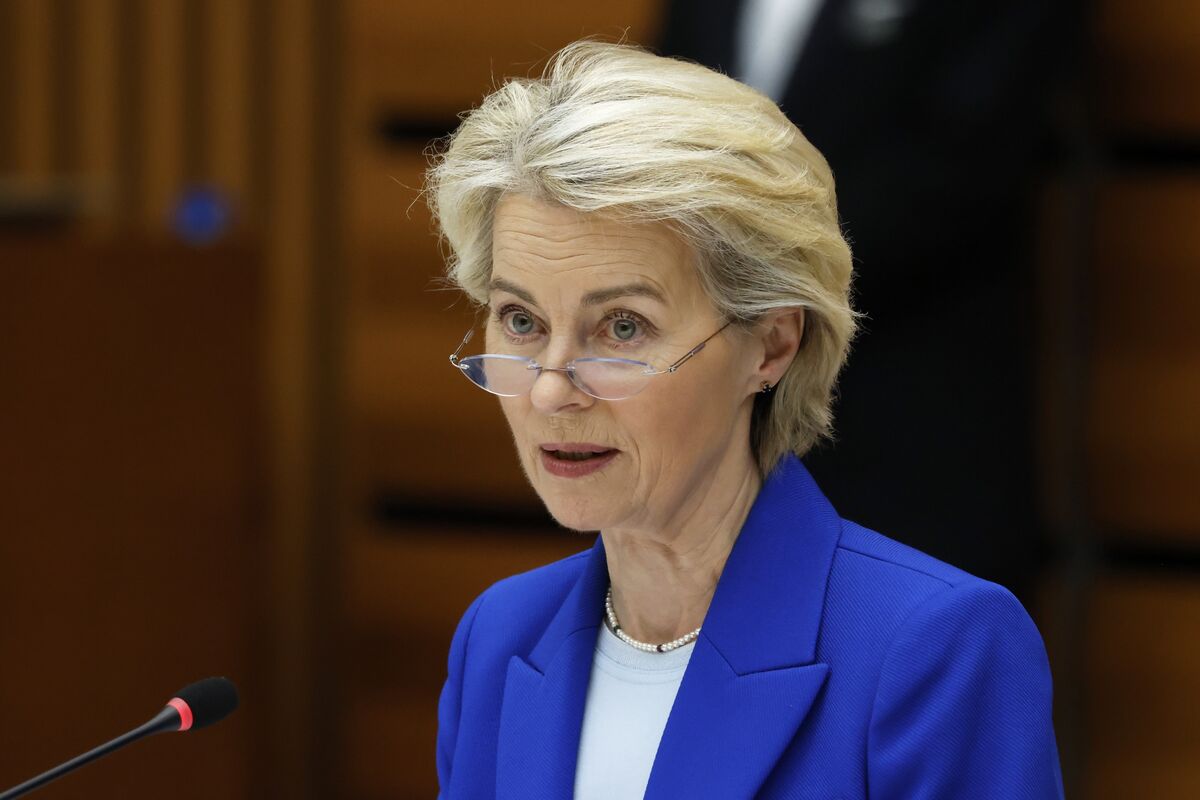
European Commission President Ursula von der Leyen defended the EU's trade deal with the US, emphasizing its critical role in ensuring stability and preventing a trade war that would be exploited by geopolitical rivals like Russia and China. Her commentary underscores the strategic imperative of maintaining robust transatlantic economic ties amidst current global tensions.
European Commission President Ursula von der Leyen's commentary reinforces the strategic importance of the EU-US trade relationship, framing it primarily as a tool for geopolitical stability rather than a purely economic arrangement. By characterizing the deal as "strong, if not perfect," she acknowledges potential shortcomings but emphasizes the overriding benefit of avoiding a transatlantic trade war, which she explicitly states would be advantageous to rivals like Russia and China. This defensive positioning, coupled with a moderately positive sentiment signal, suggests that while the current trade framework has its critics, the political will to maintain it is high, driven by a shared strategic imperative to present a united front. For investors, this signals a reduction in tail risk for assets exposed to EU-US trade, as leadership appears committed to preventing escalations that could disrupt markets and supply chains.
AI-powered research, real-time alerts, and portfolio analytics for institutional investors.
Request DemoOverall Sentiment
moderately positive
Sentiment Score
0.40
