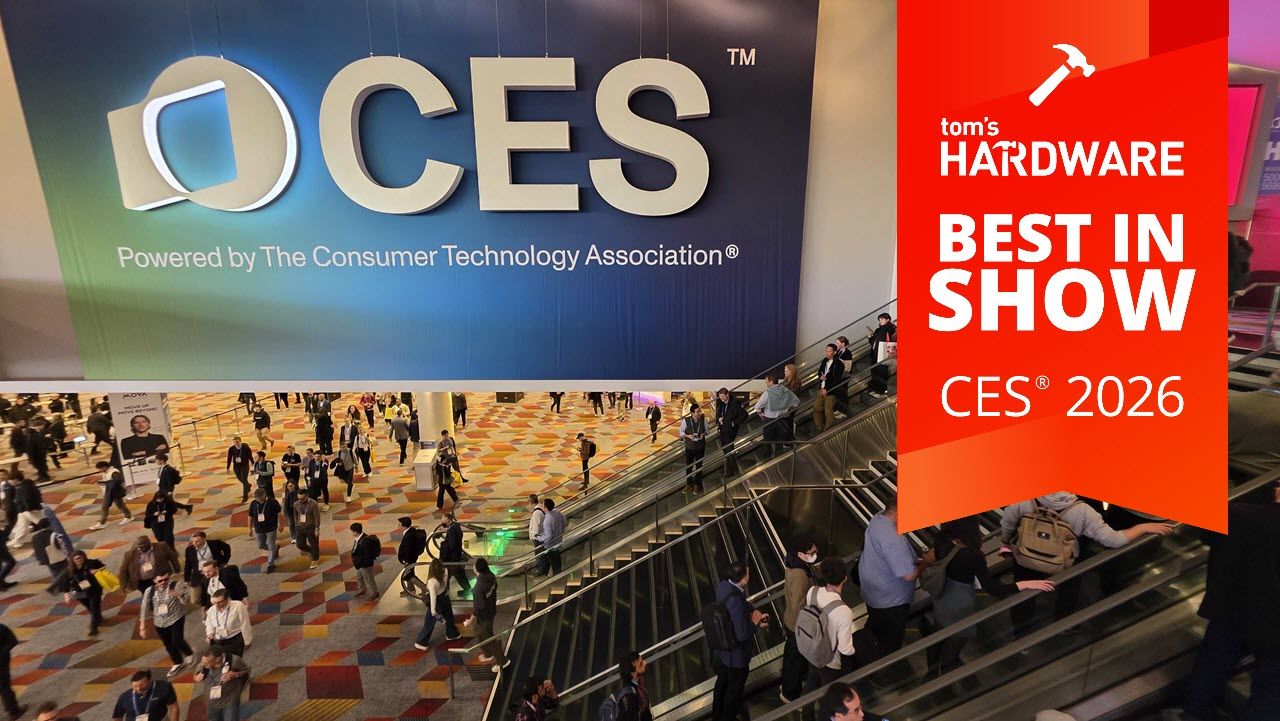
Intel’s unveiling of Panther Lake at CES 2026 — positioned as an AI-PC enablement with a much larger iGPU and notable performance claims — was the standout industry move amid an AI-dominated show. The event featured a raft of hardware product launches (MSI’s extreme RTX 5090 Lightning Z overclocking flagship, Dell’s redesigned XPS 14/16 using Core Ultra Series 3, Dell’s 52-inch UltraSharp 6K monitor at $2,899.99, Corsair’s Galleon 100 SD keyboard at $349.99, Audeze Maxwell 2 headsets at $329–$349), but exhibitors flagged a weak consumer GPU cadence and constrained RAM/storage supply that are expected to pressure pricing and limit near-term availability. For investors, the takeaway is selective upside for companies delivering differentiated AI/graphics and premium peripherals, tempered by supply-side constraints in memory and storage that could lift ASPs and cap unit growth.
Market structure: Intel (INTC) is the clear near-term winner—Panther Lake’s claim to combine AI enablement, efficiency, and improved iGPU reduces OEM demand for low-end discrete GPUs and gives laptop OEMs (DELL) pricing power to push premium SKUs. Memory and storage vendors face stronger pricing power as AI-driven demand tightens DRAM/SSD supply; OEM margins are at risk if contract prices rise >10–15% into H1–H2 2026. Nvidia (NVDA) and AMD lose some consumer GPU TAM but retain datacenter moats; expect bifurcation between consumer softness and enterprise strength.
Risk assessment: Tail risks include an Nvidia N1X/AMD Shock Wave launch (90–120 days) that restores gaming GPU momentum, a faster-than-expected DRAM supply ramp (memory prices down >20% in 60–90 days), or Intel yield problems that push shipments >2 quarters later. Immediate (days) CES sentiment moves are noisy; short-term (weeks–months) is driven by channel inventory and DRAM spot contracts; long-term (quarters–years) hinges on process execution and server AI demand elasticity. Hidden dependency: OEM pricing decisions and channel inventory levels can amplify or mute these effects quickly.
Trade implications: Favored direct longs are INTC and DELL (notional 2–3% and 1–2% weights) to capture Panther Lake adoption and XPS redesign benefit over 6–12 months; small defensive hedges on NVDA via 3-month puts (10% OTM) to protect against consumer GPU share loss. Consider a relative-value pair: long INTC vs short AMD (1:1 notional, 6–12 months) to express mobile iGPU share shift while limiting market beta. Stagger entries over 2–6 weeks to manage CES noise and memory pricing releases.
Contrarian angles: The market may be underestimating pent-up GPU demand—if NVDA delays are supply-driven, consumer GPU scarcity could mean outsized price resilience and upside once supply improves, making aggressive NVDA shorts risky. Conversely, Intel’s claims could be overpromised; prepare for 15%–25% downside in INTC if third-party benchmarks disappoint within 90 days of launch. Historical parallel: CPU architecture inflection points (Intel’s 10nm/14nm cycles) show execution, not announcement, drives multi-quarter NAV changes. Trade small, hedge, and watch DRAM price and Nvidia roadmap as primary catalysts.
AI-powered research, real-time alerts, and portfolio analytics for institutional investors.
Request DemoOverall Sentiment
mildly positive
Sentiment Score
0.22
Ticker Sentiment
