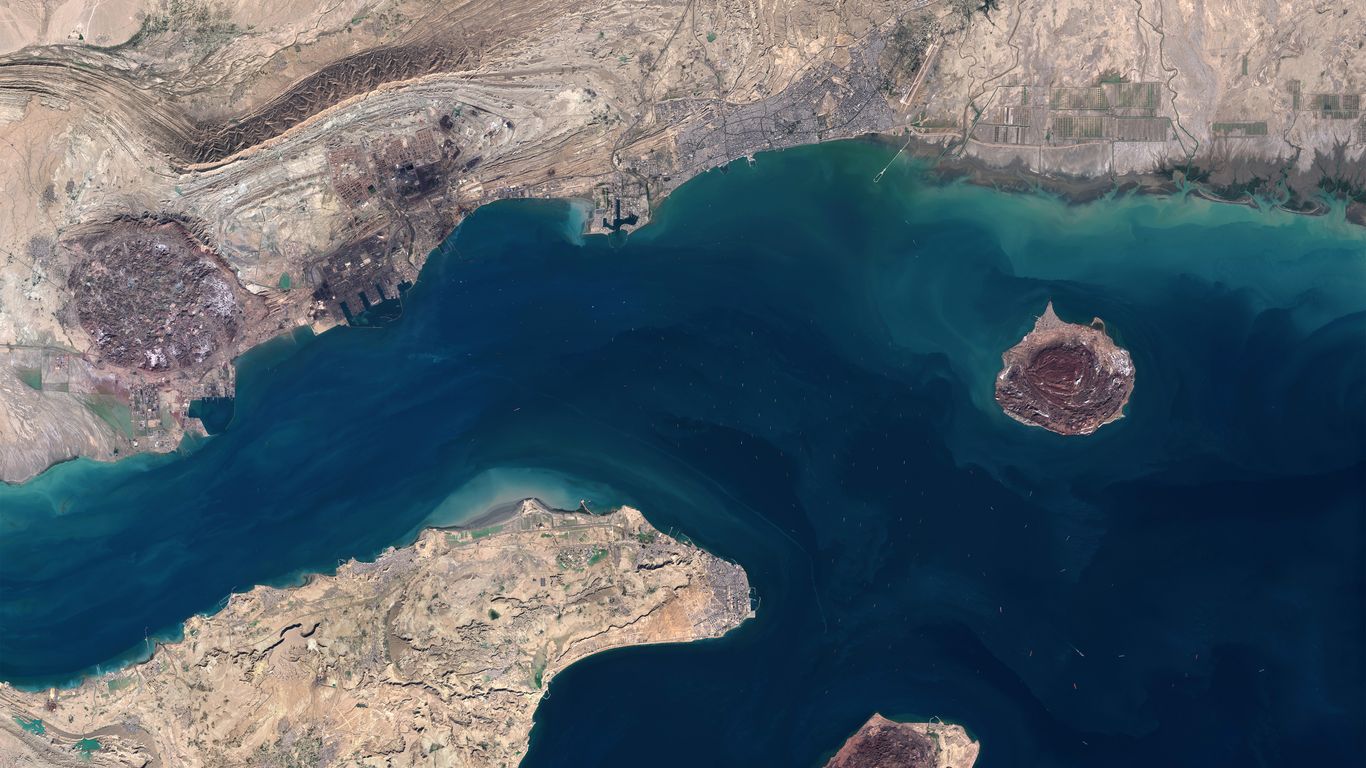
President Trump is weighing military escalation options targeting Persian Gulf islands — including seizing Kharg, Larak, Abu Musa and the Tunbs — to strike at Iran's ability to control the Strait of Hormuz. Kharg handles roughly 90% of Iran's crude oil exports and a direct hit or occupation could rapidly shut down most Iranian oil flows (many to China), while Larak and the other islands control mine-laying and harassment of vessels, creating a high risk of major escalation and significant global oil-market disruption.
The market is implicitly repricing concentrated chokepoint risk in the Gulf into energy and shipping premiums; the transmission mechanism is short-duration physical disruptions plus a sharp, transitory rise in war-risk insurance and longer voyage distances. A 10-20% hit to regional loadings over weeks would be sufficient to push Brent $8-18/bbl in 1-3 months, and that magnitude materially compresses refined product availability in Asia, amplifying refinery margins and temporary GRMs.
Second-order winners are shipping and floating storage economics — spot VLCC/AFRA earnings and time-charter rates can spike before physical crude reroutes are fully executed, creating a 4–8 week window where tanker equities and charter income capture disproportionate cash flows. Concurrently, buyers of substitute barrels (Russia/Venezuela) face logistical and counterparty friction that raises freight costs and slippage risk, pressuring shorter-term swaps and regional credit lines of commodity traders.
Defense and insurance are more structural beneficiaries: procurement cycles and war-risk premiums reprice over 3–12 months, not days, so mid-cap defense names and reinsurers with war-risk exposure should see earnings visibility improve even if headlines cool. The main downside path is rapid diplomatic de-escalation — a credible negotiated pause would deflate risk premia in 48–72 hours and leave stretched tactical longs exposed.
Contrarian lens: headlines currently overstate the probability of durable occupation versus targeted interdiction. Markets tend to overpay for a “worst-case occupation” outcome; therefore the highest IRR trades buy optionality on disruption rather than outright directional exposure to sustained elevated oil prices.
AI-powered research, real-time alerts, and portfolio analytics for institutional investors.
Request DemoOverall Sentiment
strongly negative
Sentiment Score
-0.75
