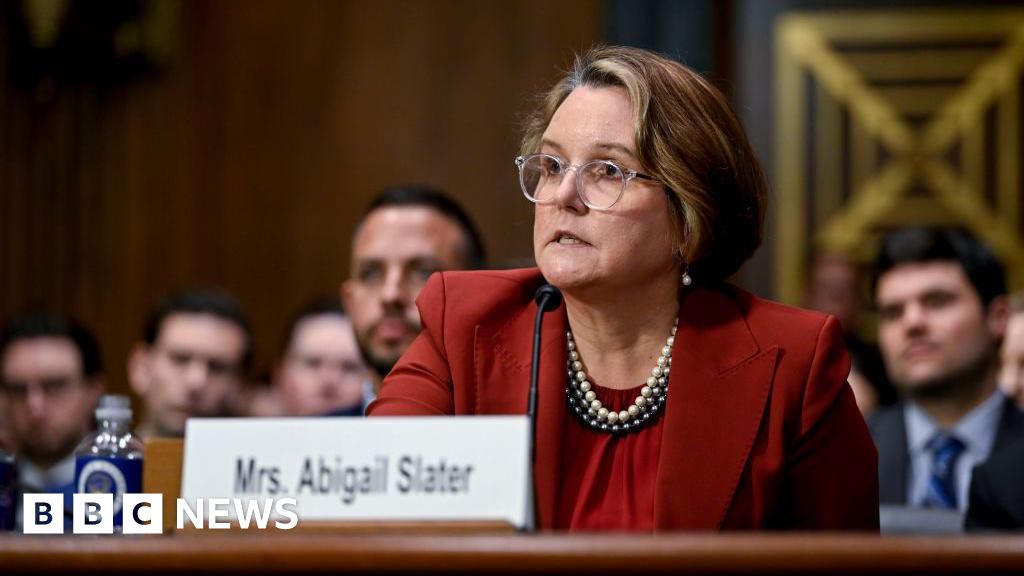
Gail Slater, head of the DOJ Antitrust Division appointed last year, resigned amid reported interventions by senior Trump administration officials that critics say have weakened antitrust enforcement. The personnel turmoil follows the DOJ's decision to drop litigation challenging HPE’s $14bn acquisition of Juniper and casts doubt on ongoing suits involving major firms including Live Nation, Visa and Apple, introducing regulatory uncertainty for M&A and companies facing antitrust scrutiny.
Market structure: DOJ leadership churn tilts the near-term regime toward weaker, less predictable federal antitrust enforcement, which directly benefits consolidation-minded acquirers (HPE-style integrators) and hurts firms exposed to litigation risk (Visa, Apple, Live Nation). Expect a modest increase in M&A activity and deal completion probability over 3–12 months, widening bid-ask spreads for targets and compressing takeover premia volatility; credit spreads for acquirers could tighten ~10–30bps if deal risk declines materially.
Risk assessment: Tail risks include a reversal driven by congressional oversight or a new enforcement appointee within 60–120 days that re‑energizes merger challenges, or state AGs/private plaintiffs filling the enforcement vacuum leading to sustained litigation costs. Immediate (days) consequence is higher equity volatility; short-term (weeks–months) is repricing of deal probabilities; long-term (quarters) is structural legal uncertainty that can lower long-duration multiples by 5–15% for litigation-sensitive names.
Trade implications: Tactical opportunities — favor HPE (beneficiary of Juniper outcome) and underweight Visa (V) and Apple (AAPL) where DOJ suits exist; consider 2–3% long HPE vs 1–2% short V/AAPL exposure, and buy 3‑month 10% OTM puts on V and AAPL for asymmetric downside protection. Options traders can buy 3‑month put spreads on V/AAPL to limit premium while targeting 8–20% downside; enter within 1–4 weeks and reprice on any DOJ appointment or court filing.
Contrarian angles: Consensus assumes permanent deregulation; missing is that weaker DOJ may shift enforcement to states and private suits, sustaining tail risk — a mistaken relaxation trade could quickly reverse. Historical parallels (leadership swings 2008–2018) show a 6–12 week policy window where stocks move, then fundamentals reassert; target exits at +15% or if DOJ signals reinstated enforcement within 90 days.
AI-powered research, real-time alerts, and portfolio analytics for institutional investors.
Request DemoOverall Sentiment
moderately negative
Sentiment Score
-0.50
Ticker Sentiment
