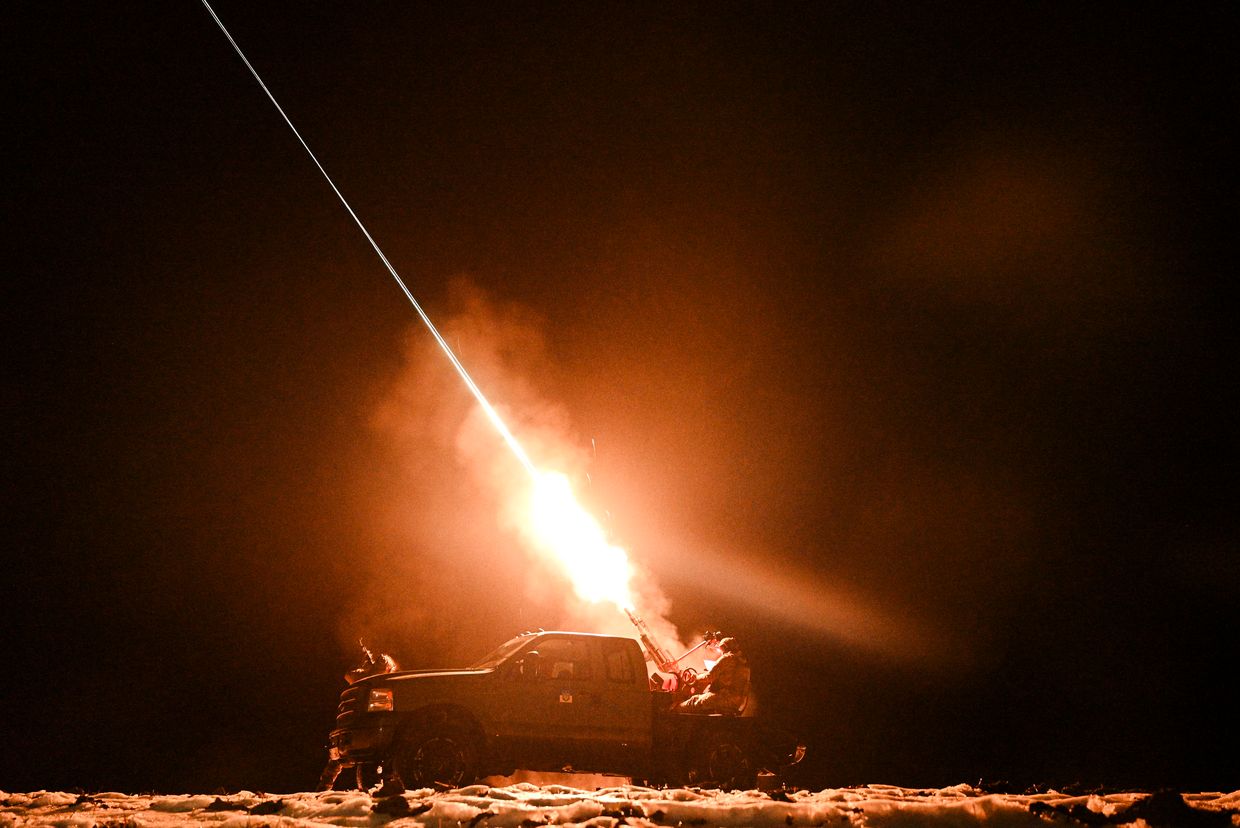
Russia resumed drone attacks on Kyiv overnight, with dozens of drones launched and debris striking a 16-storey residential building in the Obolon district; no casualties were reported. Damage was also reported in Kyiv Oblast, including a kindergarten and several homes in Fastiv. The attack came hours after a U.S.-brokered temporary ceasefire expired, and U.S. officials are reportedly trying again to broker a short ceasefire in exchange for sanctions relief.
The immediate market read is not about the tactical drone volley itself; it’s about the failure of the ceasefire channel and the likely re-pricing of tail risk around any negotiated pause. Once both sides learn that “temporary calm” can be used as cover for repositioning, the probability distribution shifts toward intermittent escalation rather than a clean de-escalation path, which tends to keep European defense demand sticky and sanctions more durable than headlines imply. Second-order, this is negative for any asset class that needs lower Eastern Europe risk premia to work: regional currencies, freight/insurance tied to Black Sea routes, and European industrials with energy-sensitive margins. The bigger hidden effect is on sanctions enforcement: if Washington is seen as trading relief for compliance, then compliance becomes contingent and reversible, which reduces the credibility of future export-control regimes and supports a higher long-run risk premium on Russia-linked commodities and transit routes. The contrarian point is that repeated limited attacks can perversely lower volatility if they remain below a threshold that triggers broader infrastructure disruption or Western retaliation. That means the near-term trade is not “war gets worse” in a linear sense; it is “policy uncertainty stays elevated,” which is actually more supportive for defense procurement than for broad commodity spikes. The key catalyst window is days to weeks: if another negotiation round produces only a partial pause, the market will likely continue to bid stocks tied to munitions, air defense, and ISR while ignoring headline ceasefire noise. What would reverse this? A credible, externally verified ceasefire with enforcement mechanisms and no sanctions-relief linkage. Short of that, the base case remains a slow burn that favors suppliers of air defense, counter-drone, and battlefield electronics over classic energy and broad macro hedges.
AI-powered research, real-time alerts, and portfolio analytics for institutional investors.
Request DemoOverall Sentiment
strongly negative
Sentiment Score
-0.60
