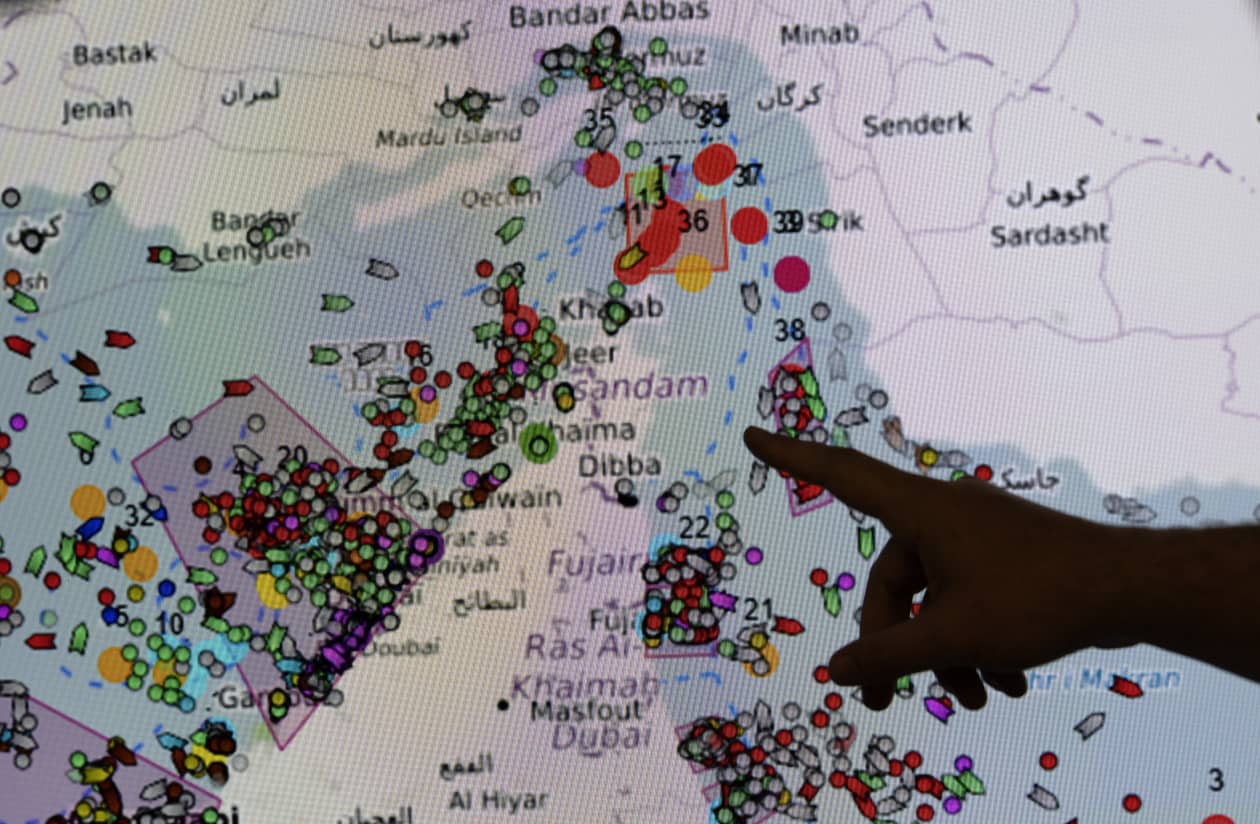
Oil prices climbed on Monday as markets reacted to disputed reports that Iranian missiles struck a U.S. Navy ship near the Strait of Hormuz. The incident, if confirmed, raises the risk of disruption in a critical chokepoint for global crude flows and supports a risk-off move in energy markets. The article does not provide a price magnitude, but the geopolitical headline has market-wide implications for oil and shipping.
The market is reacting to a headline risk premium, but the more durable move is in optionality: a credible Strait of Hormuz disruption path forces energy end-users, shippers, and refiners to reprice tail risk before any physical barrels are actually lost. The first-order winner is crude exposure, but the more interesting second-order winners are U.S. logistics, defense, and offshore assets that benefit from higher security spending and rerouting rather than just spot oil strength. If the story de-escalates quickly, the move can retrace fast; if it lingers, prompt-time spreads and implied vol in oil-linked options likely outperform outright futures.
The biggest losers are not just airlines and transport, but any industrial with low inventory and weak pass-through power — especially chemicals, trucking, and discretionary retail where fuel cost shocks hit margins with a lag of 1-2 quarters. Refiners are a mixed bag: integrated players may gain on wider cracks, but those exposed to sour Middle East supply or higher freight insurance could see margins squeezed if feedstock logistics degrade. The market may underappreciate that even a false or disputed incident can tighten insurance rates and raise tanker spot pricing for weeks, which can matter more than the initial crude tick.
From a trading standpoint, this is a convexity event: cheap upside in near-dated oil calls or call spreads makes sense if spot vol remains subdued relative to geopolitical headline risk. The best expression may be a relative long energy / short transport pair rather than a naked crude long, because the pass-through into fuel costs and freight rates is more reliable than forecasting the exact oil level. The contrarian view is that the headline premium may already be close to maximum unless there is confirmed damage or a repeat incident; absent escalation, crude can mean-revert quickly while shipping and defense-related risk premia persist longer.
AI-powered research, real-time alerts, and portfolio analytics for institutional investors.
Request DemoOverall Sentiment
mildly negative
Sentiment Score
-0.35
