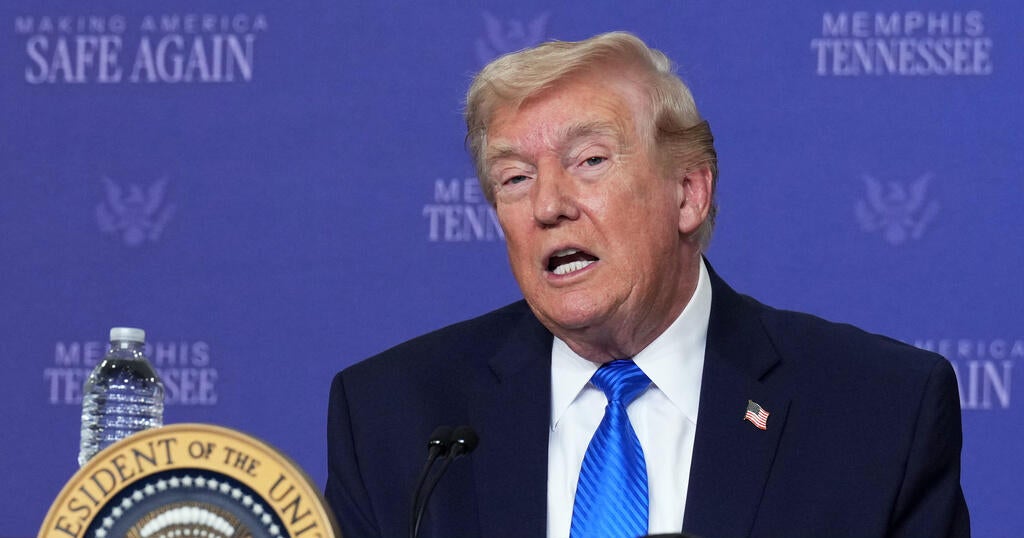
Brent crude plunged about 10% and the S&P 500 rallied ~1.15% after President Trump said the U.S. and Iran held 'very good and productive conversations' with roughly 15 points of agreement and Iran confirmed it received U.S. points via mediators. The U.S. paused strikes on Iranian energy infrastructure for five days while talks continue, but the contours of any deal remain unclear (nuclear commitments, Israel's role, past disputes over enrichment). This substantially de‑escalates immediate geopolitical risk and moved markets, but significant uncertainty and execution risk remain.
A credible backchannel that meaningfully reduces conflict risk removes a sizeable geopolitical risk premium from oil and commodity markets, which explains the rapid ~10% repricing in Brent. Expect an initial wave of risk-on flows into cyclicals and carry trades over days-to-weeks as oil-IV and commodity hedging demand collapses; oil volatility (WTI/Brent 1M implied) can compress 20-40% in the immediate re-pricing window.
Over 3–9 months the second-order supply effect matters more than headline rhetoric: even with sanctions easing, Iranian barrels will face bottlenecks (shipping insurance, restoration of export logistics, marketing to Asian refiners), so realistic added supply is closer to 0.5–1.2 mb/d phased over several months, not an instantaneous surge. That favors assets that benefit from lower crude (airlines, leisure, refiners with long product exposure) while capping upside for majors and E&P names that priced in sustained $80+/bbl.
Downside risk is binary and concentrated in execution: the five-day pause and reliance on intermediaries make reversal probability non-trivial — a collapsed deal or Israeli escalations could snap back a large portion of the move in 48–72 hours, creating sharp contango-to-backwardation swings and re-spiking oil-IV. Defensive exposures (defense contractors, insurers, tankers) are susceptible to outsized revisions in order flow and contract repricing; their reactions will be faster and larger percentage-wise than earnings changes justify.
Consensus is treating the move as de-risked rather than fragile; markets have likely overshot near-term demand winners and underpriced the time lag for Iranian supply normalization. That creates a tactical window to fade momentum trades that extrapolate peace into immediate, permanent supply increases while positioning convex optionality around the binary execution risk over the next week.
AI-powered research, real-time alerts, and portfolio analytics for institutional investors.
Request DemoOverall Sentiment
mildly positive
Sentiment Score
0.25
