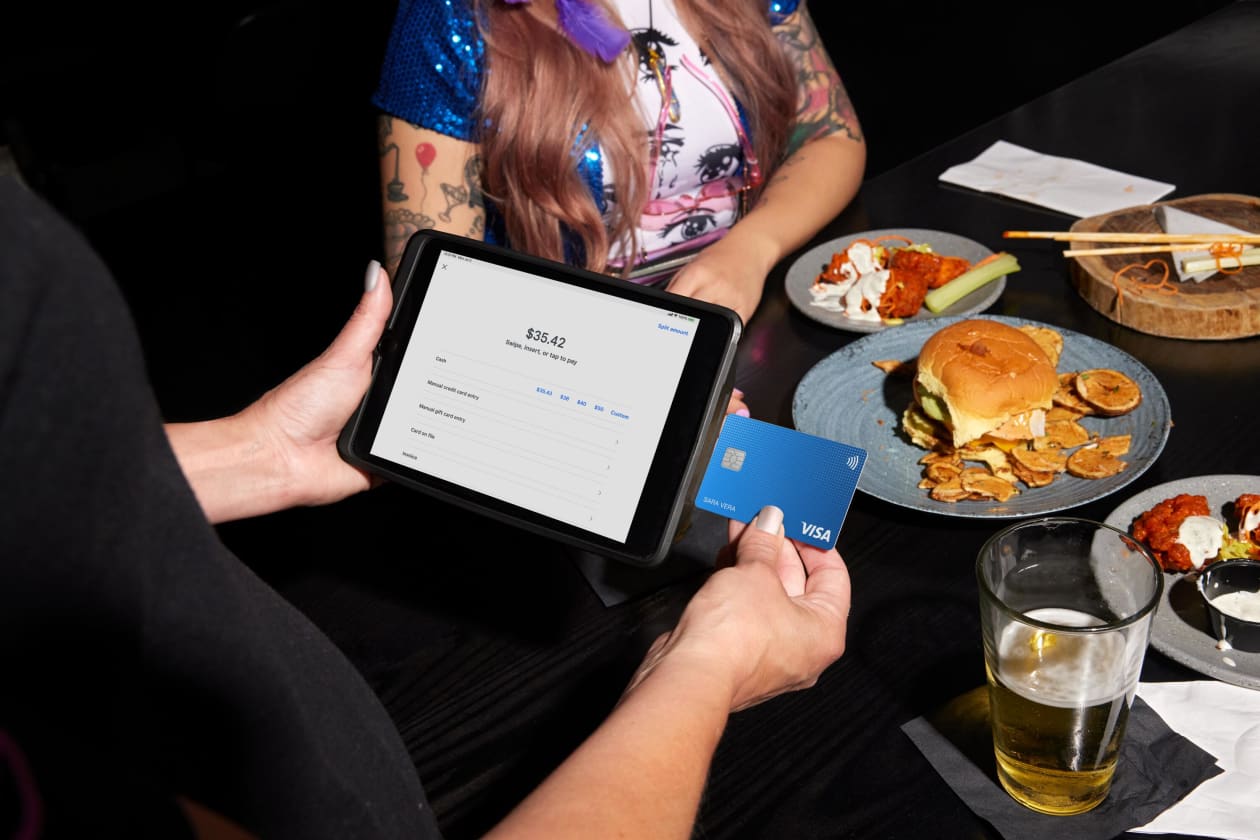
Block, parent of Square and Cash App, used its first investor day since 2022 to try to reset investor sentiment after pronounced underperformance (shares down 12% over three years and 71% over five years versus large S&P gains). Management laid out bullish 2028 targets—adjusted EPS of $5.50 versus FactSet $4.76, roughly $15.8 billion in gross profit (mid‑teens CAGR) and over $4 billion in adjusted cash flow (about 25% of gross profit)—and 2026 targets roughly in line with consensus, while blaming transitory hardware investments and a partner processing cost issue that should normalize by Q2 2026 and highlighting cost efficiencies, AI product work and tighter integration across Square, Cash App and Afterpay. The company also boosted its buyback by $5 billion and could gain from rival dislocation (eg Clover/Fiserv), but analysts caution fintech valuations remain challenged and Block faces a high bar to convert long‑range targets into renewed market confidence.
Block has underperformed materially versus the S&P — shares down 12% over three years and 71% over five years while the S&P 500 rose 67% and 86%, respectively — and used its first investor day since 2022 to present long-range financial targets intended to reset sentiment. Management modeled 2028 adjusted EPS of $5.50 versus FactSet $4.76, roughly $15.8 billion in gross profit implying mid-teens CAGR to 2028, and more than $4 billion in adjusted cash flow (~25% of gross profit within three years).
Near-term guidance is closer to consensus: Block projects 2026 gross profit of $11.98 billion (FactSet $11.78 billion) and adjusted EPS of $3.20 (FactSet $3.24). Management highlighted cost efficiencies, AI-driven product work, greater interconnection of Square/Cash App/Afterpay, a $5 billion incremental buyback (with $1.1 billion remaining under the prior authorization), and said hardware investments and a partner processing-cost headwind should normalize by Q2 2026; Square’s volume growth outpacing gross-profit growth remains an execution watch.
Analysts note both opportunity and high execution risk: William Blair sees share gains from rival dislocation (Clover/Fiserv) while Seaport is critical of multi-year performance. Sentiment metrics are mildly positive but cautious and market-impact is modest (0.35); converting aspirational 2028 targets into sustained investor confidence depends on the operational cadence over the next four quarters.
AI-powered research, real-time alerts, and portfolio analytics for institutional investors.
Request DemoOverall Sentiment
mildly positive
Sentiment Score
0.30
Ticker Sentiment
