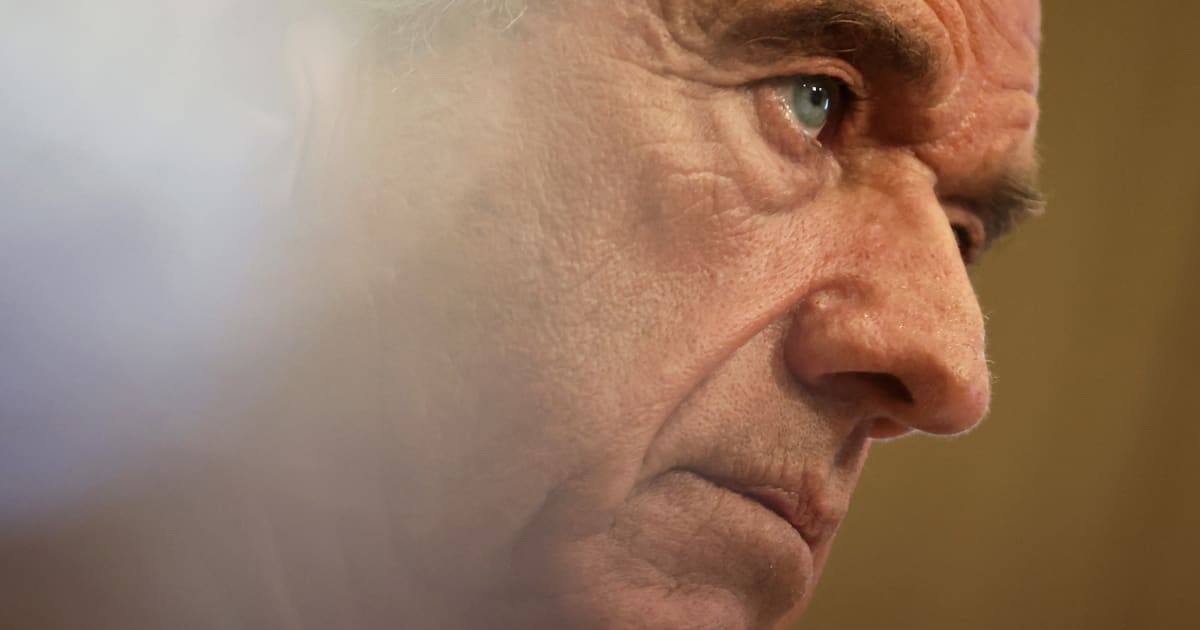
HHS, under the leadership of Robert F. Kennedy Jr., has been criticized for backing an HHS-funded study in Guinea-Bissau that would withhold hepatitis B vaccine from some infants, drawing ethics comparisons to the Tuskegee experiment and prompting public rebuke from health experts and lawmakers. The Africa CDC said the study was canceled pending resolution of ethical concerns, while an HHS spokesperson disputed that characterization. The controversy creates reputational and policy risk for U.S. health agencies, may complicate global vaccination efforts, and raises political oversight issues ahead of broader scrutiny of agency governance.
Market structure: This controversy primarily redistributes reputational and funding risk away from small, vaccine‑focused developers and research outfits toward large diversified pharmas and insurers. Expect a 3–12 month re‑pricing: small-cap vaccine names (NVAX, some max biotech microcaps) could see 10–30% downside on funded‑trial cancellations or grant freezes, while PFE/MRK/JNJ trade as safe, cash‑generative refuges (outperformance of ~3–7% vs. sector). Donor/NGO funding volatility tightens demand for CRO services, pressuring CRO margins if trials pause.
Risk assessment: Tail risks include congressional funding cuts to HHS or frozen global immunization programs that could remove $100M+ in program spend—low probability but >$1B systemic impact if replicated across donors. Immediate (days) risk: media/legal headlines driving sentiment and pairwise equity flows; short term (weeks–months): trial cancellations and grant reviews; long term (quarters–years): structural trust erosion reducing vaccination uptake and recurring revenue for certain product lines. Hidden dependency: funding from foundations/Gavi and Africa CDC decisions can swing outcomes independently of U.S. politics.
Trade implications: Direct plays: favor 2–4% long positions in PFE/MRK/JNJ for defensive cash yield over next 3–12 months; establish 1–2% short or buy puts on NVAX and single‑asset vaccine microcaps with >25% revenue dependency on grant-funded trials. Pair trade: long PFE (+2%) / short NVAX (−1.5%) to capture relative safety; use 3‑6 month put spreads to cap cost if volatility spikes.
Contrarian angles: The market may overreact to reputational headlines—big pharm fundamentals unchanged; buying high‑quality pharma on 2–5% drawdowns is contrarian. Conversely, if Africa CDC reopens programs after ethical fixes, small vaccine names could rebound 15–40% in 3–9 months—consider buying cheap 6–9 month calls as asymmetric risk. Monitor three catalysts: congressional actions (30–90 days), Africa CDC statements (days–weeks), and major donor funding decisions (60–180 days).
AI-powered research, real-time alerts, and portfolio analytics for institutional investors.
Request DemoOverall Sentiment
moderately negative
Sentiment Score
-0.40
