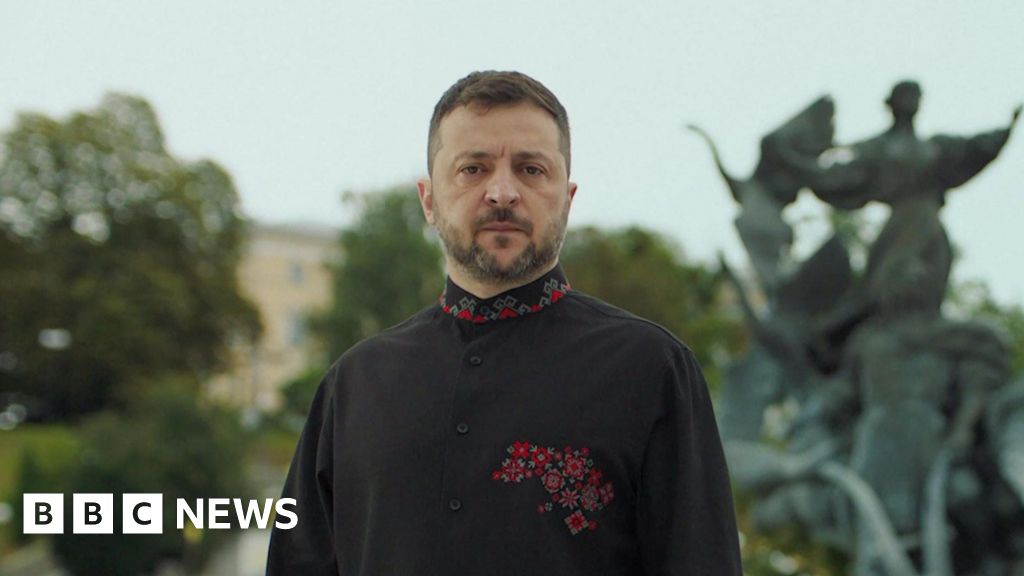
On Ukraine's Independence Day, President Zelensky affirmed the nation's resolve to continue fighting for a "just peace" amid reports of Ukrainian drone attacks on Russian energy facilities, including a nuclear plant, which Russia stated caused minor damage. Western allies simultaneously reiterated robust support, with Canada pledging over C$1 billion in military aid, Norway committing $693 million for air defense, and Sweden agreeing to joint defense production. This sustained backing contrasts with stalled diplomatic efforts, as US President Trump considers "massive sanctions or tariffs" on Russia due to the lack of a peace deal, signaling potential for intensified economic pressure and prolonged conflict.
The geopolitical landscape surrounding the war in Ukraine is solidifying towards a prolonged conflict, marked by Ukraine's unwavering resolve and a significant influx of Western military support. Substantial new aid packages, including over C$1 billion from Canada for drones and armored vehicles, a $693 million commitment from Norway for air defense systems, and a joint defense production agreement with Sweden, materially enhance Ukraine's defense capabilities for the medium term. This military reinforcement is further cemented by the UK's decision to extend its troop training program until at least 2026. Conversely, diplomatic channels are deteriorating, with US President Trump expressing frustration over the lack of a peace deal and actively considering imposing "massive sanctions or tariffs" on Russia. This introduces a significant risk of economic escalation. Meanwhile, tactical military operations continue to pose risks to critical infrastructure, as evidenced by the reported Ukrainian drone attack on a Russian nuclear power plant, which, while causing minimal damage, highlights the persistent threat to regional energy stability.
AI-powered research, real-time alerts, and portfolio analytics for institutional investors.
Overall Sentiment
moderately positive
Sentiment Score
0.40
