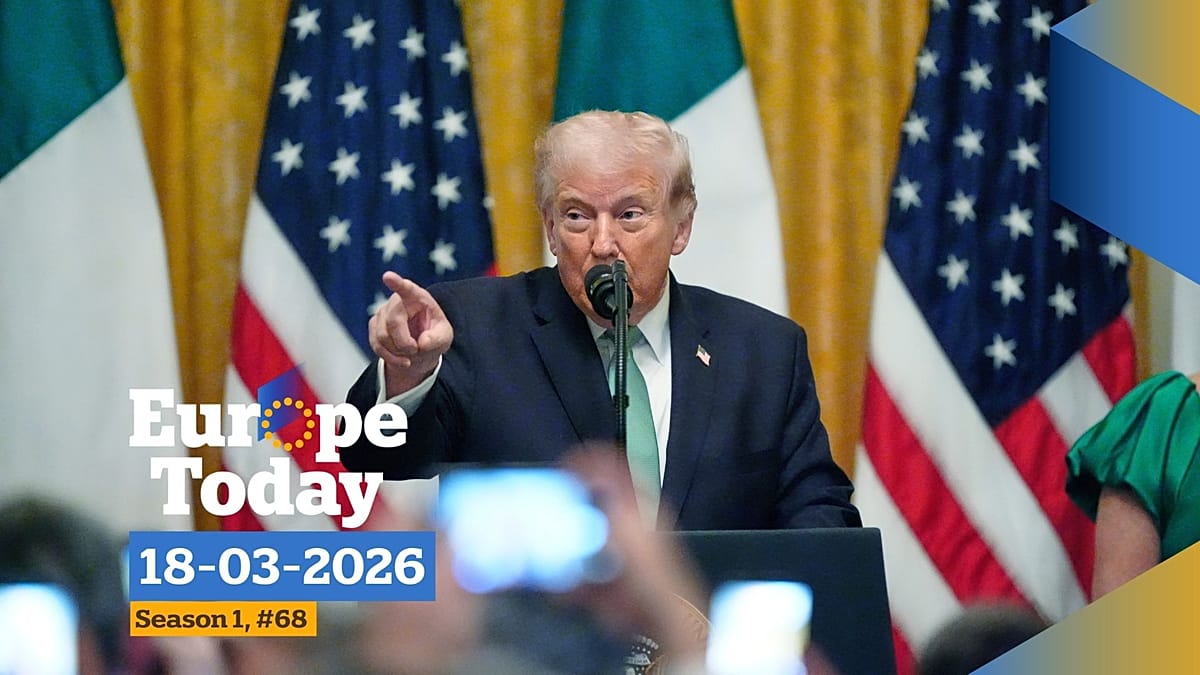
€90 billion: Ukraine accepted a fact‑finding mission to assess Druzhba pipeline damage in a bid to lift Hungary's veto on the EU’s €90bn loan for Ukraine. US President Donald Trump publicly criticized NATO allies for not helping to reopen the Strait of Hormuz, while the EU naval mission Aspides has refused to expand its mandate. Euronews is running coverage and interviews (including the UN Under‑Secretary‑General for Humanitarian Affairs), highlighting ongoing geopolitical and energy risks that warrant monitoring for potential policy or market responses.
The interplay between a narrowly scoped EU naval posture and parallel diplomatic moves around Central European energy infrastructure is creating a bifurcated risk premium: defense and private security providers should price in rising short‑term demand for capabilities while regional energy markets retain a structural premium until physical flow guarantees are re-established. A fact‑finding mission that materially reduces the probability of a Hungary veto being sustained would act as a discrete catalyst to compress regional spreads within 4–8 weeks, releasing a chunk of the political risk premium priced into Central European gas and refined product margins. Second‑order winners are not the headline navies but contractors, insurance underwriters, and specialist maritime security firms who capture outsized margins from ad‑hoc tasking and war‑risk rate resets; these revenue streams are lumpy and concentrated over months, not years. Conversely, refiners and utilities in landlocked Central Europe carry the residual tail risk — a delayed procedural finding keeps import substitution and storage expenditure elevated, pressuring near‑term earnings and capex plans. Timeframes matter: expect headline‑driven volatility in the next 2–6 weeks around mission acceptance milestones and parallel political votes on EU funding; structural re‑pricing of energy security and defense budgets will play out over 3–12 months as contracts and insurance renewals roll. The market’s consensus underweights the feed‑through from political process timing into contract award cadence — a 6–9 month runway for campaignable defense orders and higher insurance renewals is the highest probability scenario, not an immediate one‑off spike.
AI-powered research, real-time alerts, and portfolio analytics for institutional investors.
Overall Sentiment
neutral
Sentiment Score
0.00
