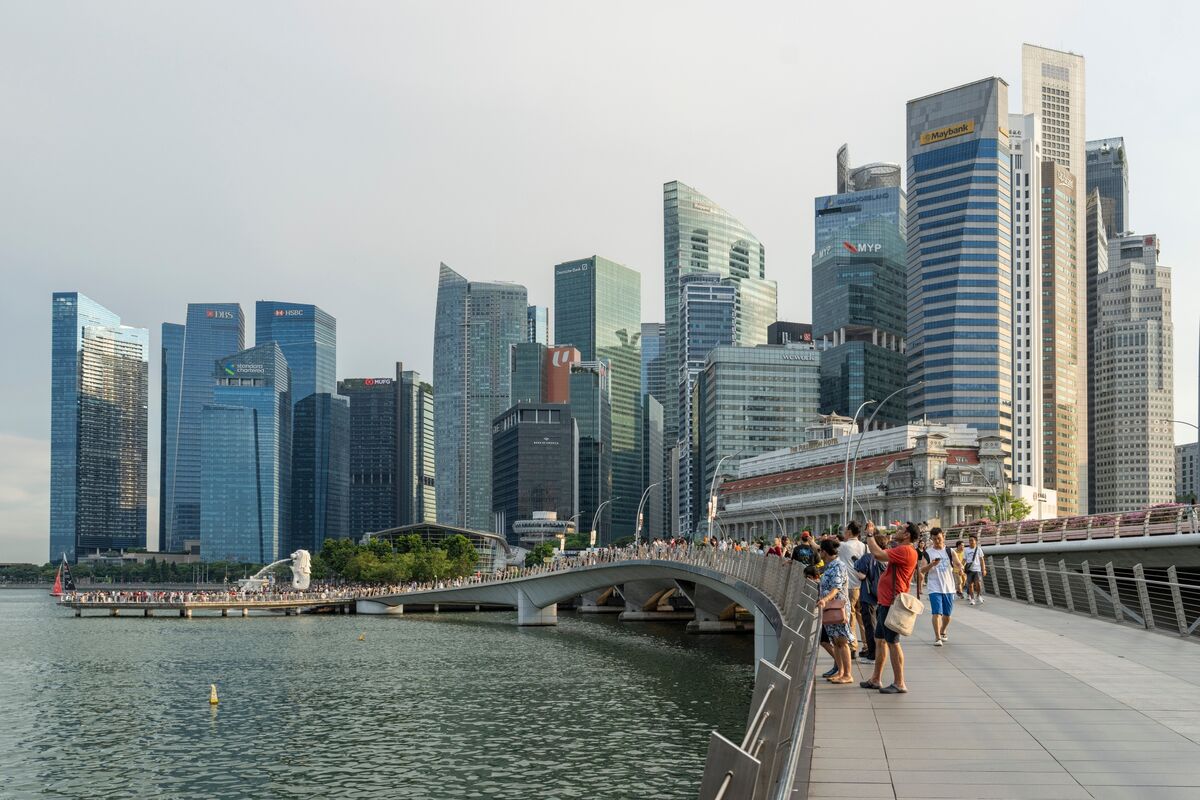
The Monetary Authority of Singapore (MAS) projects a deceleration in the nation's financial sector growth in the coming years, citing global trade and geopolitical tensions as key headwinds. While the sector expanded robustly by 6.8% in 2024, more than doubling the prior year's growth, MAS Managing Director Chia Der Jiun indicated this pace is unsustainable, signaling a more challenging outlook for the trade-dependent country's financial services industry.
The Monetary Authority of Singapore (MAS) has issued a cautious forward guidance on the nation's financial sector, projecting a significant deceleration from its recent robust performance. While the sector achieved an impressive 6.8% expansion in 2024—more than doubling the 3.1% growth of the prior year—the central bank's managing director, Chia Der Jiun, has explicitly stated this pace is unsustainable. The forecasted slowdown is attributed directly to external headwinds, specifically the confluence of global trade frictions and heightened geopolitical tensions, which pose a considerable risk to Singapore's trade-dependent economy. This official statement from the MAS serves as a formal adjustment of expectations, signaling that despite strong trailing data, the outlook for the financial services industry is now clouded by macroeconomic and geopolitical uncertainty.
AI-powered research, real-time alerts, and portfolio analytics for institutional investors.
Request DemoOverall Sentiment
moderately negative
Sentiment Score
-0.40
