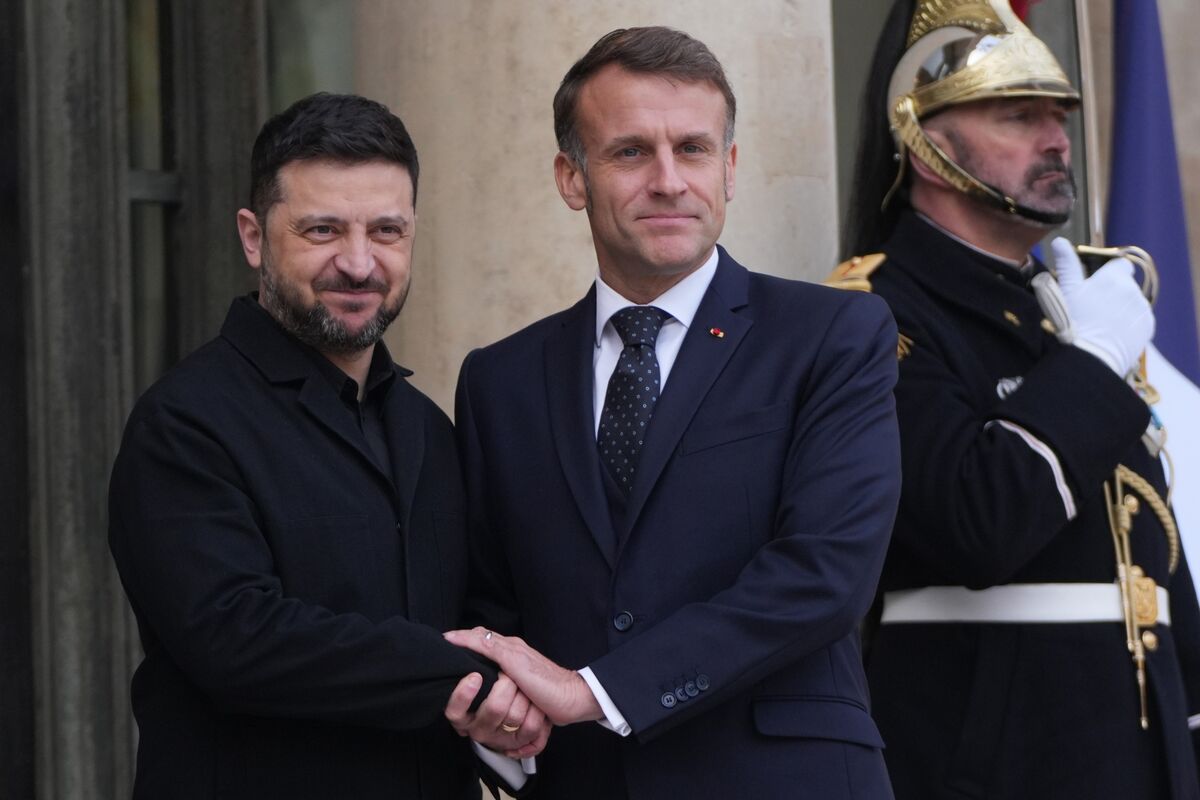
Ukrainian President Volodymyr Zelenskiy arrived in Paris for talks with French President Emmanuel Macron at the start of a pivotal week that also sees U.S. special envoy Steve Witkoff heading to Moscow and EU defence ministers gathering in Brussels. EU foreign policy chief Kaja Kallas's comment that Europe feels 'on the outside looking in' regarding U.S. support highlights potential strains in Western coordination; investors should monitor these diplomatic engagements for shifts in military aid, sanctions dynamics and geopolitical risk premia that could affect defense exposure and Russia-related assets.
Market structure: Geo-political jockeying (Zelenskiy-Macron, envoy to Moscow) increases idiosyncratic demand for defense and security goods while raising risk premia for Europe-exposed cyclicals. Direct winners are prime defense contractors (US: LMT, NOC, RTX, GD, LHX; UK: BAES.L) where order backlogs and pricing power can re-rate by ~3–8% over 6–12 months; losers are energy/transport firms with Russia exposure and European utilities/airlines facing gas/oil volatility and higher financing spreads. Cross-asset signals: expect safe-haven bids into US Treasuries/Bunds (yields down 10–30bps in flight-to-safety moves), EUR pressure vs USD in short-term (0.5–2% moves), and higher oil/gas volatility (20–40% vol repricing).
Risk assessment: Tail risks include rapid escalation that pushes Brent +$20 in days and triggers secondary sanctions on multinationals (low prob but high impact) or a sudden diplomatic thaw that derisks markets. Time horizons matter: immediate (days) = FX/energy vol spikes; short-term (weeks–months) = procurement announcements, EU defense funding decisions; long-term (quarters–years) = EU strategic autonomy shifting procurement from US to EU suppliers. Hidden dependencies: munitions & specialized semiconductor supply chains and export-control lists could bottleneck deliveries, amplifying price moves. Key catalysts: this week’s EU defense minister meeting and any Moscow engagement outcomes — both can rapidly reverse market direction.
Trade implications: Tactical plays favor defense long exposure via ETFs and select primes plus commodity volatility hedges. Establish modest long positions (1–3% portfolio) in ITA and directly in LMT/NOC with 6–12 month targets of +10–20% and hard stop-losses of 7–10%; buy 3-month Brent call spreads (e.g., $80/$95) sized to 0.5–1% notional to capture upside if escalation occurs; hedge European credit exposure with 3-month buying of protection (iTraxx/XOVER or single-name CDS) or long EUR vs USD options only if EUR breaks 1.02 support.
Contrarian angles: Consensus assumes permanent US unreliability and one-way upside for defense — that may be overstated: rapprochement or rapid shipment of munitions could cause a 10–25% correction in defense names as order risk de-rates. Historical parallel: 2014–15 NATO rearmament narratives created multi-month spikes then mean reversion; unintended consequences include accelerated China/Eastern supplier substitution benefiting EM industrials. Use options to express asymmetric views rather than concentrated equity bets to manage event risk and time uncertainty.
AI-powered research, real-time alerts, and portfolio analytics for institutional investors.
Request DemoOverall Sentiment
neutral
Sentiment Score
-0.05
