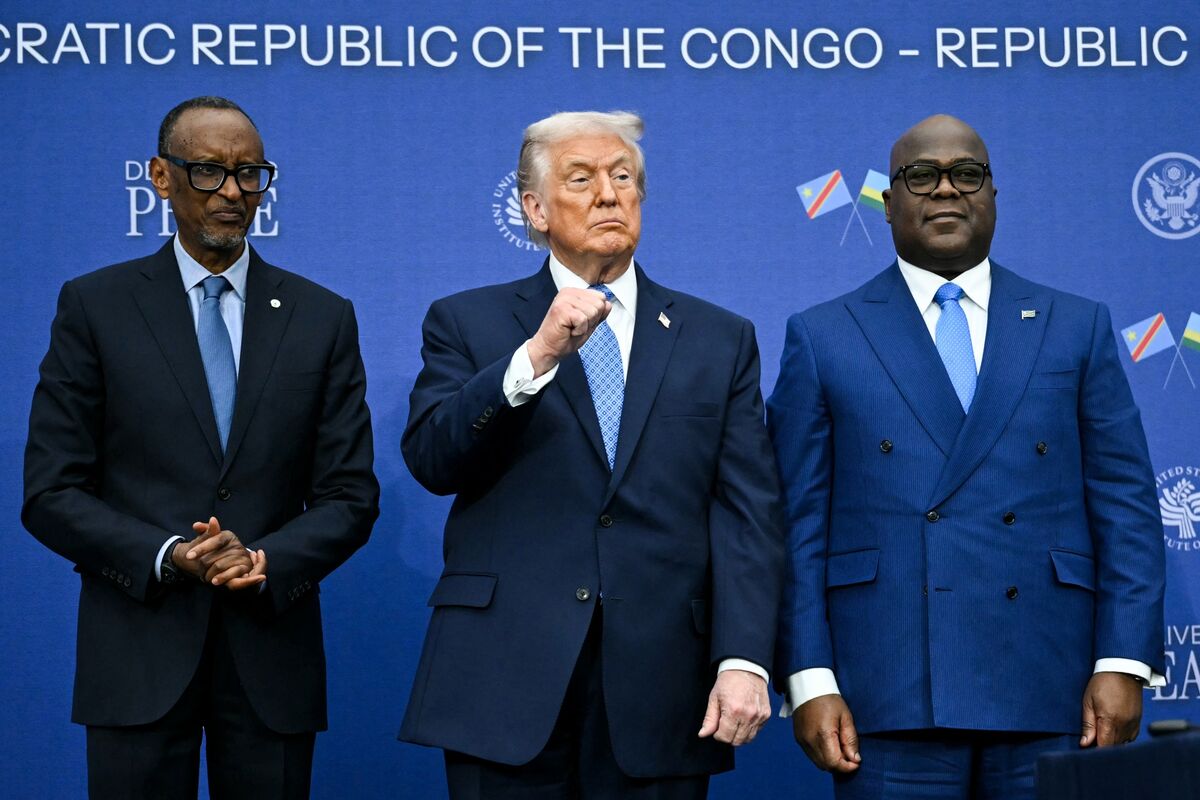
President Donald Trump hosted the presidents of Rwanda and the Democratic Republic of Congo in Washington to sign a peace accord and related economic agreements with the United States; he framed the deal as a shift from decades of conflict toward cooperation. The pact’s practical effects are unclear and the long-running 30-year tensions persist, leaving near-term implications for regional stability and trade limited and uncertain for investors.
Market structure: A credible peace/US economic framework between DRC and Rwanda primarily shifts political risk premia for base-metals supply chains (copper, cobalt, tin). If implemented, marginal supply could increase and reduce risk premia on DRC-focused assets by 20–40% over 12–24 months as investors reprice permit/security risk; short-term market impact is likely muted (0–3 months) absent verification data.
Risk assessment: Tail risks include rapid collapse of the agreement, localized militia flare-ups, or domestic political backlash in either capital — each could cause >30% drawdowns in DRC-exposed equities and spike sovereign CDS by 200–500 bps within days. Key horizons: immediate (days) for knee-jerk FX/commodity moves, 30–90 days for implementation signals, and 6–24 months for capital projects and export recovery; hidden dependencies include Chinese offtake/concessions and US aid conditionality.
Trade implications: Tactical trades favor selective long exposure to DRC copper/cobalt producers and long copper via ETFs/futures, funded by hedged shorts in diversified miners with limited African upside to isolate re-rating. Options can be used to buy directional exposure with defined loss (6–12 month call spreads); initial sizes should be small (1–2% per idea) and scaled on 30–90 day verification events (export volumes, concession transfers).
Contrarian angles: Consensus assumes ‘peace = immediate supply relief’; that’s likely overstated — infrastructure and security restorations take 12–36 months, so near-term mispricings exist in equities but not necessarily in spot metals. Overdone: buying broad miners (RIO, FCX) for Africa upside; underdone: concentrated DRC developers (Ivanhoe/China Moly) and copper call spreads priced to low implied vols if security improves slowly.
AI-powered research, real-time alerts, and portfolio analytics for institutional investors.
Request DemoOverall Sentiment
neutral
Sentiment Score
0.05
