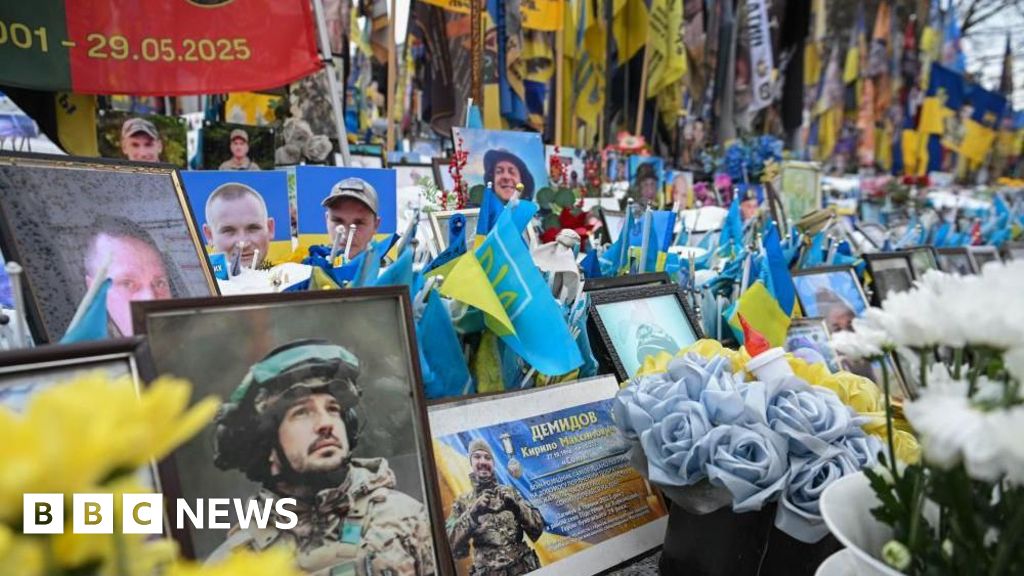
As the conflict enters its fifth year Ukraine faces near-daily aerial attacks, significant battlefield losses and continued territorial contest — Russia controls just under 20% of Ukrainian territory. Reported casualty figures are large and disputed (BBC identified over 186,000 Russian soldiers killed; UK MoD cited 1.25 million Russian casualties overall; Ukrainian official battlefield deaths cited at 55,000 with other sources up to 200,000), while Zelensky is pressing for US interceptor missiles to replenish depleted air defenses after strikes on energy and infrastructure. Western leaders convened a Coalition of the Willing and G7 reiterated support (including US President Trump), signaling ongoing political and military backing and a low likelihood of near-term peace; the situation sustains a geopolitical risk premium, elevates defense-sector exposures and keeps potential volatility in energy markets elevated.
Market structure: Protracted war entrenches winners in defense (US prime contractors LMT, NOC, RTX) and LNG/oil exporters (Cheniere LNG, XOM, CVX) as Europe and Ukraine require multi-year rearmament and energy diversification. Pricing power shifts to suppliers of interceptors, drones, and LNG cargoes — expect order-book visibility for defense to rise by 20–40% revenue visibility over 12–24 months while spot European gas premia remain +$3–$8/MMBtu above Henry Hub in winter scenarios.
Risk assessment: Tail risks include NATO escalation (low probability, 5–15%, high impact on risk assets), a surprise negotiated ceasefire (10–25% chance in 12 months) that would compress defense margins, and major cyberattacks on energy grids. Near-term (days–weeks) expect elevated volatility around political events and aid votes; medium-term (3–12 months) spring offensives could spike commodity and FX moves; long-term (12–36 months) structural EU defense budgets likely up 15–30% cumulatively.
Trade implications: Favor concentrated exposure to US primes via equities and 6–18 month call-spreads to cap premium, add LNG longs (Cheniere) via call-spreads to play persistent European demand, and allocate 1–3% portfolio to gold/long-duration Treasuries (GLD, TLT) as asymmetric hedges. Use VIX call-spreads around NATO/aid vote windows and size positions so max portfolio drawdown per trade is ~2–3%.
Contrarian angles: Consensus assumes endless upside for US primes — risk of mean reversion if a diplomatic breakthrough occurs, so prefer selective smaller-cap subsuppliers (HEI) trading <15x EPS with clearer order conversion. European utilities (EDF.PA) may be overexposed to power disruption risk and are candidates for tactical shorts or pairs versus US regulated utilities as a hedge to a prolonged energy shock.
AI-powered research, real-time alerts, and portfolio analytics for institutional investors.
Request DemoOverall Sentiment
strongly negative
Sentiment Score
-0.65
