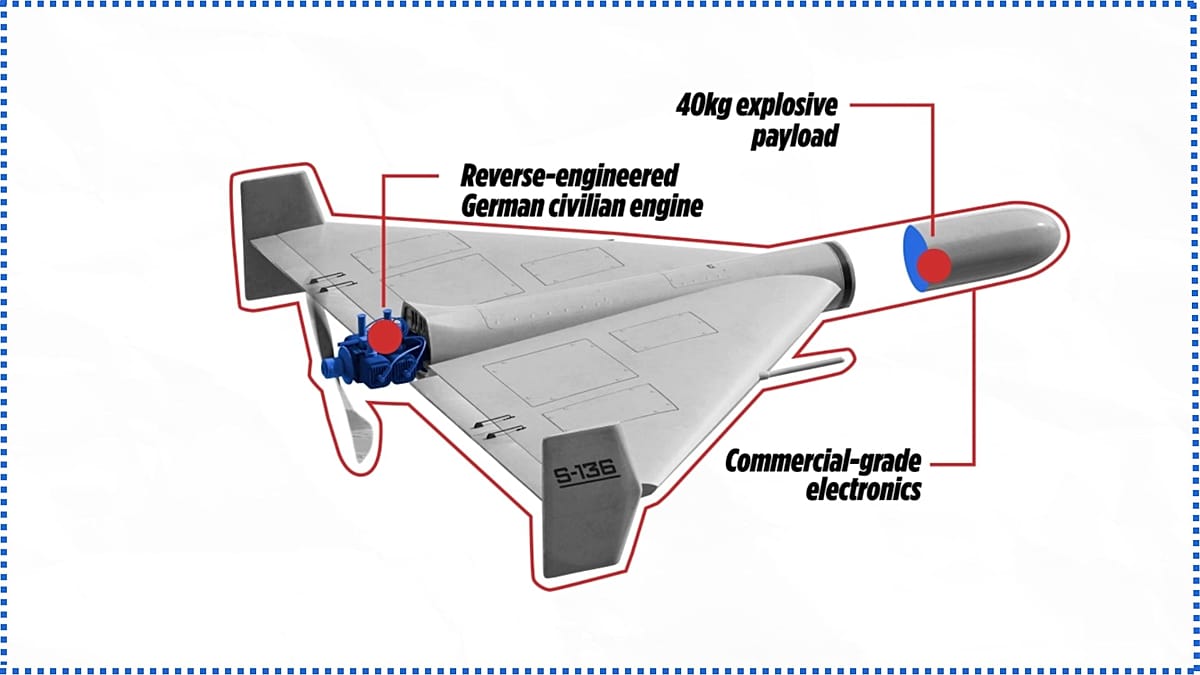
Iranian-designed Shahed drones—low-cost (~€25,000–€40,000) loitering munitions with ranges up to ~2,500 km—are being launched in large waves from Iran and threaten US bases, oil refineries and tourist hubs across the Middle East. The asymmetric cost dynamic (cheap drones vs million-dollar interceptors) and mass-launch swarm tactics, proven in Ukraine where >80% interception rates required layered air-defence and electronic warfare, create a credible risk of increased energy-price volatility, higher defense spending and accelerated procurement of counter-drone systems across the region. Investors should monitor oil and defense-sector exposure, insurance costs for regional assets, and any rapid escalation in military procurement or sanctions responses.
Market structure: Cheap Iranian Shahed-style loitering munitions reprice regional defence demand toward layered, low-cost counter-UAS (electronic warfare, interceptor-drones, ground-mobile launchers) and traditional missile defence. Winners: large primes with integrated air-defence lines (RTX, LMT, NOC) and smaller autonomous/EW specialists (ANDB, KTOS, AVAV) that scale quickly; losers: exposed commercial aviation/tourism and regional insurers, plus countries reliant on single-layer missile shields. Expect procurement demand to shift 12–36 months, adding an incremental regional defence procurement pool likely in the low single-digit billions annually.
Risk assessment: Immediate (days) risk = risk-premium spikes in oil, FX and sovereign CDS if attacks hit energy infra; short-term (weeks–months) = rerouting costs, insurance rate moves and order acceleration for interceptors; long-term (quarters–years) = sustained capex into EW and drone intercept tech. Tail scenarios: direct US–Iran escalation or 1M+ bpd supply hit could lift Brent >$100/bbl and spike global risk premia; hidden dependency = chokepoints in missile/interceptor component supply (semis, gyro/IMU capacity).
Trade implications: Tactical buys should favor 3–12 month option-levered exposure to RTX/LMT/LHX and 12–24 month LEAPs on ANDB/KTOS for asymmetric upside from EW/drones. Play commodities via selective energy overweight (XOM/CVX) for oil upside while hedging below $70/bbl. Pair trades: long defence primes vs short airline/travel beta (JETS ETF) for 1–3 months; reduce duration and raise cash to fund drawdowns.
Contrarian angles: Consensus focuses on big primes; market may underprice scale benefits of software/EW firms (Anduril, Kratos) and the opportunity in low-cost interceptors that compress per-engagement economics. The reaction could be overdone for legacy prime valuations already carrying high defence multiples; mid-cap autonomous/EW firms could outperform if procurement targets shift to lower-cost, repeatable systems. Historical parallel: limited 2006/2014 escalations led to steady procurement rather than sustained equities rallies—watch order flow, not headlines.
AI-powered research, real-time alerts, and portfolio analytics for institutional investors.
Request TrialOverall Sentiment
strongly negative
Sentiment Score
-0.65
