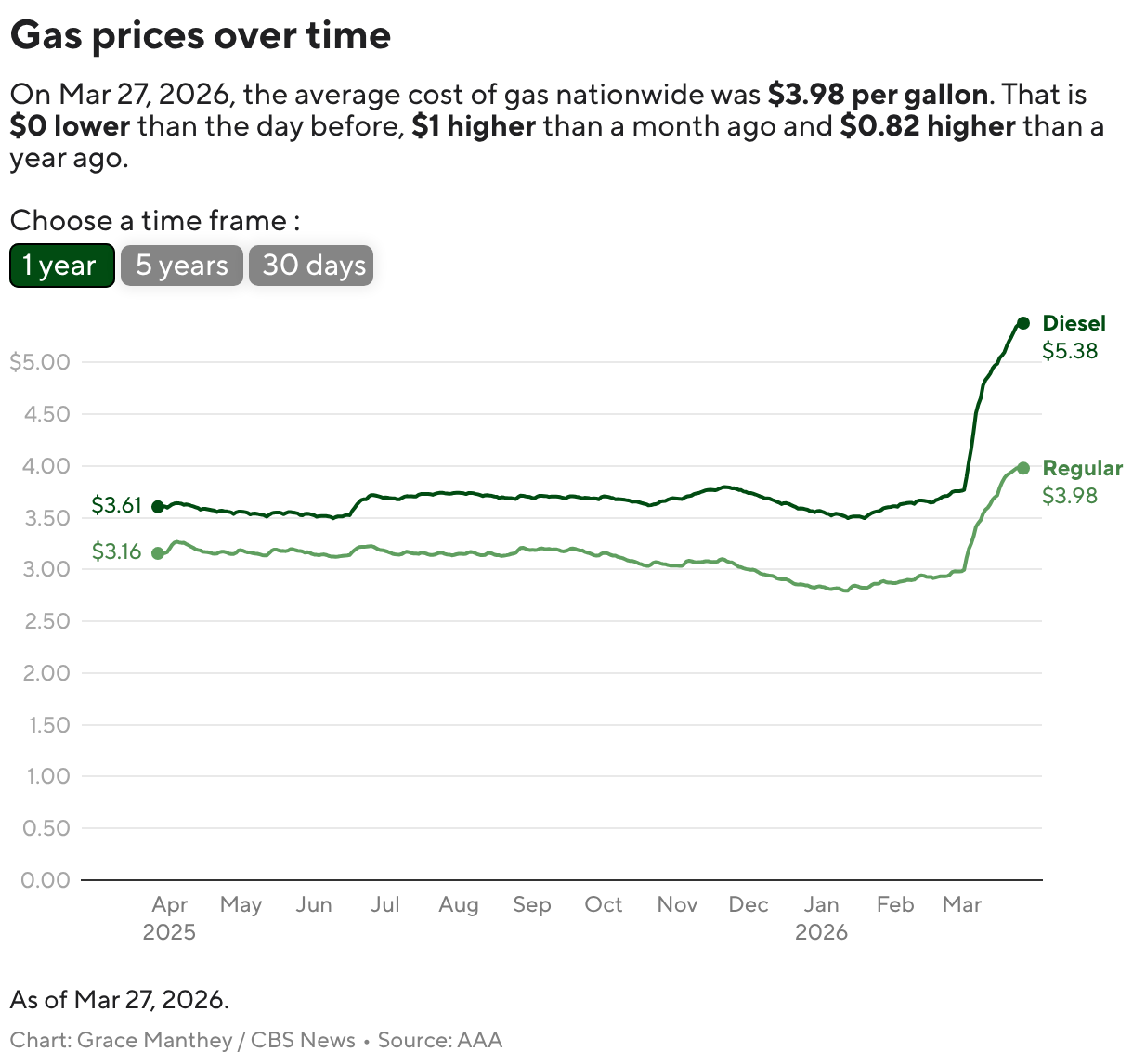
Gasoline averaged $4.06/gal nationally (up 36% since the Iran war began), crossing $4 for the first time since August 2022; GasBuddy forecasts the national average could reach $4.10 this week. The Iran conflict is constraining oil supply — Brent accounts for ~51% of a gallon's cost and the Strait of Hormuz (transporting ~20% of global oil) is effectively closed per Lloyd's List Intelligence — pressuring energy prices and inflation. President Trump will deliver a prime-time address on Iran and has pledged prices will fall after a resolution, but analysts warn short-term upside risk remains for pump prices.
Winners in a Hormuz-linked supply shock are not just producers — US refiners with flexible crude slates and coastal export access can capture widened gasoline crack spreads quickly, while tanker owners and marine insurers collect elevated voyage and war-risk premia. Losers include high fuel-intensity transport (airlines, long-haul trucking) and regional consumer-facing retailers whose margins compress as discretionary spending shifts; second-order effects include higher container and bulk freight costs that raise input prices for manufacturers importing intermediate goods.
Key short-term catalysts are political (presidential statements, diplomatic back-channels) and physical (routing through Cape of Good Hope, insurance redlining of certain flags), so expect volatility clustered around speeches, sanctions announcements, and OPEC+/US SPR moves. Time horizons diverge: price spikes can compress within days if a ceasefire or rapid re-routing is announced, but a protracted closure keeps prices elevated for months because US shale capex and global spare capacity respond slowly; a sustained premium above consensus for 3-6 months materially raises CPI path and keeps real yields higher.
The consensus treats the premium as persistent; that is the contrarian entry. Markets tend to overshoot geopolitical events — floating storage, rapid chartering of neutral-flag tonnage, and tactical SPR releases can unwind a large portion of the risk premium within 2–8 weeks. Tactical, time-bound exposure that leans into gasoline crack widening and shipping insurance, with strict event-based exits around diplomatic developments, offers asymmetric payoff versus outright long crude futures.
AI-powered research, real-time alerts, and portfolio analytics for institutional investors.
Request DemoOverall Sentiment
mildly negative
Sentiment Score
-0.30
