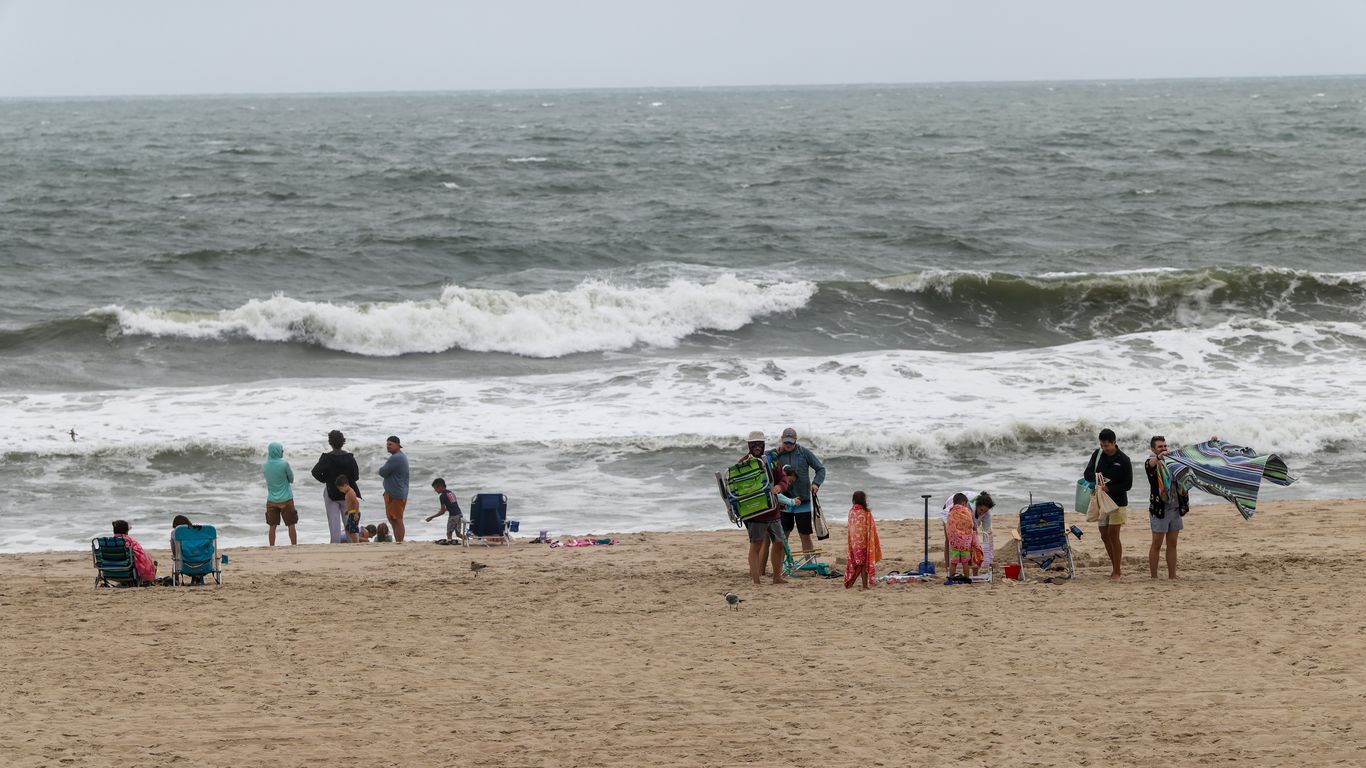
Hurricane Erin, a large Category 2 storm, is generating widespread "life-threatening" surf, storm surge, and coastal flooding across the U.S. East Coast, Bahamas, Bermuda, and Atlantic Canada, prompting evacuations and infrastructure closures. While not forecast for U.S. landfall, its broad reach and potential to re-intensify present immediate physical risks to coastal assets, tourism, and the insurance sector. The storm's rapid intensification, explicitly linked to climate change, underscores growing long-term climate-related physical risks for regional investments and infrastructure.
Hurricane Erin, a large Category 2 storm, is generating significant economic and physical risk across a wide swath of the U.S. East Coast, Bermuda, and the Bahamas, despite forecasts indicating it will not make landfall. The primary threat stems from its extensive wind field, with tropical-storm-force winds extending up to 265 miles, which is causing life-threatening storm surge and surf conditions leading to evacuations in North Carolina counties and key infrastructure closures. While the immediate impact is concentrated on coastal property, local tourism, and regional supply chains, the event has broader implications for the insurance sector, particularly property and casualty insurers with coastal exposure. Crucially, the storm's rapid intensification over unusually warm waters is highlighted as an effect of climate change, framing it not just as a singular weather event but as a tangible example of escalating long-term physical climate risks for coastal assets and regional economies.
AI-powered research, real-time alerts, and portfolio analytics for institutional investors.
Request DemoOverall Sentiment
strongly negative
Sentiment Score
-0.75
