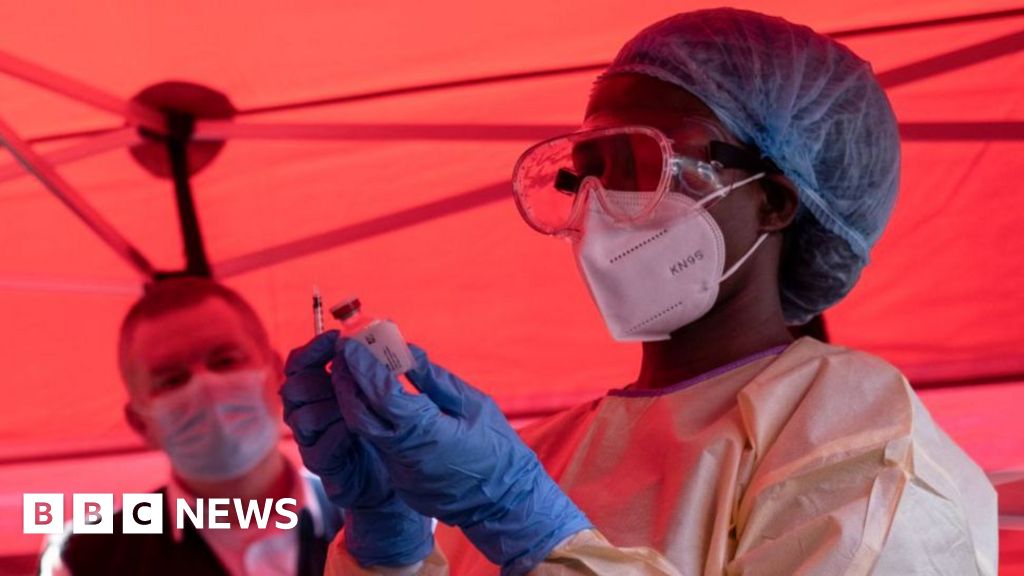
At least six Americans were exposed to Ebola during the DR Congo outbreak, with one believed to have symptoms and three others reported high-risk exposure; infection status remains unclear. The WHO has declared the outbreak an international emergency amid roughly 350 suspected cases and 91 deaths in DR Congo, plus two confirmed cases and one death in Uganda. The US has issued a Level Four travel advisory, and nearby countries including Rwanda and Nigeria are tightening screening as concern grows over regional spread.
This is less a direct earnings event than a volatility catalyst for the entire travel, leisure, and EM risk complex. The market usually prices Ebola headlines as a low-probability, high-salience shock, so the first-order move is indiscriminate de-risking in airlines, hotels, cruise names, and any asset tied to cross-border mobility; the second-order effect is more important: African regional carriers, border-adjacent tourism, and aid/logistics flows can see immediate disruptions even if global travel demand never materially changes. In healthcare, the likely winners are not the obvious broad biotech names but firms with diagnostic logistics, sample transport, PPE, and biosafety handling exposure, where procurement often spikes before any vaccine or therapeutic demand does.
The key risk is asymmetry around containment. If the U.S. exposure count stays small and no secondary transmission appears over the next 2-3 incubation cycles, the headline fades quickly, but if there is even one confirmed imported case with incomplete contact tracing, the narrative can escalate faster than fundamentals justify, especially given the absence of approved countermeasures for this strain. That would likely pressure not just travel, but also EM sovereign and frontier credit proxies through a “public health governance” lens, with local currencies and regional banks vulnerable to risk-off outflows.
The consensus may be overpricing U.S. domestic contagion while underpricing regional spillover and operational friction. The more durable trade is not a blanket short on U.S. equities, but a relative-value expression: short the most exposed travel/leisure names into strength while favoring cash-generative healthcare logistics and diagnostics providers. If authorities successfully move exposed individuals to isolation and the reporting cadence quiets over 5-10 trading days, the trade should be covered quickly because Ebola headlines tend to mean-revert once transmission chains are shown to be contained.
AI-powered research, real-time alerts, and portfolio analytics for institutional investors.
Request DemoOverall Sentiment
strongly negative
Sentiment Score
-0.75
