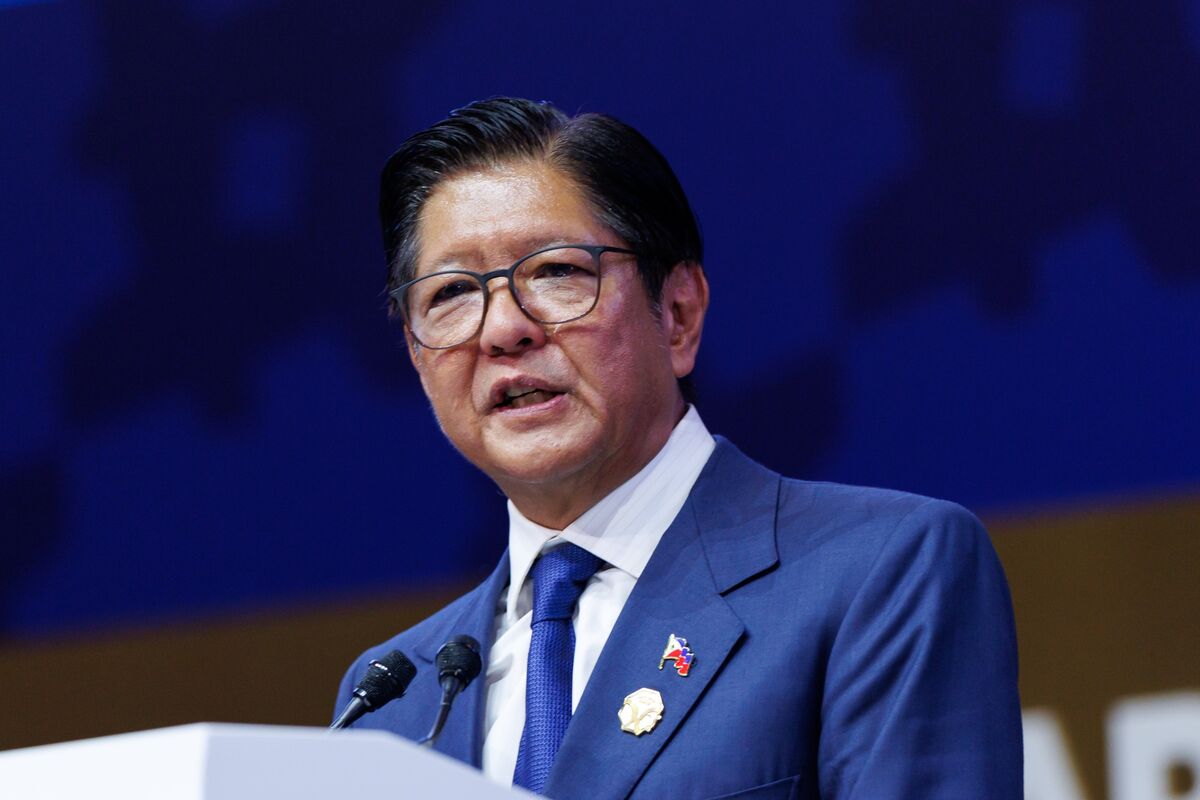
Philippine President Ferdinand Marcos Jr. announced a phased increase in soldiers’ base pay to be implemented in three tranches, with the first tranche scheduled at the start of 2026, following revelations by the military chief of attempts to unseat him. The move is intended to shore up military loyalty and comes with modest fiscal implications that could marginally affect budget priorities and investor perceptions of political risk in the Philippines.
Market structure: A phased base-pay increase for the armed forces (starting 1H 2026 in three tranches) is a fiscal policy loosener concentrated in government wage bills, likely benefitting domestic consumer-facing firms (restaurants, remittance-linked retailers) and locally focused contractors that supply bases and infrastructure. Direct winners: PSE-listed consumer names (JFC) and domestic construction/conglomerates (AC.PH, EEI.PH) from incremental demand; losers: Philippine sovereign paper and long-duration local-currency bonds if funding needs rise. Expect a modest fiscal drag equivalent to ~0.2–0.5% of GDP cumulatively over 2026–2028 depending on tranche size, enough to nudge short- to mid-term sovereign spreads wider but unlikely to trigger immediate crisis.
Risk assessment: Immediate market reaction (days) should be muted; short-term (3–12 months) risks center on budget rework, rating-agency scrutiny and FX volatility; long-term (12–36+ months) risk is persistent upward pressure on public wages and debt servicing. Tail scenarios: a renewed coup attempt or a sovereign rating downgrade (low-probability but high-impact) could spike USD funding costs and PHP weakness >5–10% vs current levels. Hidden dependencies include follow-on public-sector wage demands and central bank rate responses if inflation picks up; catalysts are the 2026 budget law, upcoming sovereign debt issuances, and any credit-agency commentary.
Trade implications: Tactical FX/sovereign trades are highest-conviction: add 1–2% portfolio long USD/PHP exposure via 6–12 month FX forwards or buy USD/PHP call options (strikes 3–5% OTM) to hedge potential PHP weakness tied to funding. Relative-value equities: go long Philippines domestics (JFC, BDO.PH 1–2% each) while hedging sovereign-credit via buying 1–3y protection or increasing cash if CDS available; consider short duration local-govt bond exposure (underweight 2–5y PHP bonds) to avoid mark-to-market losses if yields repriced. Monitor rate-sensitive banks (BDO.PH) for participation but size modestly given uncertainty.
Contrarian angles: Consensus may understate that improved military pay could reduce political-risk premia (lower coup probability), which would be bullish for long-cycle assets and offset some fiscal worries; markets that sell sovereigns reflexively might overprice credit risk by >50–100bp. Conversely, if the raise triggers broader public-sector wage demands, the fiscal arithmetic could deteriorate faster than priced; the trade is directional and event-driven — watch the 2026 budget and next sovereign issuance as binary moments.
AI-powered research, real-time alerts, and portfolio analytics for institutional investors.
Request DemoOverall Sentiment
neutral
Sentiment Score
0.00
