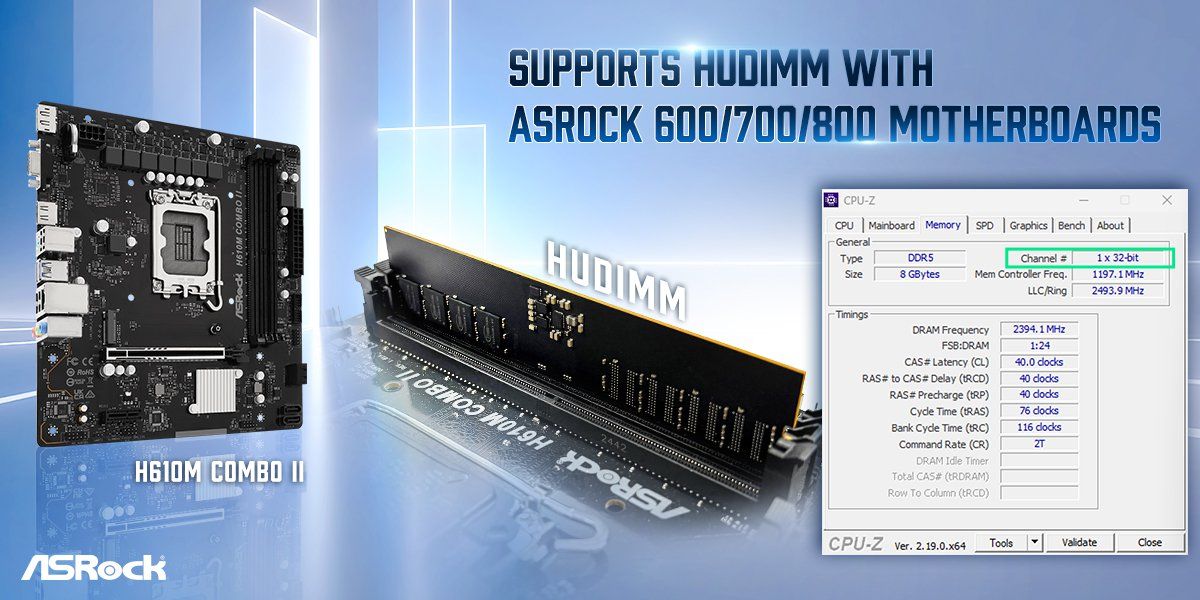
ASRock, TeamGroup, and Intel are introducing HUDIMM, a cheaper DDR5 variant that uses a single 32-bit subchannel instead of the standard 2×32-bit design, effectively halving bandwidth and capacity per module. The goal is to reduce memory costs during the ongoing RAM shortage, with support shown on Intel 600/700/800-series motherboards and a laptop-focused HSODIMM variant also mentioned. No pricing or availability was disclosed, so the near-term market impact appears limited but the move underscores supply pressure in the memory market.
This is less a “memory innovation” story than a pricing signal for a stressed DRAM market. When vendors are willing to engineer a lower-density consumer format, it usually means the supply curve is still tight enough that end-market elasticity matters more than clean segmentation; that tends to extend the shortage window by encouraging OEMs to ship lower-performance configurations rather than absorb full DDR5 cost inflation. The second-order effect is that mainstream PC vendors get a temporary BOM escape valve, but the average selling price of attachable memory stays firmer for longer because buyers who only need basic capacity can now substitute down instead of waiting for a price break. For INTC, the near-term read-through is modestly positive but not because of silicon content — it is because platform validation on Intel 600/700/800 boards reinforces Intel’s role as the default ecosystem enabler when the market is fragmented. That matters in a downcycle: motherboard and OEM partners prefer a stable compatibility story, and Intel gains incremental stickiness if alternative memory configurations become a BIOS-level feature rather than a standards fight. The move is small in revenue terms, but it helps defend platform relevance and supports a better attach rate for future client platforms over the next 2-3 quarters. ROG/Asus is the more direct beneficiary because this is classic enthusiast-to-mainstream feature arbitrage: a headline-grabbing workaround that can be bundled into premium boards and used to differentiate inventory while memory prices remain elevated. The risk is that the market may interpret the concept as proof that demand is still weak enough to justify compromising performance, which could cap enthusiasm for high-end desktop upgrades and push more buyers toward notebook or console substitutes. If the shortage persists into the next refresh cycle, OEMs will lean into this; if DRAM pricing normalizes in 1-2 quarters, the entire category becomes a novelty rather than a durable spec shift.
AI-powered research, real-time alerts, and portfolio analytics for institutional investors.
Request DemoOverall Sentiment
mildly positive
Sentiment Score
0.15
Ticker Sentiment
