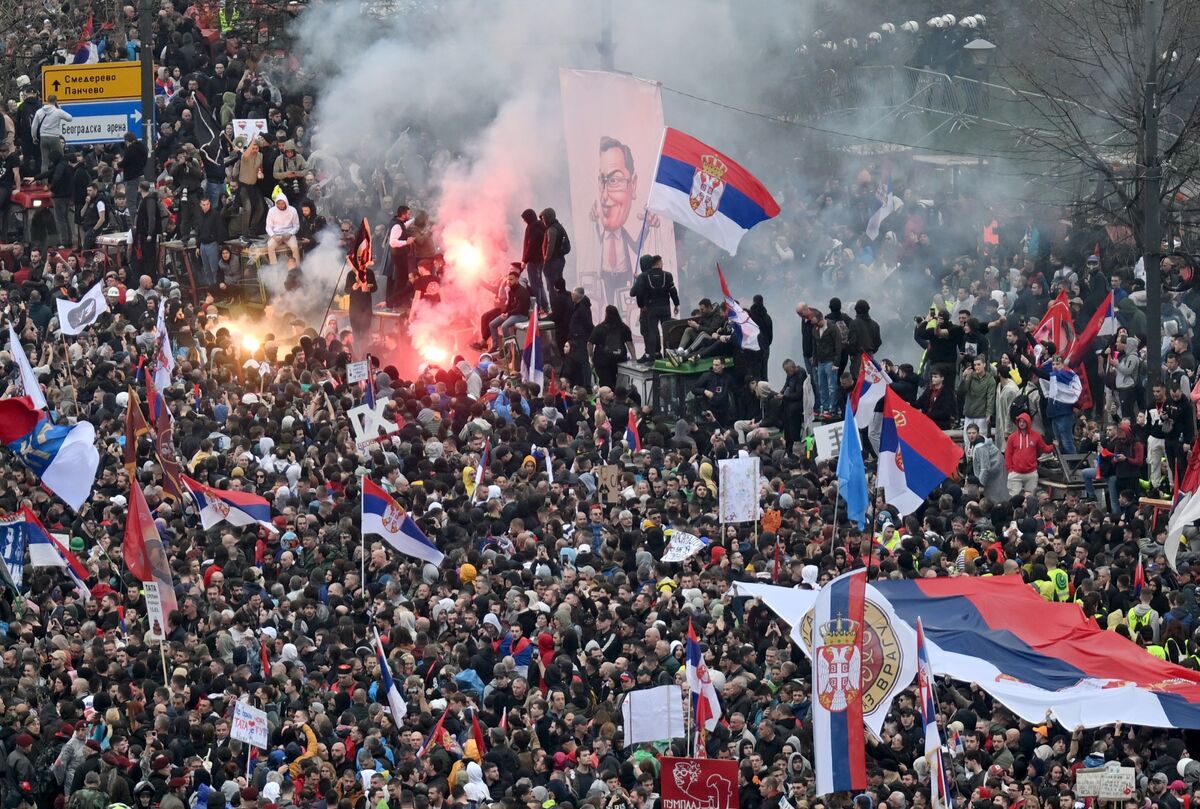
Serbia is experiencing sustained political unrest, with protests against President Aleksandar Vucic continuing for ten months over allegations of democratic erosion and corruption, and demands for snap elections. This ongoing instability presents a significant factor for institutional investors monitoring the political and economic landscape in the Balkan region.
Serbia is experiencing a prolonged period of political instability, characterized by sustained anti-government protests against President Aleksandar Vucic that have persisted for ten months. The core drivers of the unrest are public allegations of democratic erosion and entrenched corruption, leading to demands for a snap election. The situation's description as a threat to the nation's "economic lifeblood," combined with a strongly negative sentiment score (-0.6) and a significant market impact score (0.65), indicates that this political turmoil poses a material risk to the country's economic stability. The ongoing and unresolved nature of these demonstrations creates an environment of uncertainty, which can deter foreign investment, increase sovereign risk premiums, and potentially disrupt economic policy and growth forecasts for institutional investors with exposure to the Balkan region.
AI-powered research, real-time alerts, and portfolio analytics for institutional investors.
Request DemoOverall Sentiment
strongly negative
Sentiment Score
-0.60
