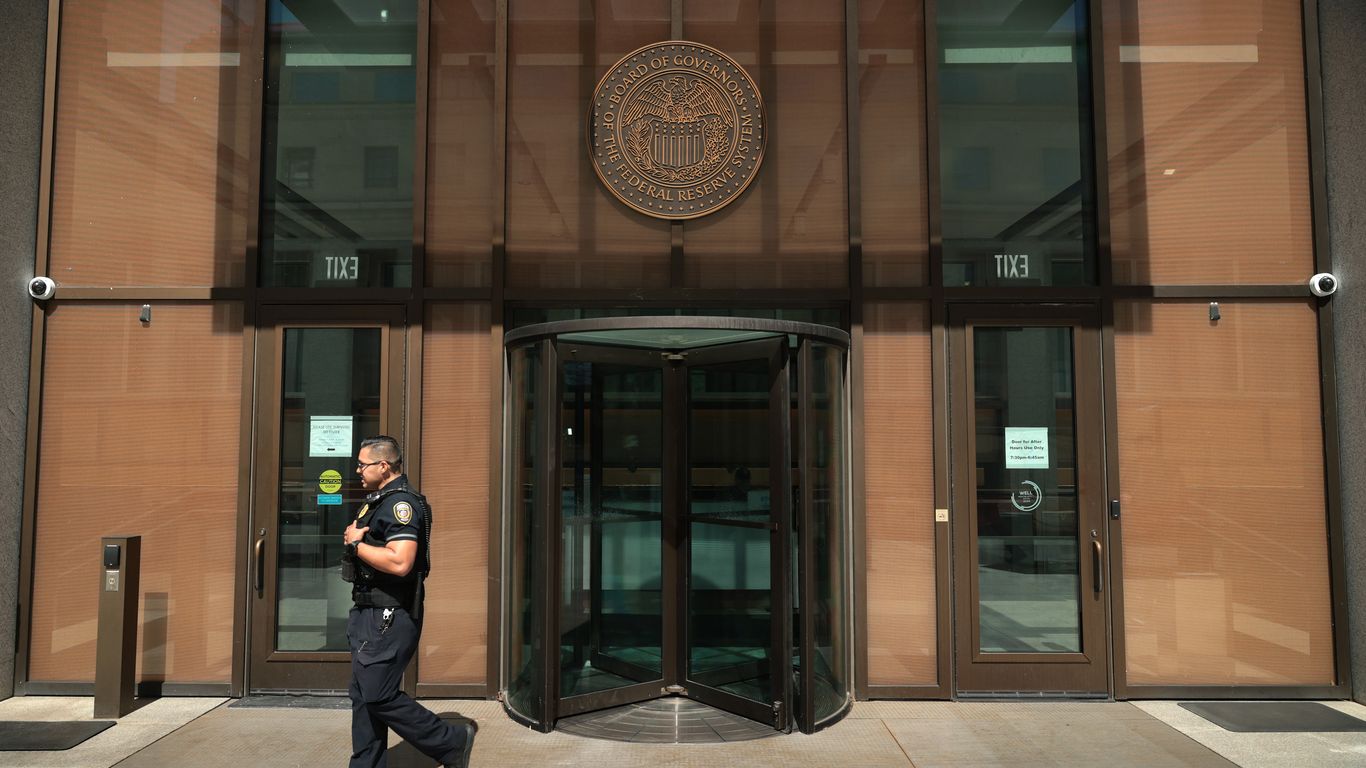
A trio of financial regulators has proposed relaxing bank capital requirements under the Supplementary Leverage Ratio (SLR), representing the most significant regulatory revamp for Wall Street in the Trump era. The proposal would replace the current fixed 2% additional capital requirement for large banks with half of a variable, size-based surcharge, effectively reducing the capital banks must hold against certain investments. Supporters, including Treasury Secretary Scott Bessent and Fed officials, argue it would incentivize banks to increase U.S. Treasury holdings, potentially lowering interest rates, and correctly differentiate safe assets from risky ones. However, opponents, including former Fed official Michael Barr, warn the change significantly increases systemic risk and the potential for bank failures, sparking debate over financial stability versus market liquidity.
A consortium of U.S. financial regulators, including the Federal Reserve, FDIC, and OCC, has proposed a significant deregulation for Wall Street by relaxing the Supplementary Leverage Ratio (SLR). The proposal aims to replace the current additional 2% capital requirement for large banks with a variable rate equal to half of an existing, size-based surcharge that ranges from 1% to 3.5%. This change would effectively lower the capital buffer banks must hold against assets, including safe holdings like U.S. Treasuries. Proponents, such as Treasury Secretary Scott Bessent and Fed officials Jerome Powell and Christopher Waller, argue the current rule acts as a 'binding constraint,' disincentivizing banks from holding government debt and that this tweak would encourage such holdings, thereby putting downward pressure on interest rates. However, the proposal faces notable opposition within the Fed itself, with two of seven governors, Michael Barr and Adriana Kugler, voting against it. They contend the change would weaken a critical post-crisis backstop, 'significantly increase the risk' of a large bank failure, and elevate systemic risk without justifiable benefits, highlighting a fundamental conflict between boosting Treasury market liquidity and maintaining financial system resilience.
AI-powered research, real-time alerts, and portfolio analytics for institutional investors.
Overall Sentiment
Neutral
Sentiment Score
0.10
