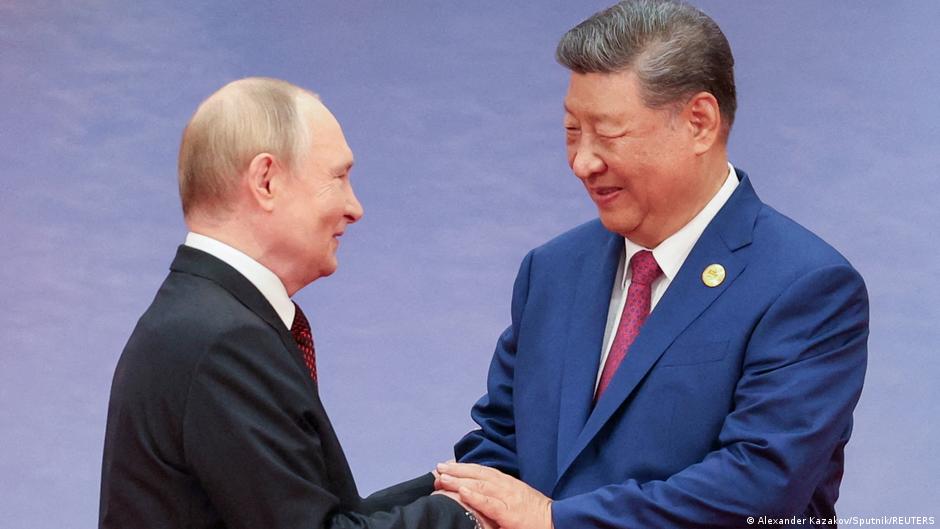
Putin’s visit to Beijing comes just days after Trump’s state visit, underscoring China’s leverage as both Russia and the US court Xi Jinping. The article highlights Russia’s dependence on China for more than a third of imports, over a quarter of exports, and nearly 18% of China’s oil imports in 2025, alongside ongoing concerns about dual-use goods and sanctions pressure. The meeting may produce agreements, but the bigger signal is Beijing’s ability to manage support for Moscow without committing to an openly unlimited partnership.
The market-level implication is not “China is stronger” so much as “China has become the marginal price-setter for two stressed systems at once: Russian defense/energy logistics and Western sanction design.” That creates a narrow but real tailwind for Chinese intermediates tied to energy transport, non-U.S. industrial inputs, and dual-use logistics, while increasing the probability of episodic tightening in export-control enforcement rather than a clean, regime-wide escalation. The second-order effect is a slower, more bureaucratic decoupling: less headline-driven, more targeted at specific firms, ports, insurers, and freight lanes.
For energy, the constructive read on Russian barrels is already partly in prices; the underappreciated angle is substitution risk in the other direction. If Moscow proves dependable enough, China can keep blending discounted Russian crude into its system while reducing exposure to Gulf chokepoints, which is bearish for tanker rates tied to longer-haul Middle East flows and supportive for refiners with complex configurations that can process discounted grades. The flip side is that any signal of Beijing “controlling the water tap” would hit Russian export volumes quickly, but the adjustment would likely show up first in shadow logistics, freight, and financing spreads rather than outright oil prices.
The geopolitical risk is asymmetric: a rapid thaw in U.S.-China relations could actually be negative for Russia-heavy trade channels, while a sharper Russia setback would force China to choose between cheap inputs and strategic stability. That means the most likely catalyst path is not a big break, but a series of incremental constraints over 1-3 months: sanctions enforcement, shipping insurance friction, and dual-use screening. Consensus may be overestimating the durability of the partnership; the real tradeable theme is volatility around its seams, not a straight-line deepening of ties.
AI-powered research, real-time alerts, and portfolio analytics for institutional investors.
Request DemoOverall Sentiment
neutral
Sentiment Score
-0.10
