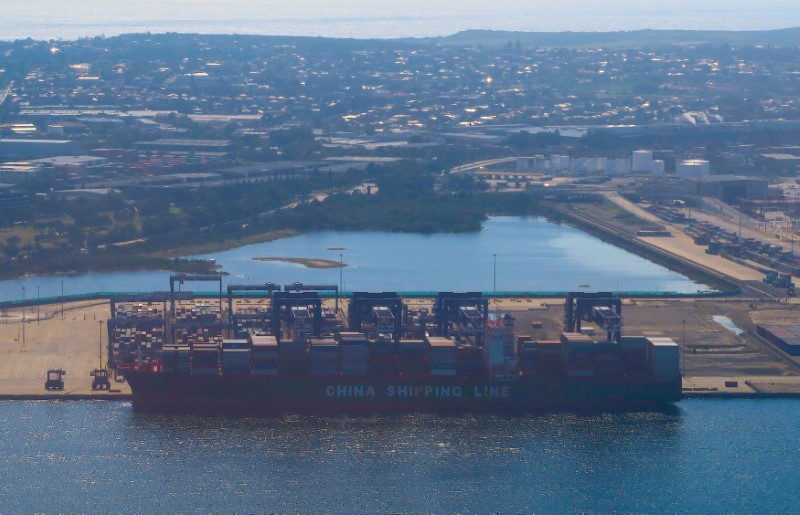
Australia's trade surplus narrowed significantly in May to A$2.24 billion ($1.47 billion), sharply missing expectations of A$5.08 billion and falling from April's revised A$4.86 billion, marking its lowest level since November 2019. This softer print was primarily driven by a 2.7% month-on-month decline in exports, particularly metal ores and minerals, amidst weak global demand and persistent economic weakness in China, while imports simultaneously rebounded 3.8% due to strong capital goods demand. The substantial narrowing of the surplus underscores the impact of external demand pressures on Australia's economy.
Australia's trade surplus contracted sharply to A$2.24 billion in May, its lowest level since November 2019 and significantly below the consensus forecast of A$5.08 billion. The deterioration was driven by a dual-sided movement: a 2.7% month-on-month decline in exports combined with a 3.8% rebound in imports. The export weakness was primarily due to reduced shipments of metal ores and minerals, underscoring the impact of soft global demand and persistent economic sluggishness in China, Australia's key trading partner. This external pressure persists despite a U.S.-China trade agreement. Concurrently, the jump in imports was led by strong demand for capital goods. The substantial negative surprise in the trade balance highlights the Australian economy's vulnerability to external conditions and suggests that net exports will likely be a weaker contributor to second-quarter GDP.
AI-powered research, real-time alerts, and portfolio analytics for institutional investors.
Request DemoOverall Sentiment
moderately negative
Sentiment Score
-0.60
