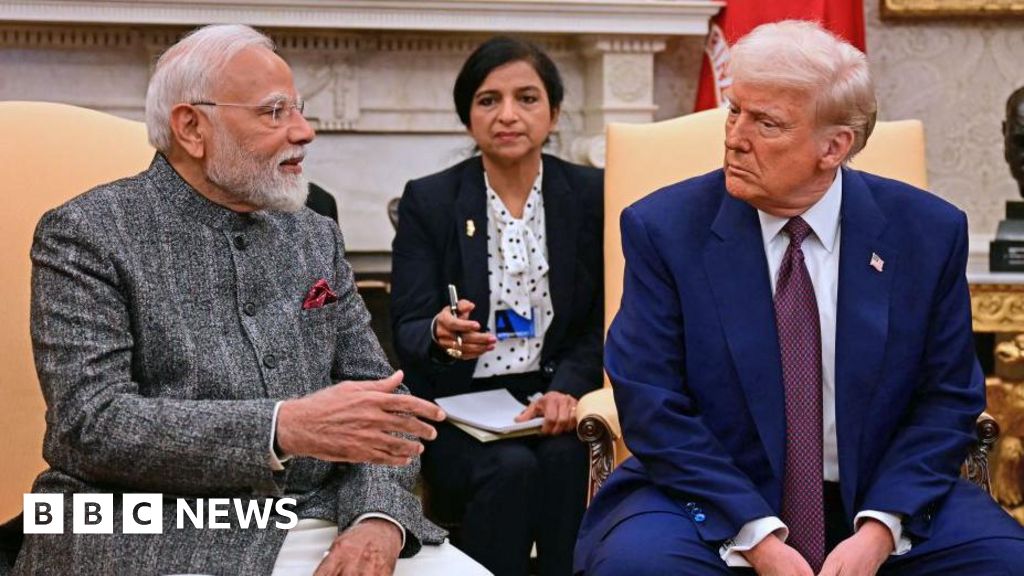
President Trump announced a 25% tariff on Indian goods, effective August 1st, alongside an unspecified penalty for India's trade with Russia, citing India's high tariffs and the US's $45.8 billion trade deficit. This aggressive move comes amidst ongoing, complex trade negotiations where agriculture and dairy remain key sticking points, potentially disrupting the $190 billion bilateral trade relationship despite India's stated optimism for a deal.
The United States is re-escalating trade tensions with India by announcing a 25% tariff on all Indian imports, effective August 1st, alongside an additional but unspecified penalty for India's continued trade with Russia. This aggressive policy, articulated by President Trump, is primarily aimed at closing the $45.8 billion trade deficit the US has with India, a country he labeled a "tariff king." This development casts significant doubt on the future of the $190 billion bilateral trade relationship and disrupts ongoing negotiations that have been described with conflicting tones; Indian officials project optimism and "fantastic progress," while US representatives highlight India's historically "protectionist" policies. The core of the trade dispute remains centered on key structural disagreements, particularly US demands for greater market access to India's protected agriculture and dairy sectors. The linkage of trade tariffs to geopolitical alignments—specifically India's purchase of Russian energy and weapons—adds a complex new dimension that moves the conflict beyond pure economics and could jeopardize the stated long-term ambition of growing bilateral trade to $500 billion.
AI-powered research, real-time alerts, and portfolio analytics for institutional investors.
Overall Sentiment
moderately negative
Sentiment Score
-0.45
Ticker Sentiment
