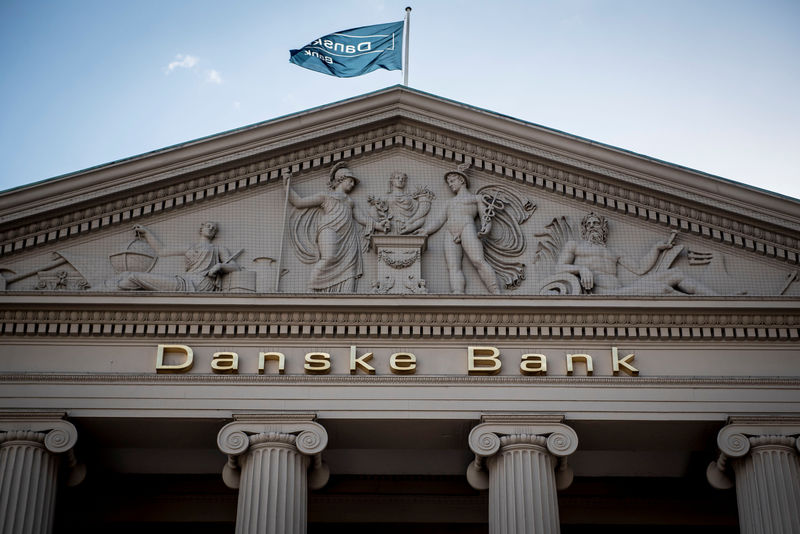
Danske Bank reported Q1 net profit of DKK 5.69 billion, down 1% year on year, as a 56% drop in trading income offset gains in net interest income (+4%) and fee income (+7%). The bank kept 2026 net profit guidance unchanged at DKK 22 billion to DKK 24 billion and maintained a strong CET1 ratio of 17.7%, while also announcing an extraordinary dividend of DKK 6.14 per share and lifting its ordinary payout ratio to 60% to 70%. Jefferies noted pre-provision profit of DKK 7.57 billion came in 4% below estimates, with the main miss driven by trading.
The market is treating the step-up in capex as a margin threat, but the bigger signal is that management is willing to buy growth while simultaneously pre-committing to a more aggressive capital return regime. That combination usually screens as balance-sheet confidence, not a defensive capital release, and it tends to favor the equity over the bond proxy if the incremental investment is truly productivity-enhancing. The key second-order effect is that higher payouts can compress the discount rate on the stock by reducing perceived trapped capital, which can offset some near-term multiple pressure from lower excess CET1. The real risk is not the headline payout ratio, but the execution gap between elevated 2028 targets and a loan-loss assumption that looks less benign than consensus. If macro credit weakens, the market will quickly re-price the “through-the-cycle” optimism embedded in the forward plan, especially because the current capital cushion gives management room to be judged on growth quality rather than solvency. That makes the next 2-3 quarters a sentiment window: strong fee/interest momentum should keep estimates stable, but any wobble in trading or impairments would expose how much of the narrative depends on a continued benign backdrop. A less obvious implication is that the extraordinary dividend and revised ordinary payout policy can re-anchor the shareholder base toward income and away from growth-only holders, which can lower volatility over time. At the same time, the higher capital return pace may reduce optionality for future buybacks if capital generation softens, so the stock likely becomes more sensitive to quarterly CET1 drift than to reported earnings alone. In that sense, the setup is constructive but increasingly asymmetric: good quarters can still work, but bad quarters may de-rate harder because the market is being asked to underwrite both growth and capital efficiency at once. The consensus may be underestimating how much of this is a strategic re-rating attempt rather than a pure quarter-to-quarter beat/miss story. If the bank can sustain even modestly above-target capital generation while keeping costs contained, the market should start to price the 2028 ROE target as achievable, which would justify a higher book multiple over the next 6-12 months. The flip side is that the current move likely overstates the downside from a one-off trading miss; the more durable issue is whether investors trust the quality of earnings and the realism of the long-dated assumptions.
AI-powered research, real-time alerts, and portfolio analytics for institutional investors.
Request DemoOverall Sentiment
mildly positive
Sentiment Score
0.15
Ticker Sentiment
