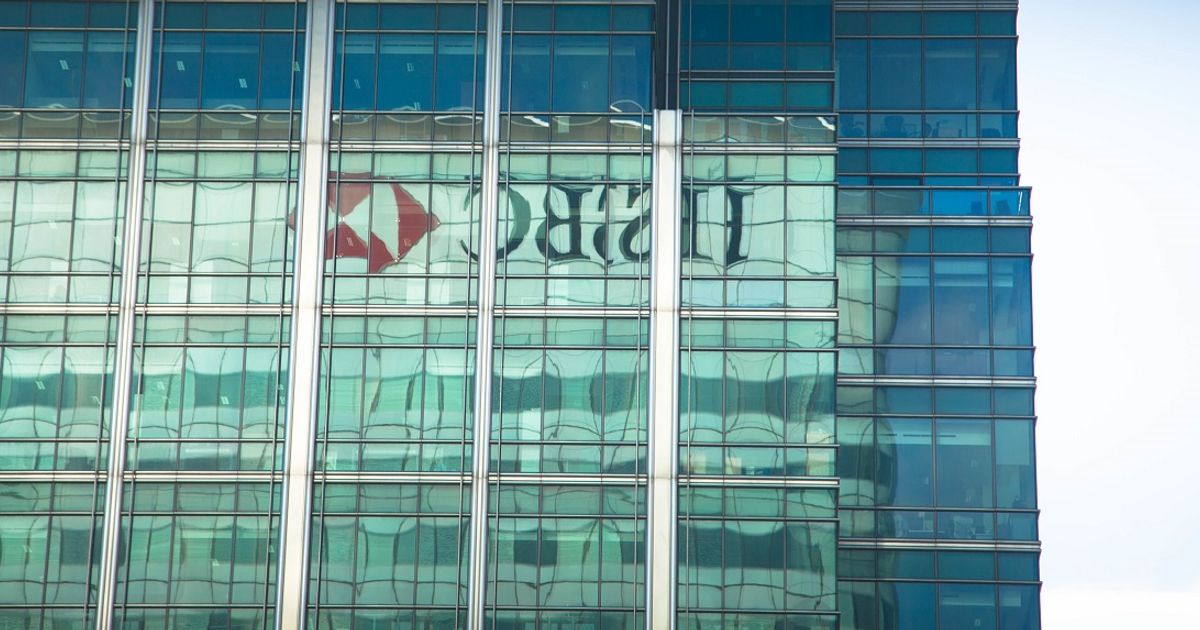
HSBC's proposed $13.6 billion acquisition of the remaining 36.7% minority stake in Hang Seng Bank, funded by pausing three quarters of share buybacks, has generated skepticism among analysts. Priced at a "punchy" 15 times forecast earnings and expected to reduce HSBC's CET1 ratio by 1.25%, the deal's financial logic is questioned given the lack of obvious synergies and the foregone accretion from HSBC's own share repurchases. While HSBC aims to increase focus on Hong Kong and wealth management, some observers suggest the transaction may be politically rather than purely financially motivated, particularly as Hang Seng faces exposure to China's property crisis.
HSBC logic questioned over 'politically motivated' Hang Seng deal Published: 14:10 09 Oct 2025 BST HSBC Holdings PLC's (LSE:HSBA) proposal to buy the remaining 36.7% minority shareholders in Hang Seng Bank was a bit of a surprise, analysts said, with the price looking a little "punchy". The second-largest company in the FTSE 100 saw its shares fall over 6% as it said the $13.6 billion cost to own the whole of the Hong Kong lender would be paid for by pausing three quarters of share buybacks to restore its CET1 capital level back to where it was. Paying HK$155 a share equates to around 15 times forecast earnings, according to analysts at Keefe, Bruyette & Woods, or 1.8 times tangible book value. The transaction is expected to reduce CET1 by 1.25%, reflecting the cash consideration less 0.40% for the removal of non-controlling regulatory capital deductions from surplus capital in Hang Seng. "This equates to a net CET1 capital cost of $11 billion, equating to one year of share buybacks," said the KBW team, adding that they "struggle to see" how buying out minority shares for at least 15 times earnings with "no obvious synergies" is positive in comparison to buying back its own shares at just over nine times earnings, with a positive earnings contribution of circa 4%. "We therefore question the logic of this transaction," concluded KBW. Broker Shore Capital that while it will take time to work through the announcement and interpret the detail, "we think that this could possibly be a politically-motivated transaction, as much as a financially-motivated one", as most of the minority stake is held by Hong Kong and Chinese retail investors. HSBC already had control of the business, "so this is not about driving out synergies and savings", the Shore Cap analysts said. "With that in mind, the acquisition multiple looks punchy, in our view, relative to the profitability and return on equity generated by the business." Analysts at Interactive Investors said share buybacks "have been a big part of investors’ rationale" for holding shares in HSBC after the bank paid out $11 billion to shareholders last year. They suggsted that other factors may be worrying shareholders, as Hang Seng Bank has been "caught up in China’s property crisis, pushing up its bad debts", while HSBC has been carrying out a major global restructuring and cutting costs. However, CEO Georges Elhedery has been working on exits from less attractive markets, as well as increasing the focus on wealth management and on Hong Kong. HSBC's proposed $13.6 billion acquisition of the remaining minority stake in Hang Seng Bank has drawn strong analytical skepticism, evidenced by its "punchy" valuation at 15 times forecast earnings and an immediate 6% drop in HSBC's shares. The transaction, which will reduce HSBC's CET1 ratio by 1.25% ($11 billion capital cost) and necessitates pausing three quarters of share buybacks, is seen as financially questionable given the lack of clear synergies. Keefe, Bruyette & Woods explicitly question the logic, highlighting the unfavorable comparison to HSBC's own share repurchases, which offer better earnings accretion at a lower valuation. Shore Capital suggests the deal may be politically rather than financially motivated, especially considering most minority shares are held by Hong Kong and Chinese retail investors, and HSBC already held control. Further concerns stem from Hang Seng Bank's exposure to China's property crisis, which is contributing to increased bad debts. This acquisition introduces additional risk, contrasting with HSBC's broader strategy of exiting less attractive markets. While the deal aligns with HSBC's stated goal of increasing focus on wealth management and Hong Kong, the significant capital deployment and valuation multiples, coupled with identified risks and opportunity costs, have resulted in a strongly negative market and analyst sentiment.
AI-powered research, real-time alerts, and portfolio analytics for institutional investors.
Request DemoOverall Sentiment
strongly negative
Sentiment Score
-0.75
Ticker Sentiment
