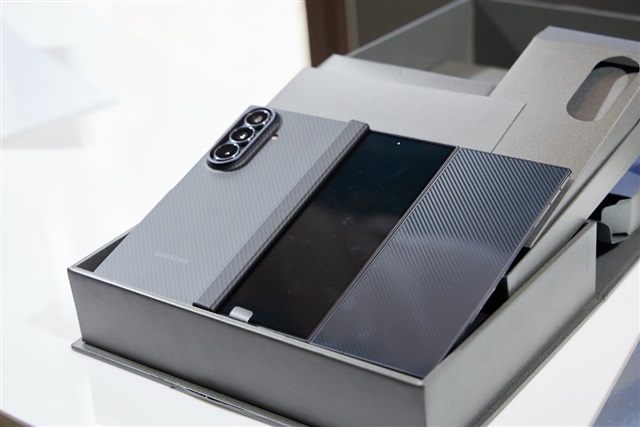
Samsung Electronics launched its first tri-fold smartphone, the Galaxy Z TriFold, in Taiwan on December 18, and announced on December 19 that its entire initial shipment sold out on launch day. No sales volumes or revenue figures were disclosed, but the immediate sell-through signals strong early consumer demand in Taiwan for the premium device, a positive indicator for product reception though likely limited near-term market impact beyond the local market.
Market structure: Samsung Electronics (005930.KS / SSNLF) being first to market with a tri‑fold and selling out initial Taiwan allocation signals premium demand elasticity in the >$1,000 smartphone niche and gives Samsung short‑term pricing power (+5–10% ASP lift potential vs. current foldables). Direct winners: Samsung, OLED/flexible‑panel suppliers (LGD 034220.KS, BOE 000725.SZ), hinge/mechanism suppliers; losers: incumbents reliant on slab premium upgrades (AAPL) if Samsung converts a 1–3% share shift in premium buyers over 12 months. Cross‑asset: stronger Samsung sales support KRW vs USD (potential 1–3% appreciation on sustained momentum), modest positive for Korean credit spreads, and incremental demand for specialty materials (indium, flexible polymers) but negligible macro commodity impact near term.
Risk assessment: Tail risks include manufacturing yield shortfalls or durability recalls that could force warranty accruals >$200–500m over 12 months, and rapid feature copy by Chinese OEMs compressing ASPs by 5–15% within 6–12 months. Immediate (days): knee‑jerk stock moves and option vol upticks; short term (weeks–months): order flow and supplier earnings revisions; long term (quarters–years): product lifecycle adoption and ecosystem lock‑in. Hidden dependencies: component lead times (6–12 weeks) and supplier capacity; catalyst risks: CES demos, quarterly guidance, and Taiwan/China market rollouts can accelerate or reverse adoption.
Trade implications: Favor a tactical long exposure to Samsung and select display suppliers sized 1–3% of equity portfolio with explicit stop/trim rules: trim if shares rally >12% in 60 trading days or if return rates exceed 5% in first 90 days. Options: buy 3–6 month call spreads on 005930.KS (buy ATM, sell ~+20% OTM) to cap premium; consider long 3–9 month LEAP calls on 034220.KS for supply chain leverage. Pair trade: long 034220.KS (1–2%) / short AAPL (0.5–1%) to express premium foldable adoption over 6–12 months while hedging market beta.
Contrarian angles: The Taiwan sell‑out is a small, potentially supply‑driven illusion — initial scarcity often marketed (target sample size <1,000 units) and may not scale; historical parallel: Galaxy Fold initial hype then recall and slower mass adoption. Reaction may be underdone in supplier stocks but overdone for Samsung if investors extrapolate sell‑out to global share gains; main unintended consequence is higher after‑sale warranty and R&D spending that could compress margins by 100–200bps in next two quarters.
AI-powered research, real-time alerts, and portfolio analytics for institutional investors.
Request DemoOverall Sentiment
mildly positive
Sentiment Score
0.35
