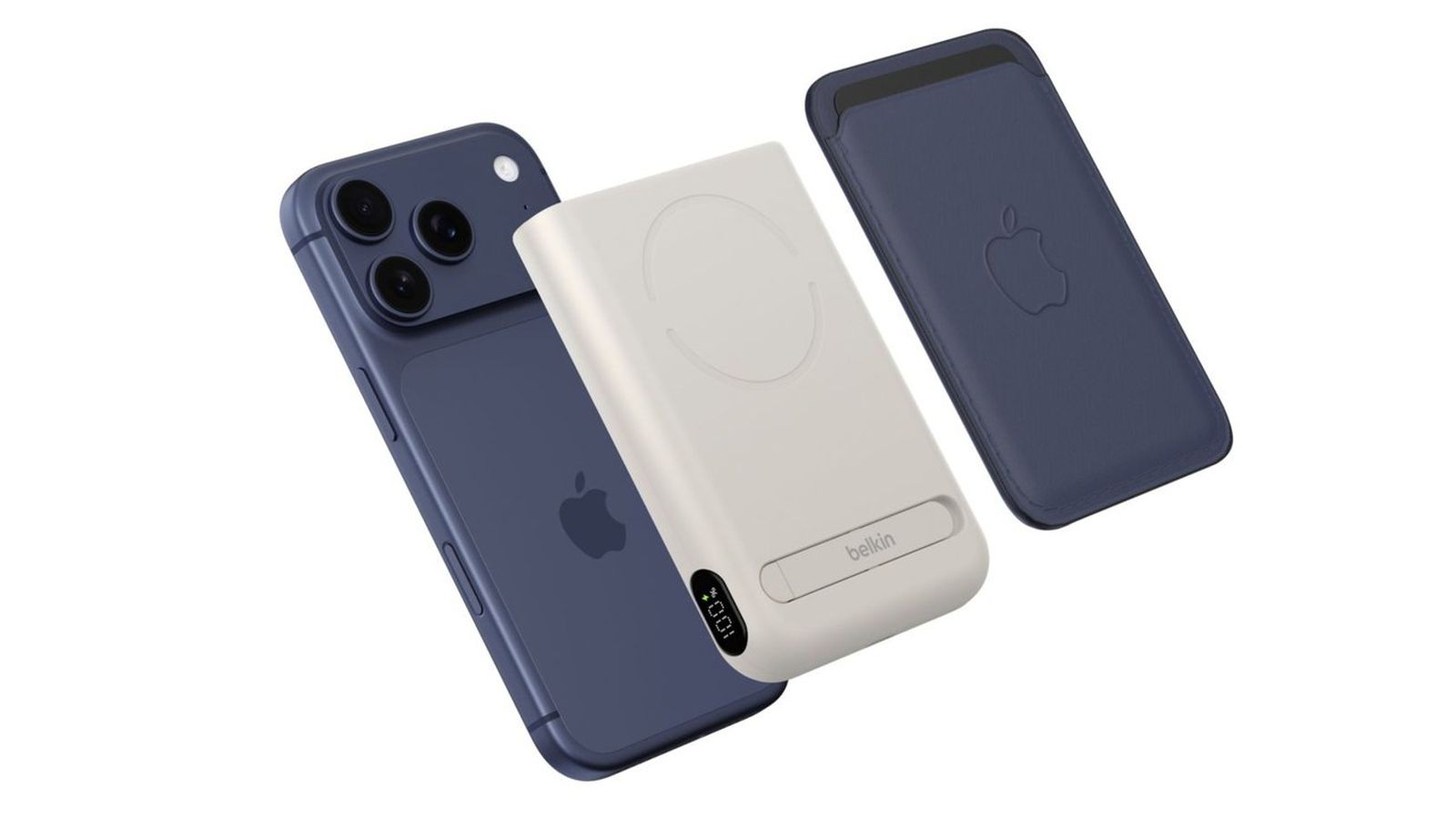
Belkin unveiled a broad suite of charging and connectivity accessories at CES 2026 targeting Apple and USB-C users, with most products slated for launch in H1 2026. Key SKUs and price points include the UltraCharge Pro Power Bank 10K ($99.99, Feb 2026), UltraCharge Modular Charging Dock ($64.99, Q1), BoostCharge Slim magnetic power banks (5K $59.99 and 10K $84.99, Q2), UltraCharge Pro Laptop Power Bank 27K ($149.99, March) and connectivity hubs like ConnectAir Wireless HDMI ($149.99, Q1) and an 8‑port USB-C hub ($99.99, Q2); notable specs include up to 240W total output and single‑port USB‑C laptop charging to 140W. The lineup broadens Belkin’s premium, Apple-focused accessory portfolio and could incrementally boost H1 2026 unit sales and ASPs, but contains no financial guidance and is unlikely to be materially market-moving on its own.
Market structure: Belkin’s CES lineup signals premiumization and modularization in mobile power and USB-C peripherals — winners are power-IC and GaN suppliers (e.g., POWI, TXN), premium peripheral makers (LOGI), and select retailers (BBY) who can merchandize higher-ASP accessories. Low-cost commodity Chinese chargers face margin pressure; expect accessory ASPs to drift +5–10% across 12 months as consumers pay for higher wattage/compatibility and travel-ready features.
Competitive dynamics: Larger accessory OEMs that secure MFi/USB-C certification and retail shelf space will gain share; product differentiation (Qi2.2, 240W laptop banks) increases pricing power for certified suppliers but compresses margins for undifferentiated players. Expect 6–12 month SKU rationalization in retail channels and selective promotional activity (20–30% off initial SKU periods) to drive early adoption.
Risk assessment & catalysts: Tail risks include regulatory shifts around certification or safety recalls (battery/airline compliance), silicon shortages for fast-charging controllers, or an Apple move to first-party accessories — any would cause >15% swing in supplier stocks in 3–6 months. Near-term catalysts: Apple/Google product announcements, Q1 retail sell-through (next 6–8 weeks), and supplier earnings calls revealing order cadence.
Cross-asset & second-order effects: Limited macro commodity impact, modest USD/FX sensitivity for global suppliers; rising accessory demand favors investment-grade tech credit over retail credits. Options market may see skew compression for AAPL/LOGI if accessory-driven demand proves persistent; bond spreads for small retailers could widen if inventory bloats post-launch.
AI-powered research, real-time alerts, and portfolio analytics for institutional investors.
Request DemoOverall Sentiment
mildly positive
Sentiment Score
0.25
Ticker Sentiment
