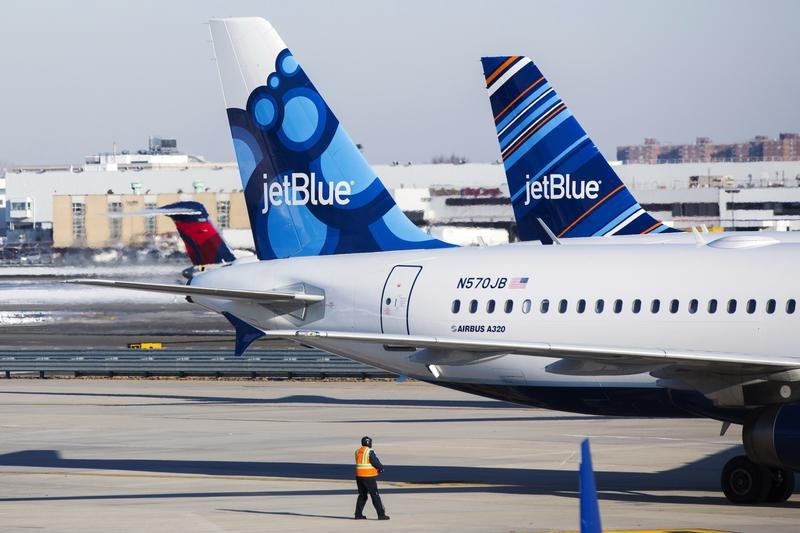
JetBlue is expanding Fort Lauderdale service to 11 new destinations and expects nearly 130 daily departures this summer, more than 75% above 2025 levels. The carrier also launched a limited-time Spirit Airlines status match for Free Spirit Silver and Gold members as Spirit shuts down, which could help capture displaced travelers. Offset against the operational growth are JetBlue's heavy leverage and $1.16 billion of negative free cash flow over the last 12 months.
This is less a pure demand story than a capacity-reset event for Florida aviation. JetBlue is using Spirit’s exit to lock in Fort Lauderdale as a hub-like asset, which should improve schedule density, airport relevance, and loyalty stickiness faster than a normal route launch cycle would. The near-term beneficiary is JBLU’s revenue mix: higher frequency and fewer low-fare incumbents should support better unit revenue, but the second-order effect is that the industry may now be forced into a more rational pricing environment in leisure-heavy markets where Spirit previously anchored the fare floor. The market is likely underestimating the operational strain this creates for JetBlue. Adding capacity while still carrying a heavy balance sheet and negative free cash flow increases execution risk if load factors lag or if the airline has to discount to fill seats during the ramp period. The key catalyst window is the next 2-3 quarters, when investors will see whether this is a durable share gain or merely a temporary absorption of displaced Spirit demand; if fuel spikes or macro softens, the incremental flying can become margin-dilutive quickly. From a competitive standpoint, ULCC is the obvious spillover beneficiary only if it can capture price-sensitive demand elsewhere, but the bigger winner may be a better-capitalized peer with similar Florida exposure and less balance-sheet stress. The contrarian view is that the move in JBLU may be too optimistic if the market is pricing in clean share gains without factoring in the cost of filling all those seats, the lag between route announcement and revenue realization, and the possibility that legacy competitors respond aggressively on key corridors. In other words, capacity is an asset only if pricing discipline survives the ramp.
AI-powered research, real-time alerts, and portfolio analytics for institutional investors.
Overall Sentiment
mildly positive
Sentiment Score
0.25
Ticker Sentiment
