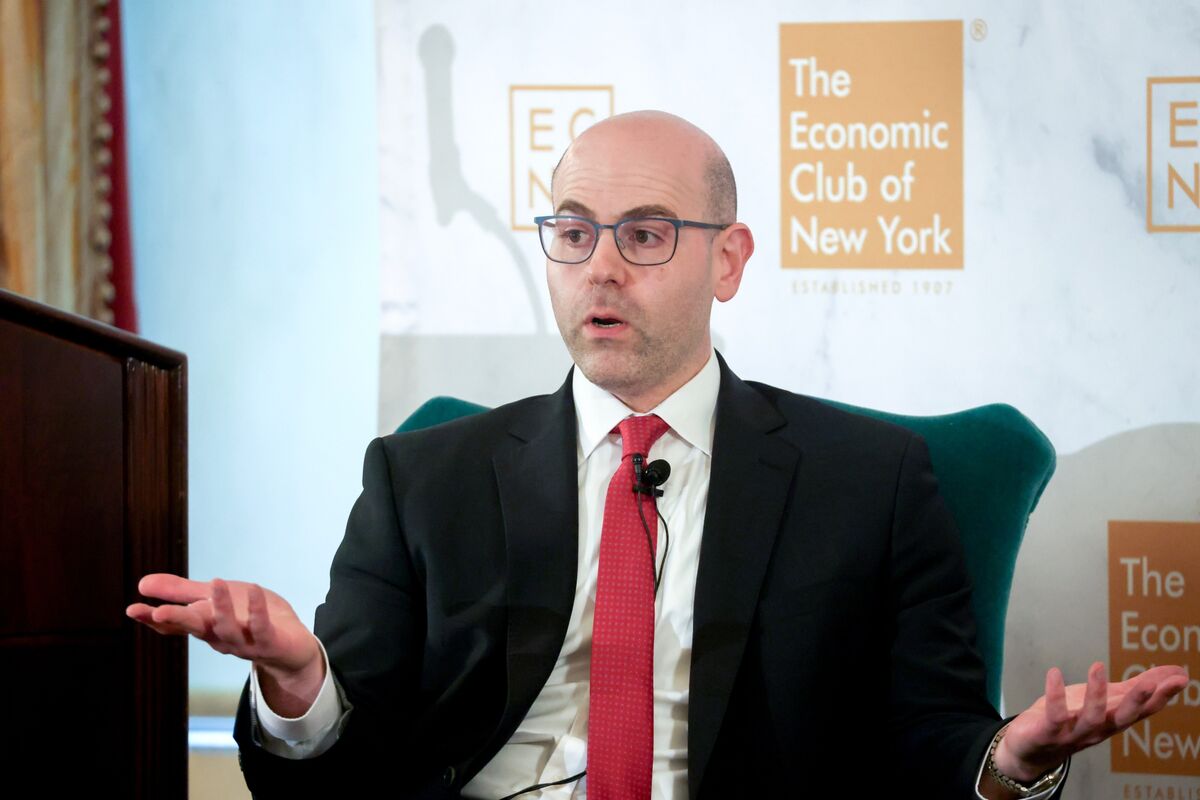
Federal Reserve Governor Stephen Miran has publicly advocated for steep and swift interest rate cuts, arguing that a significant drop in the US economy's 'neutral rate' renders current monetary policy unduly restrictive and risks higher unemployment. This out-of-consensus position, articulated at the Economic Club of New York, raises questions regarding its theoretical basis versus potential political rationalization, given his prior role with the Trump administration.
Federal Reserve Governor Stephen Miran has introduced a significant element of uncertainty into the monetary policy outlook by advocating for steep and swift interest rate cuts, a position described as 'far-out-of-consensus'. His justification, articulated at the Economic Club of New York, is that a substantial drop in the economy's 'neutral rate' has made current policy unduly restrictive, creating risks of higher unemployment. However, the article questions the authenticity of this economic rationale, highlighting that Miran held a 'very different' policy view just last year. This raises the possibility that his argument may be a rationalization for President Donald Trump's stated desire for lower rates, a concern amplified by Miran's recent transition from the President's Council of Economic Advisers. This development introduces political considerations directly into the Federal Reserve's decision-making framework, casting doubt on the independence of its policy formulation and increasing forecast uncertainty.
AI-powered research, real-time alerts, and portfolio analytics for institutional investors.
Request DemoOverall Sentiment
moderately negative
Sentiment Score
-0.35
