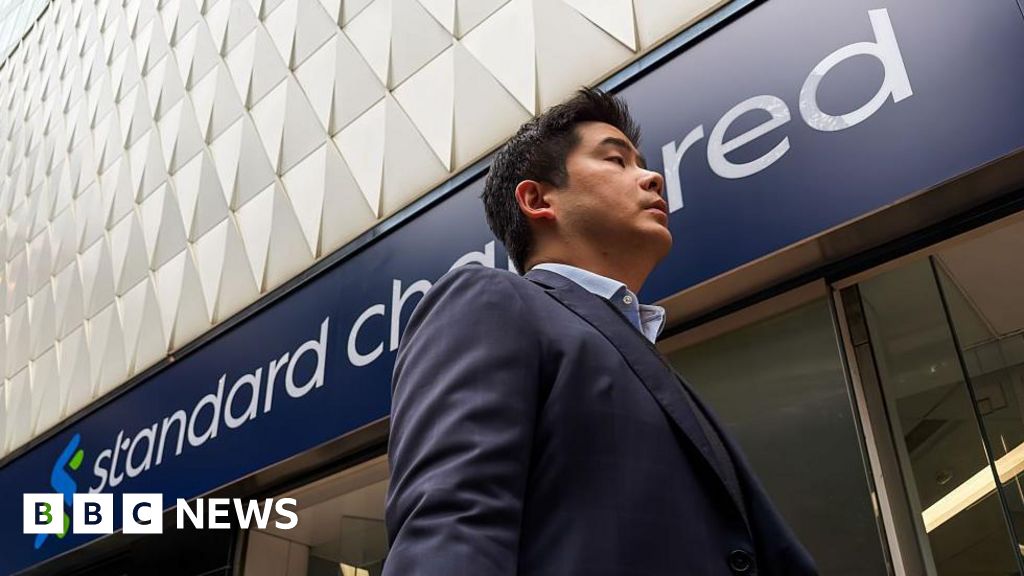
Standard Chartered plans to cut more than 15%, or around 7,800, of its back-office roles by 2030 as it expands use of automation and AI. The bank said some affected employees may be moved into other roles, and the move is part of CEO Bill Winters' broader strategy to improve profitability. The announcement underscores growing AI-driven restructuring pressure across financial services.
This is a margin story first and an AI capex story second. In banking, back-office headcount reductions usually matter less for near-term revenue and more for the operating leverage implied by a lower cost base, which can lift returns on tangible equity without requiring balance-sheet risk to rise. The second-order effect is that peers with slower process automation will be forced to respond, turning what looks like a single-bank restructuring into a sector-wide expense reset over the next 12-24 months. For the named US mega-cap tech beneficiaries, the read-through is mixed rather than uniformly positive. META, AMZN, and ORCL all benefit from the broad validation of AI-driven efficiency programs, but this is also a signal that customers want hard ROI, not just model demos; that favors vendors with workflow integration, cloud monetization, and measurable labor replacement. The risk is that investor expectations for immediate monetization get ahead of deployment reality, so the stocks can overshoot on “AI productivity” headlines and then stall if bookings or guidance do not inflect within the next 1-2 quarters. The contrarian view is that layoffs are not the same as durable productivity gains. In regulated industries, a meaningful share of the savings gets recycled into compliance, oversight, and change-management costs, so the net margin benefit can be smaller than headline job cuts imply. If AI adoption triggers even modest service degradation, model risk, or operational incidents, managements will slow deployment quickly; that makes this a medium-term thesis with a very binary catalyst path rather than a straight-line trend. The cleanest trade is to favor software/infrastructure names with visible enterprise monetization over consumer AI enthusiasm, while fading any near-term knee-jerk rally in the stocks most exposed to “AI savings” narratives. I would also watch for labor substitution to accelerate in banking vendors and BPOs before it shows up in lender earnings, because the market usually prices the cost-cutting announcement before it prices the follow-through.
AI-powered research, real-time alerts, and portfolio analytics for institutional investors.
Request DemoOverall Sentiment
moderately negative
Sentiment Score
-0.45
Ticker Sentiment
