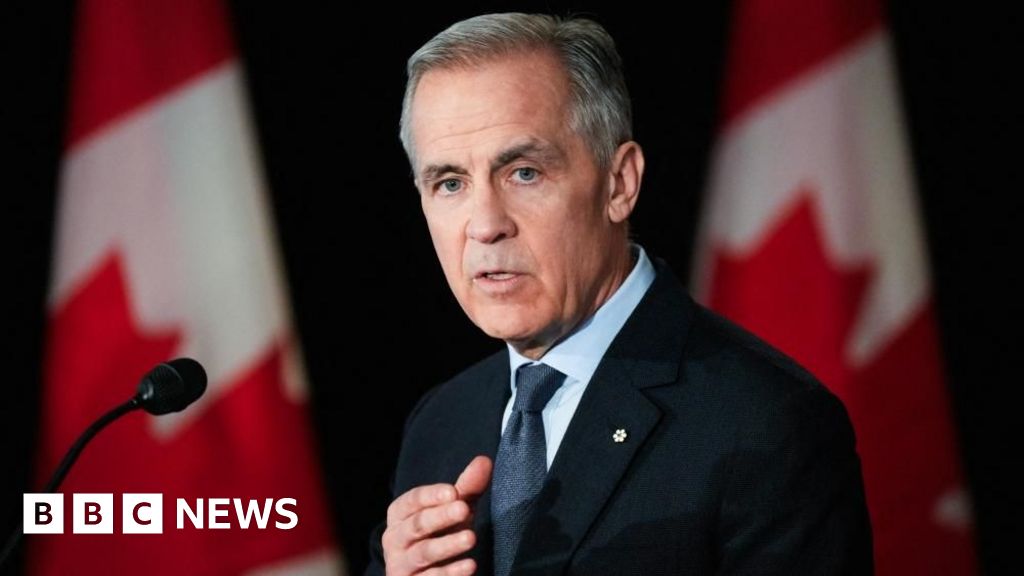
President Trump announced via Truth Social that he has withdrawn an invitation for Canada to join his newly formed 'Board of Peace', in a growing diplomatic spat after Canadian leader Mark Carney warned of a 'rupture' in the US-led global order and Ottawa said it would not pay to participate. The board — described by the US as an international body with broad powers for Trump as chairman and billed by the administration as an alternative to some UN functions — has invited roughly 60 nations with about 35 reportedly signed up; the UK has signaled it will not yet participate amid concerns over possible Russian involvement. The development increases geopolitical uncertainty and highlights potential frictions in multilateral initiatives, but is unlikely to have significant near-term direct market implications.
Market structure: A public US-Canada diplomatic spat raises a small but non-trivial risk premium for Canada-exposed assets and for multilateral institutions; immediate winners are defensive/sovereign-hedge assets (USD, gold, long-dated Treasuries) and defense contractors that benefit from higher geopolitical risk. Losers are Canada equity beta (financials, autos, energy infra) and CAD FX — potential directional move USD/CAD +1–3% if tensions escalate over weeks. The Board-of-Peace dispute signals fragmentation risk in multilateral conflict-resolution, increasing pricing power for nations acting unilaterally and transiently lifting demand for geopolitical-insulated supply chains.
Risk assessment: Tail scenarios include targeted Canadian trade restrictions, sanctions reciprocity, or energy pipeline disruptions — low probability (10–15%) but high impact (equity drawdowns 10–25% for affected sectors, +50–150bps sovereign spread widening). Immediate (days): heightened FX and Canadian equity volatility; short-term (1–3 months): re-rating of defense (+10–25%) and gold (+5–12%); long-term (6–24 months): structural risk premia uplift if US unilateral institutions persist. Hidden dependencies: cross-border auto and energy supply chains and Canadian banks’ US exposures could transmit losses non-linearly.
Trade implications: Tactical plays favor small, defined-risk positions: long US defense names and gold, relative short Canadian equity exposure via ETFs, and FX options on USD/CAD to express CAD weakness. Use options to cap downside (3–12 month tenors), keep size sizes 0.5–3% portfolio per trade, and tie exits to objective triggers (FX move, spreads). Liquidity/volatility will determine premium for option strategies.
Contrarian angles: The market may underprice the speed of reversal — a rapid diplomatic thaw or Canada securing alternative multilateral backing would reverse flows sharply; this asymmetry favors limited-cost upside positions (OTM call spreads on LMT/RTX, short-dated CAD puts sold against longer USD/CAD calls). Historical parallels (2018 US trade skirmishes) show a 2–4% CAD move and 4–8% underperformance in Canada vs US over 2–6 months, so size positions conservatively and plan rebalancing triggers.
AI-powered research, real-time alerts, and portfolio analytics for institutional investors.
Request DemoOverall Sentiment
mildly negative
Sentiment Score
-0.30
